
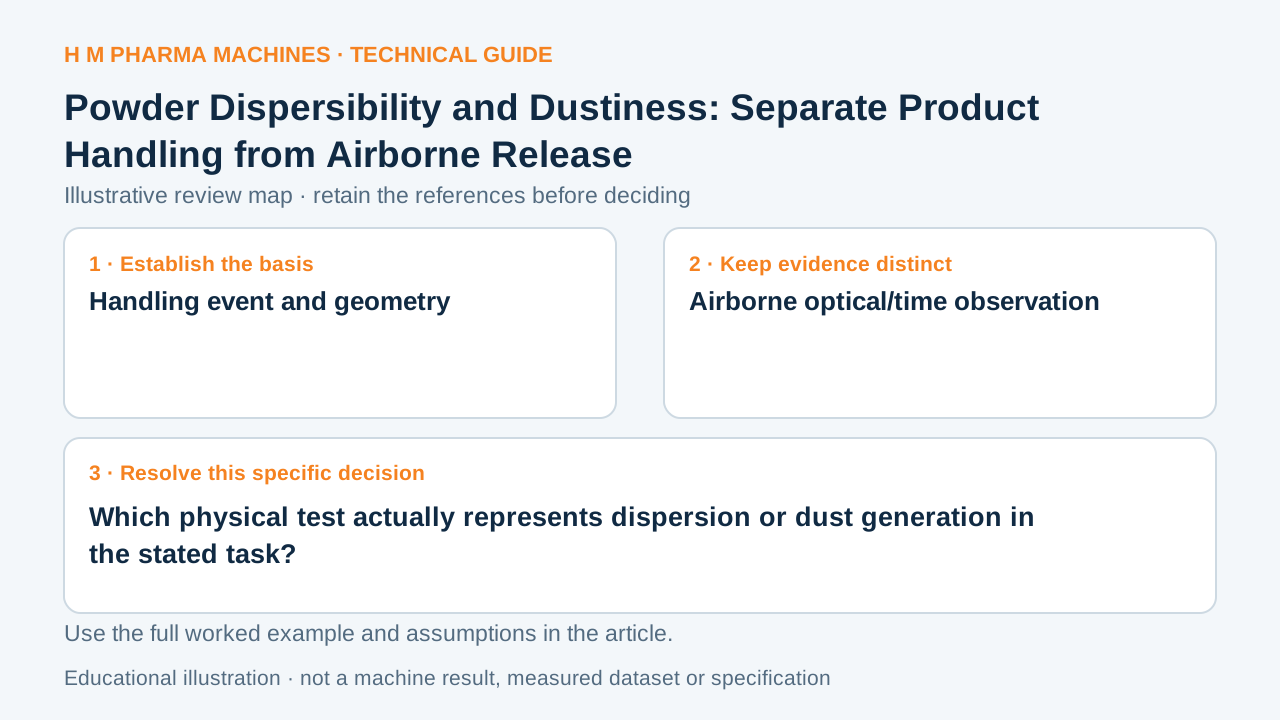
State the imposed handling event when comparing airborne release; the ability to disperse a powder in a product is a different outcome.
Identify the Material Response
Palas describes dustiness observations following a defined powder drop and subsequent optical monitoring of suspended material. The event and observation interval are part of that test. Primary reference: dust release and suspension observation.
Review a Hypothetical Comparison
Imagine one fictional comparison tracks airborne optical response after an identified dry transfer. Another records whether powder clusters remain in a specified liquid preparation after mixing. Both may concern particle associations, but one observes material released into air while the other observes incorporation into the liquid. Calling either result simply “easy dispersion” would hide the tested task.
Keep the Evidence with the Decision
Keep the dry-event geometry and optical/time basis with the dustiness result. For liquid incorporation, retain liquid identity, preparation and the chosen endpoint. Distinguish initial release from persistence in suspension; a later signal need not be a second measure of how much was released at the beginning. Compare only quantities with their stated observation boundaries.
Neither test alone supplies a complete exposure assessment or a production mixing correlation. Ask which practical task the supplied result represents before using it to select machinery or describe handling behaviour. The hypothetical comparison contains no optical calibration, dust limit, liquid recipe or HM performance. Its useful output is a test-to-task map separating airborne release from the desired product state.
Which physical test actually represents dispersion or dust generation in the stated task?
This blank worksheet is for your own project. It contains no H M machine trial result.
| Review field | Reference or result | Responsible person |
|---|---|---|
| Handling event and geometry | To complete | To complete |
| Airborne optical/time observation | To complete | To complete |
| Liquid incorporation method/endpoint | To complete | To complete |
| Test-to-process quantity boundary | To complete | To complete |
Customer Questions
Is liquid incorporation identical to airborne release?
No. The observed destinations and tasks differ.
Does a later optical signal measure only initial release?
No. Suspension persistence also affects the observation.
Does this guide establish an exposure limit?
No. That requires a separate applicable assessment.
Primary References
These references support the technical principles discussed in this guide. The worked examples and review questions are educational.
Discuss Your Machine Requirement
Share your product, container, required output and the evidence needed for your technical review.
Request a Technical Review