
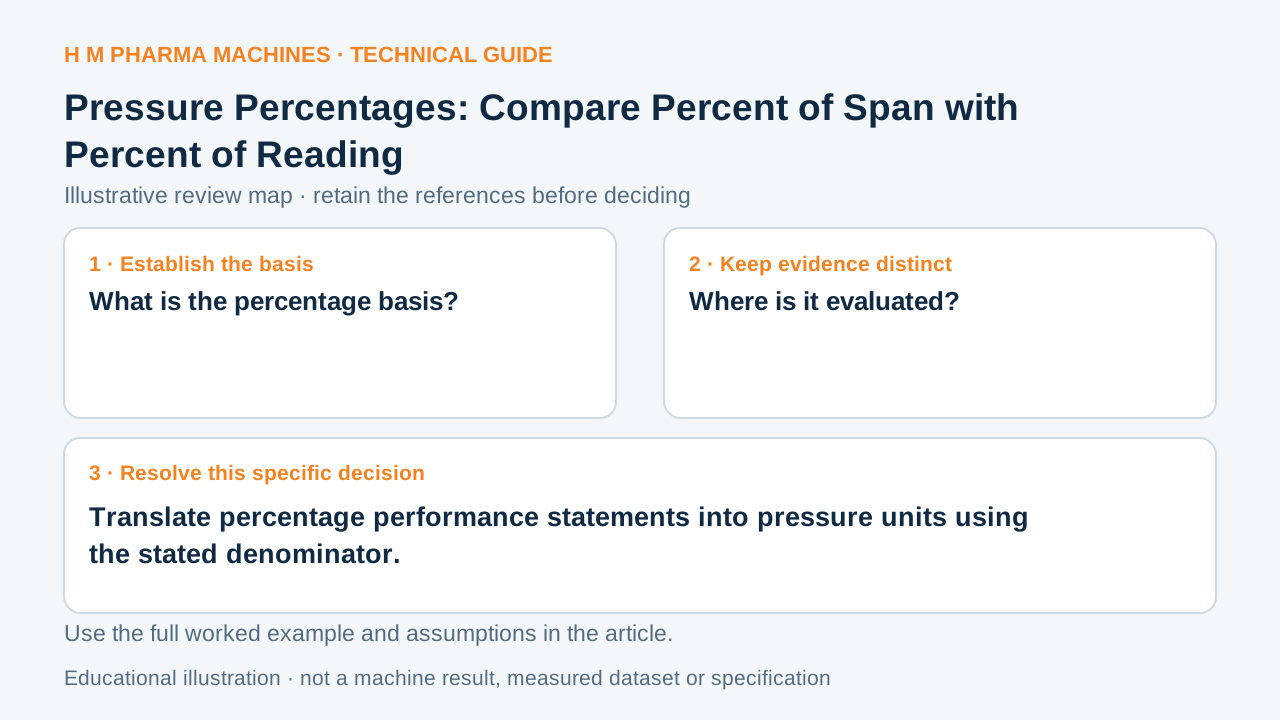
A percentage needs a basis. The same numerical percentage can imply different pressure bounds when one offer uses span and another uses the current reading.
Retain the denominator
WIKA’s 130.15 specification gives performance as percentages of span, with details tied to the stated gauge configuration. When comparing offers, keep that denominator and any scale-region conditions. Do not shorten a specification to a bare “percent accuracy” field.
Calculate an invented comparison
For an illustrative 0–10 bar span, 1% of span is 0.10 bar. At a reading of 2 bar, an illustrative 1% of reading is 0.02 bar. At 8 bar, it is 0.08 bar. These computations compare definitions, not complete performance claims for real instruments.
If another specification adds a fixed term, uses different bounds in parts of the scale, or limits its reference conditions, retain those details too. A single calculated contribution is not the combined uncertainty of the installed measurement result.
Make the comparison reproducible
Copy the exact performance wording, span definition, reading point and conditions into the review worksheet. Convert the applicable bound to pressure units at the intended use points. Ask the supplier about ambiguous “full scale” terminology rather than choosing a favourable denominator. Keep the original statement beside the arithmetic.
Primary reference: Manufacturer technical reference.
Instrument evidence worksheet
This blank worksheet is for your own project. It contains no H M machine trial result.
| Review question | Evidence to retain |
|---|---|
| What is the percentage basis? | Span, reading or defined alternative |
| Where is it evaluated? | Intended reading and interval |
| What other conditions apply? | Scale region and additional terms |
Customer Questions
Are 1% of span and 1% of reading always equal?
No.
Does the arithmetic establish installed uncertainty?
No. It evaluates the named statement only.
Should “full scale” be assumed without its definition?
No. Resolve the supplier’s intended basis.
Primary References
These references support the technical principles discussed in this guide. The worked examples and review questions are educational.
Discuss Your Machine Requirement
Share your product, container, required output and the evidence needed for your technical review.
Request a Technical Review