
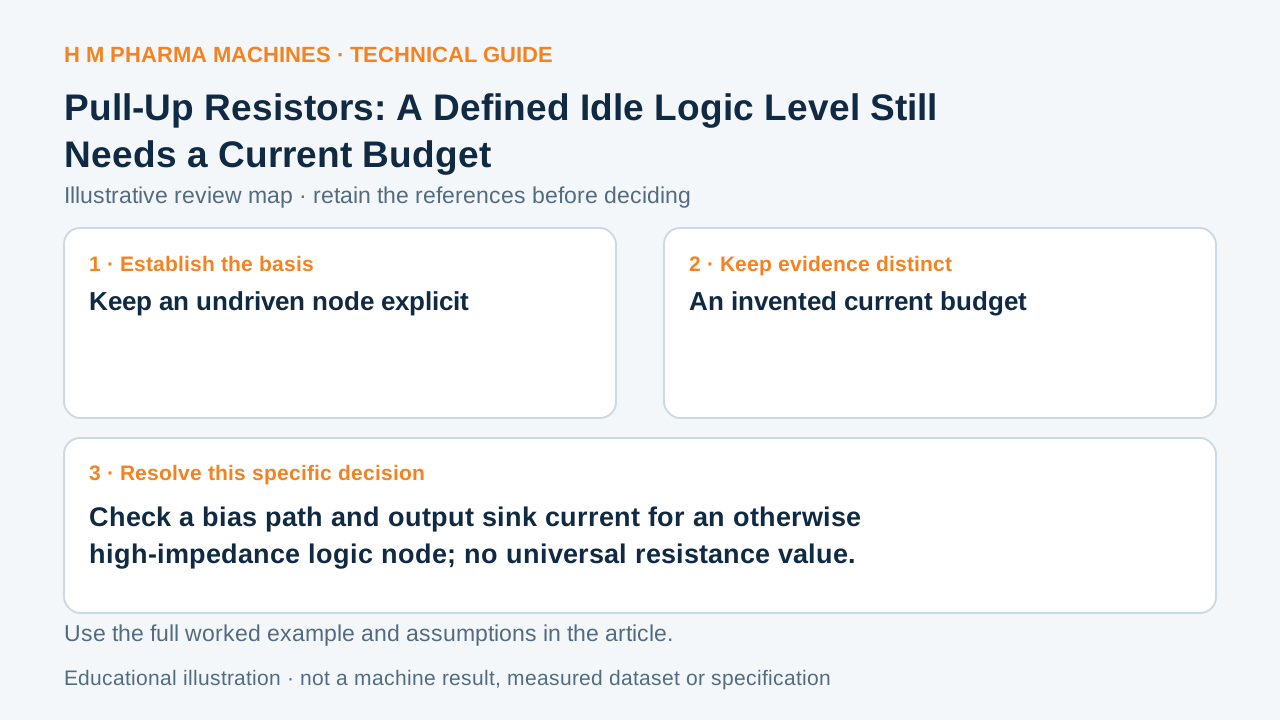
Identify the bias path and current budget that define the idle state of a high-impedance logic node.
Keep an undriven node explicit
TI distinguishes undriven non-bus-hold inputs from actively driven signals and describes external bias paths for those conditions. Primary reference: floating inputs, section 5.
A wire left open is not automatically a defined logical high or low. The circuit’s internal bias, bus-hold behavior and external connection must be identified. Choosing a pull-up also introduces a current path when another device drives that node low.
An invented current budget
Suppose a fictional 5 V rail connects through 10 kΩ to a node whose active sink holds it at 0.20 V. The resistor current under that assumption is (5−0.20)/10,000 =0.48 mA. With 1 kΩ and the same voltages, it would be 4.8 mA.
The second calculation supplies ten times the current to the low-state path; it is not a universal improvement. The node’s logic thresholds, leakage, capacitance and the driving device’s actual sink capability still need evaluation. Neither resistor value is recommended for a particular board.
Document the idle-state question
Prepare a schematic field for internal bias, the external resistor, the un-driven condition and the active low-state load. Record which actual input and output characteristics support the intended levels.
Ask whether the node must retain a prior state or establish a fixed idle state; those are different requirements. This worksheet helps a control-interface discussion keep the voltage definition and its current consequence together without prescribing a circuit modification.
Customer Questions
Does an open wire guarantee a logic level?
The actual bias and input behavior determine it.
Is a smaller resistor automatically better?
It also changes current and other circuit tradeoffs.
Does the example include every leakage path?
Its simplified current calculation needs actual device evidence.
Primary References
These references support the technical principles discussed in this guide. The worked examples and review questions are educational.
Discuss Your Machine Requirement
Share your product, container, required output and the evidence needed for your technical review.
Request a Technical Review