
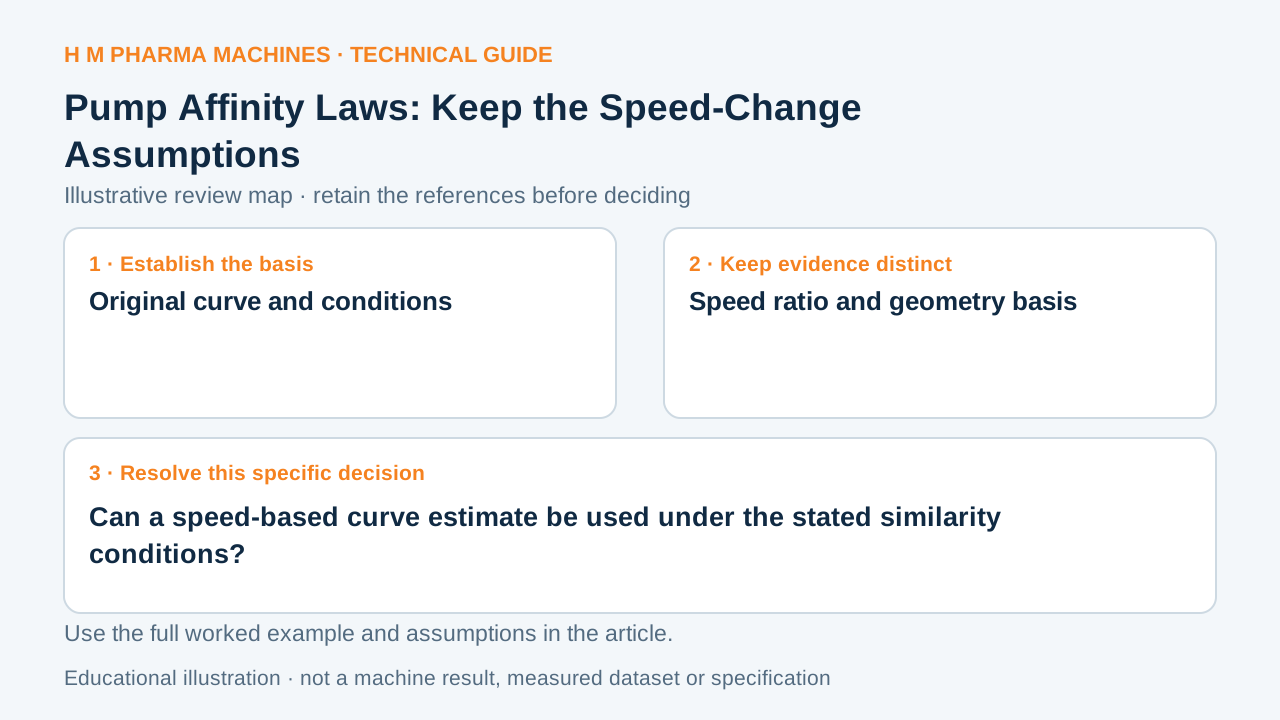
Affinity relationships can help interpret a centrifugal-pump speed change, but an estimate is not a new measured operating point.
Know What Is Being Scaled
For corresponding centrifugal-pump points under the applicable similarity assumptions, conventional speed relationships give flow proportional to speed and head proportional to speed squared. Power scaling also depends on the relevant assumptions. KSB explains affinity laws as relationships between curves at different speeds.
Keep the pump geometry and the underlying liquid/curve conditions identifiable. A speed ratio is not a substitute for a supplier correction or test where the application lies outside the assumed basis. Do not use one simple scaling rule to approve every viscous or gas-containing product. KSB primary engineering reference.
Illustrative Corresponding Point
Invented starting values are 10 m³/h and 20 m at speed n1. A speed ratio n2/n1 = 0.8 gives a corresponding ideal estimate of 8 m³/h and 12.8 m. These are a scaled point, not confirmed delivered values for an HM machine.
A system containing static head can intersect the changed pump curve at a different point from that simple scaled pair. Therefore, keep curve scaling separate from finding the operating point. The latter still requires the relevant system curve.
Ask for the Permitted Estimate Range
The supplier should identify the range over which the estimate is appropriate and which limits require another check. Preserve the original curve, speed ratio and any corrections in the record. A graph without those references cannot show what was changed.
For a transfer proposal, use the worksheet to distinguish measured manufacturer data, calculated estimates and the predicted system intersection. This allows a useful preliminary comparison without describing theoretical scaling as witnessed performance or an instruction to change an installed drive. Relevant HM context: Processing Tank.
Pump Affinity Laws: Keep the Speed-Change Assumptions — blank review record
This blank worksheet is for your own project. It contains no H M machine trial result.
| Question | Reference or result | Owner/status |
|---|---|---|
| Original curve and conditions | To complete | To complete |
| Speed ratio and geometry basis | To complete | To complete |
| Scaled point/assumptions | To complete | To complete |
| System intersection and supplier limits | To complete | To complete |
Customer Questions
Is a scaled point the new delivered flow?
Not automatically. It must also meet the relevant system curve.
Are the example values measured?
No. They are hypothetical corresponding-point calculations.
Can affinity scaling approve a product change?
The actual liquid and supplier application basis need separate review.
Related Equipment References
Review the actual offered equipment and application separately from this educational example.
Primary References
These references support the technical principles discussed in this guide. The worked examples and review questions are educational.
Discuss Your Machine Requirement
Share your product, container, required output and the evidence needed for your technical review.
Request a Technical Review