
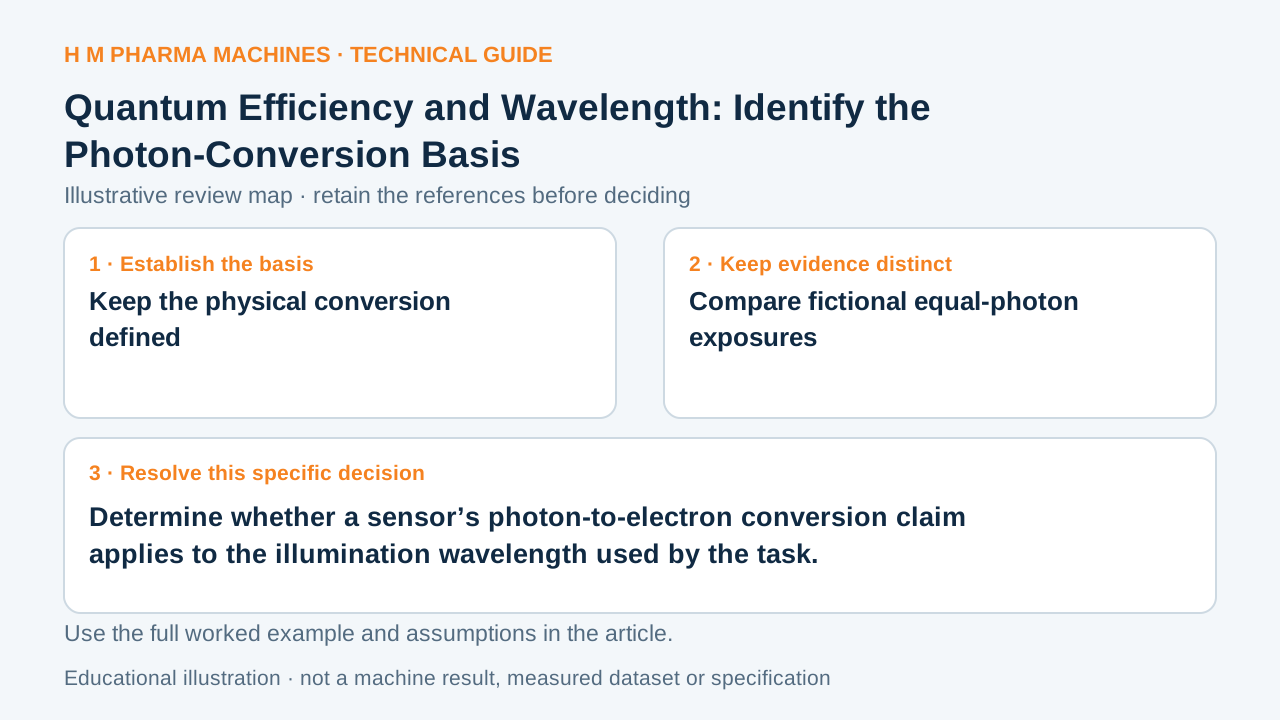
A quantum-efficiency percentage needs its wavelength. A favourable number measured elsewhere in the spectrum may not answer the illumination question in the proposed inspection.
Keep the physical conversion defined
In the stated linear camera model, quantum efficiency relates mean generated electrons to mean incident photons and depends on wavelength. It is different from electronic gain, which maps charge to an output signal. Primary reference: EMVA 1288 Release4.0 Linear, photon-conversion model.
Start by identifying the illumination spectrum used at the sensor and the corresponding camera information. A peak percentage on a summary page can refer to a different wavelength from the proposed task. Retain whether the supplied figure describes typical behaviour, a measured specimen or an assured specification; these are different evidence claims.
Compare fictional equal-photon exposures
Imagine a hypothetical sensor with an efficiency of 0.60 at one stated wavelength and 0.20 at another. For an equal mean exposure of 1,000 incident photons per pixel, the model gives mean generated charges of 600 and 200 electrons respectively. The same fictional camera has therefore produced different charge responses to equal photon counts.
This illustration assumes the applicable linear, unsaturated model and uses invented efficiencies. Equal photon counts at different wavelengths do not imply equal radiant energy. It is not a prediction of image brightness, noise, accepted-pack accuracy or a demonstrated HM camera result.
Ask for the relevant spectral evidence
Keep the source curve or characterization information with the wavelength range of the illumination. Identify filters and the optical path that affect which light reaches the sensor. If the illumination changes, review whether the previously selected conversion figure still represents the new task.
Separate the sensor characterization from the full-system demonstration. Lens transmission, the arriving photon exposure and the electronics remain relevant to the image. The buyer’s useful record links a spectral conversion statement to its actual conditions rather than treating one percentage as a universal camera-quality score.
Customer Questions
Does quantum efficiency have a wavelength basis?
Yes. Retain the stated wavelength or spectral characterization.
Is electronic gain the same physical quantity?
No. Keep photon conversion separate from the charge-to-output mapping.
Are 600 and 200 electrons actual camera measurements?
No. They are mean values from a fictional linear-model comparison.
Primary References
These references support the technical principles discussed in this guide. The worked examples and review questions are educational.
Discuss Your Machine Requirement
Share your product, container, required output and the evidence needed for your technical review.
Request a Technical Review