
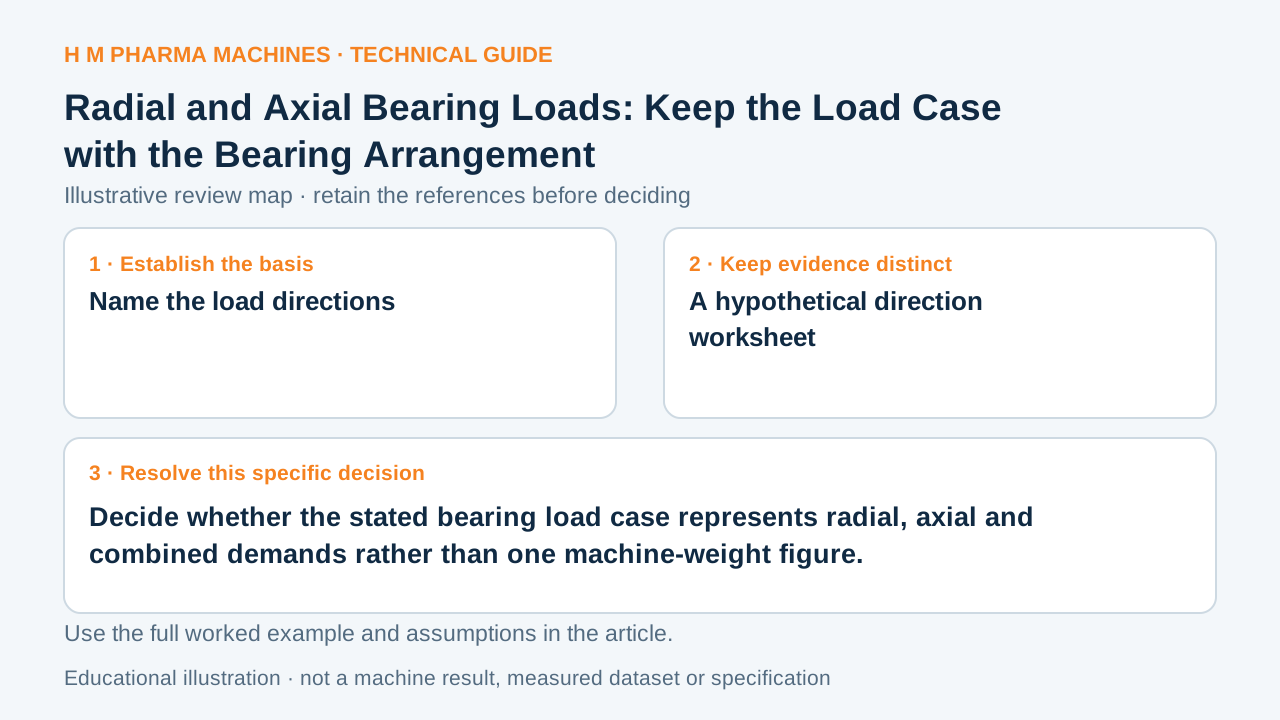
A machine-weight figure does not describe every force that its bearings must support. Draw the load directions before comparing bearing proposals.
Name the load directions
Radial and axial loads act in different directions relative to a shaft. Bearing types and arrangements have different capabilities for those directions. SKF's rolling-bearing selection material distinguishes them. Primary reference: SKF rolling bearings.
For the buyer, the immediate question is what load case the proposal actually represents. Shaft orientation, drive forces and the location of a supported item can matter. Do not replace an unresolved load case with the total machine mass merely because mass is the only available number.
A hypothetical direction worksheet
Imagine a fictional horizontal shaft carrying a downward force of 500 N and a separate endwise force of 100 N. Draw both arrows relative to the shaft axis. The first is radial; the second is axial. Adding them as 600 N and calling that the radial load loses the directional information. A designer may derive an equivalent load for a particular bearing using its applicable model, but that is a subsequent calculation with defined inputs.
Create rows for force source, direction, application point, operating mode and supporting drawing. If direction changes during operation, preserve that condition instead of choosing the most convenient arrow. These invented loads identify no HM assembly and select no bearing.
Ask for an arrangement-level answer
Request how the identified bearings share the actual loads and which bearing takes thrust in each direction. Keep the arrangement drawing beside the component ratings. A component that has a documented axial capability does not prove that every shaft layout transfers the proposed thrust to it correctly.
The useful purchase record ties each operating case to its supported load directions and calculation reference. If a later pulley, attachment or shaft orientation changes, review that case again. A tidy list of catalog capacities should follow the load description rather than stand in for it.
Customer Questions
Can radial and axial forces simply be added as one radial force?
No. Retain their directions; an equivalent-load model is specific to the identified bearing and case.
Does machine mass describe bearing thrust?
Not by itself. Identify the actual force sources, directions and transfer paths.
What should accompany a bearing proposal?
The arrangement drawing, operating load cases and the calculation basis for the selected components.
Primary References
These references support the technical principles discussed in this guide. The worked examples and review questions are educational.
Discuss Your Machine Requirement
Share your product, container, required output and the evidence needed for your technical review.
Request a Technical Review