
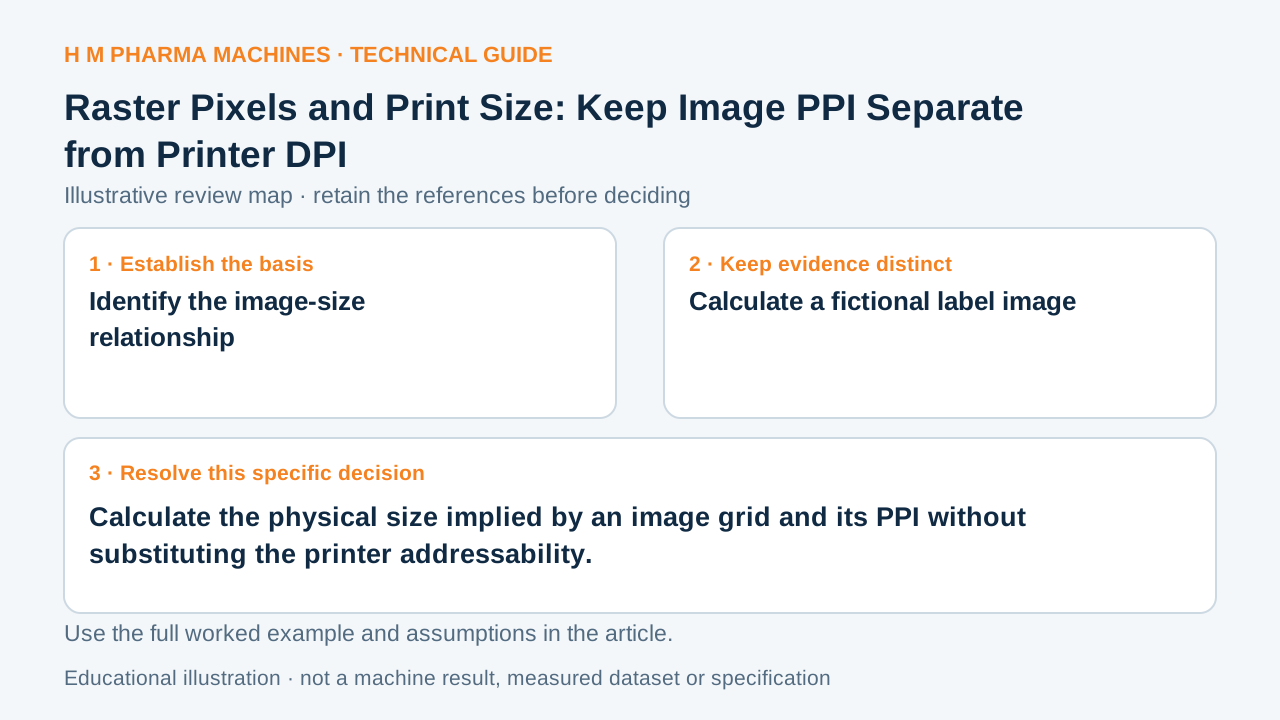
The image's sample density and the printer's dot addressability describe different things. Keep both terms explicit in a packaging-artwork handoff.
Identify the image-size relationship
For a raster image, physical width in inches equals horizontal pixel count divided by pixels per inch. Changing the assigned PPI without resampling changes that physical-size relationship while retaining the same grid of image samples. Primary reference: Adobe: image dimensions, resolution and resampling.
Printer DPI describes the device's addressable dots and is a separate value. Substituting it for the image PPI can conceal the intended artwork size. A proposed output may use many device dots to represent one image sample, depending on the rendering and printing process.
Calculate a fictional label image
Suppose an invented image is 1,200 pixels wide and assigned 300 PPI. Its implied width is four inches, or 101.6 mm. Reassigning 600 PPI without changing its pixel grid implies two inches, or 50.8 mm. The data count remains 1,200 horizontal samples.
Neither calculation demonstrates actual printed sharpness or specifies a production resolution. If the handoff requires a different physical width while keeping a chosen sample density, resampling or a different source grid may be needed. Those decisions should be recorded rather than hidden behind a printer-resolution number.
Check the output-size instruction
Put the intended millimetre dimensions on the artwork drawing and retain the original image dimensions. Identify any output scaling applied after the file is opened. A correctly assigned PPI can still yield the wrong physical size if a later print step fits the image to another area.
Ask the receiver to confirm the physical-size interpretation using the released file. Review the actual printed result separately for task requirements such as readable text or usable image detail. The arithmetic identifies the size basis; it does not certify the printer, substrate or artwork's final appearance.
Customer Questions
Does changing PPI always add pixels?
No. Without resampling it changes the implied physical size.
Is image PPI the printer DPI?
No. They describe image sampling and device dots respectively.
How wide is the fictional 1,200-pixel image at 300 PPI?
Four inches, or 101.6 mm, before later output scaling.
Primary References
These references support the technical principles discussed in this guide. The worked examples and review questions are educational.
Discuss Your Machine Requirement
Share your product, container, required output and the evidence needed for your technical review.
Request a Technical Review