
A route can return to a station. Counting one station visit per finished job would understate the work that the route assigns to that resource.
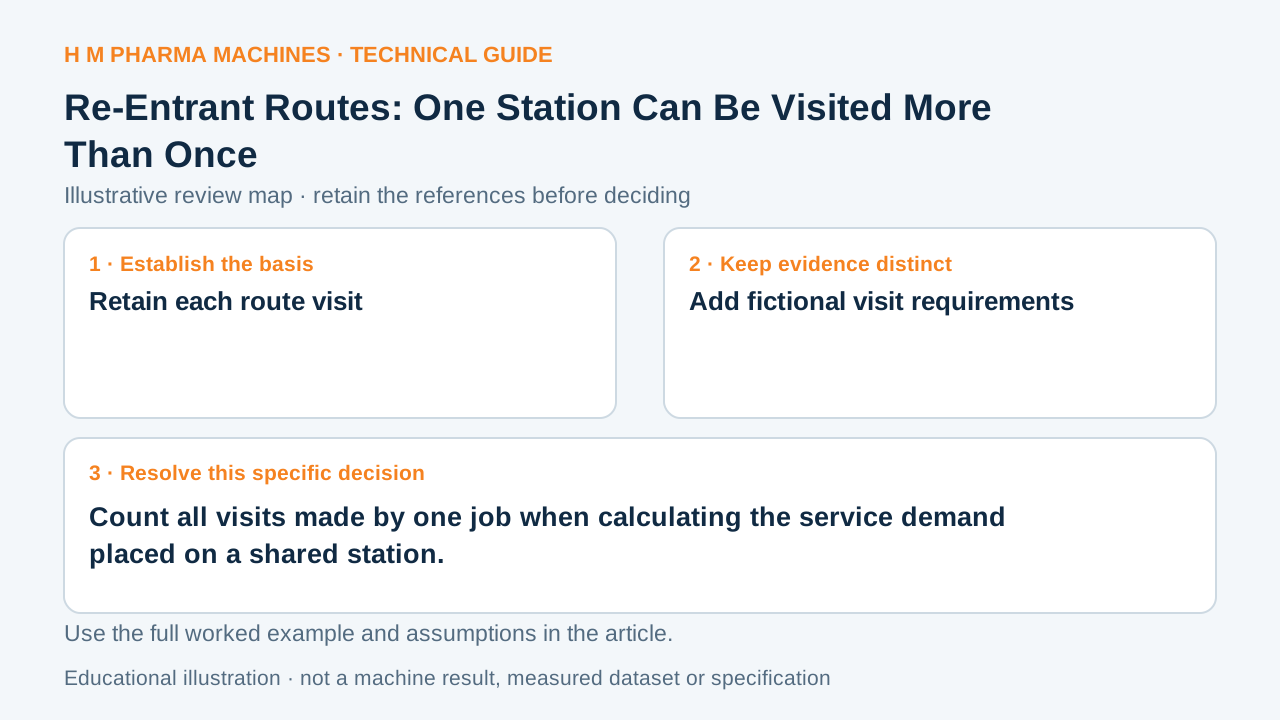
Retain each route visit
A reentrant route sends a job through a resource or processing line more than once. These planned visits differ from a random rework decision after inspection. A resource’s service demand per completed job must retain all visits assigned to it, including visits separated by other operations. Primary reference: MIT manufacturing systems analysis: reentrant routes.
For an original route sheet, give repeated visits their own sequence identifiers. The identifiers can use the same resource but different service requirements. A resource list containing each station name only once does not replace the ordered visit list needed for demand accounting.
Add fictional visit requirements
Suppose a hypothetical finished job uses station M for 2 minutes on its first visit, leaves for another operation, then returns to M for 3 minutes. Each finished job therefore places 5 minutes of defined service demand on M, rather than only 2 or 3.
At an intended flow of 6 jobs per hour, M receives 6 × 5 = 30 service-minutes of demand per hour. This is a demand calculation, not a predicted waiting time or proof that the full route is feasible. Different arrivals to the repeated visits can still compete for the resource.
Review the repeated-visit ledger
Prepare one trial row per visit with job ID, sequence position, resource, duration and completion event. Check that a return has not created a second finished-product count merely because it passes the station again. Retain priorities separately if earlier and returning jobs share one ready queue.
If actual routing includes conditional inspection returns, record that mechanism independently from this fixed two-visit example. No service duration or route here describes an HM machine. The reader decision is whether a finished-job rate has been converted into resource demand using the complete defined route.
Customer Questions
Is a planned return automatically rework?
No. A fixed reentrant route and a conditional rework route have different definitions.
What is M’s service demand per job in the example?
Five minutes, combining the 2- and 3-minute visits.
Does thirty service-minutes per hour predict queue waiting?
No. It counts demand; scheduling and arrival behavior are additional inputs.
Primary References
These references support the technical principles discussed in this guide. The worked examples and review questions are educational.
Discuss Your Machine Requirement
Share your product, container, required output and the evidence needed for your technical review.
Request a Technical Review