
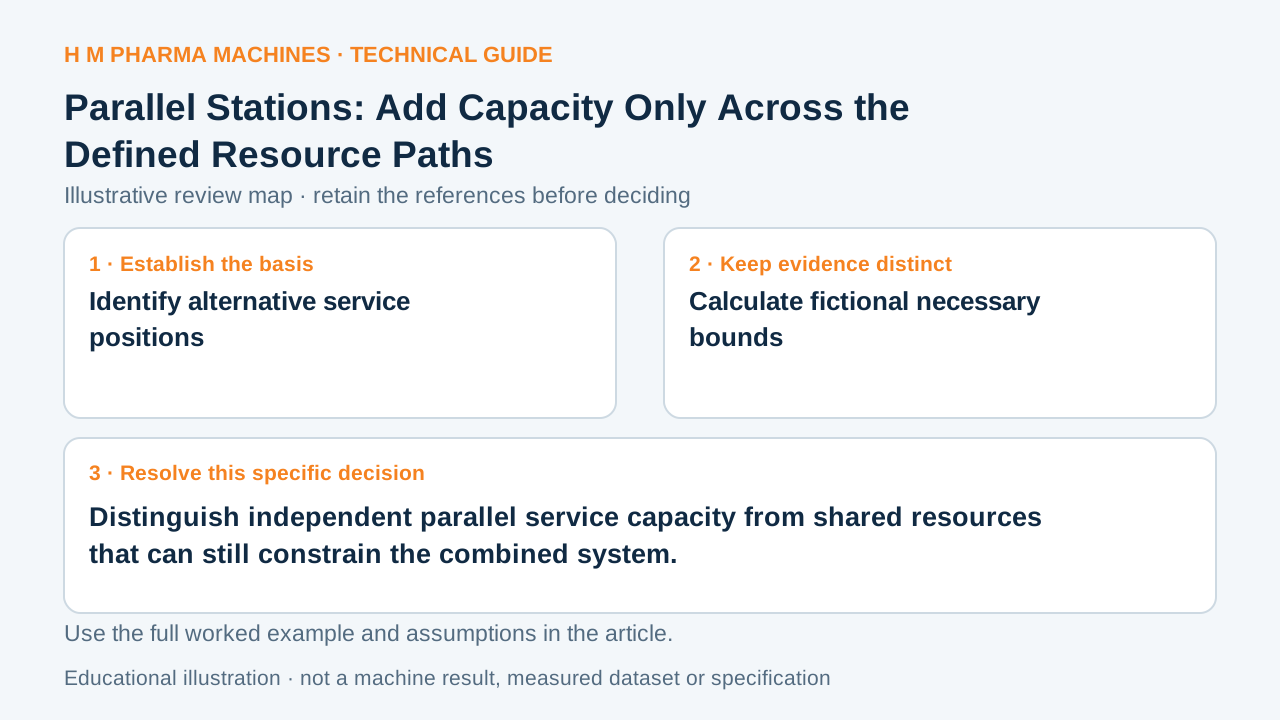
Two parallel stations can add modeled service opportunities. Their combined result still needs the resource path that every job uses.
Identify alternative service positions
A capacity-based resource model can allow several jobs to occupy service positions simultaneously. Independent parallel positions can contribute alternative service capacity, while a separate required shared resource retains its own occupation limit. The model must identify which requirements apply to every completed job. Primary reference: SimPy carwash: capacity and shared resource requests.
Draw the proposed route with alternatives and mandatory resources labeled differently. Two alternative stations do not imply two independent operators, tools or transfer paths. Also distinguish a resource held throughout service from one used only during loading; those requirements produce different constraints.
Calculate fictional necessary bounds
Suppose two hypothetical independent stations each need 10 seconds of station service per job. Their combined nominal service bound is 2 × 60/10 = 12 jobs per minute. Assume additionally that every job occupies one separate shared resource for 6 seconds, without overlapping another use of that resource.
The shared-resource bound is 60/6 = 10 jobs per minute. Consequently this stated system cannot sustain 12 completed jobs per minute solely by adding the two station figures. Ten is a necessary upper bound, not a predicted attainable output: timing, transfer and other constraints can reduce the result.
Review the occupation path
Prepare one original requirement row per job showing the station alternative, shared occupation duration and any simultaneous holds. Verify that a duration has not been assigned to two independent resources when the proposal actually uses one shared unit. Then trace a feasible event schedule before calling a bound achievable.
These numbers are fictional and exclude actual staffing policy, ergonomic limits, equipment capability and interruptions. The guide’s decision is whether parallel capacities have been added across genuinely separate paths. It does not certify a production rate or a required operator count for an HM machine.
Customer Questions
Can two nominal station rates always be added?
Only across the defined independent service paths, with other required resource limits retained.
What is the fictional shared-resource bound?
Six seconds per job on one resource gives at most ten jobs per minute.
Does that bound prove ten jobs per minute is achievable?
No. It is a necessary upper bound, not a feasible schedule or measured output.
Primary References
These references support the technical principles discussed in this guide. The worked examples and review questions are educational.
Discuss Your Machine Requirement
Share your product, container, required output and the evidence needed for your technical review.
Request a Technical Review