
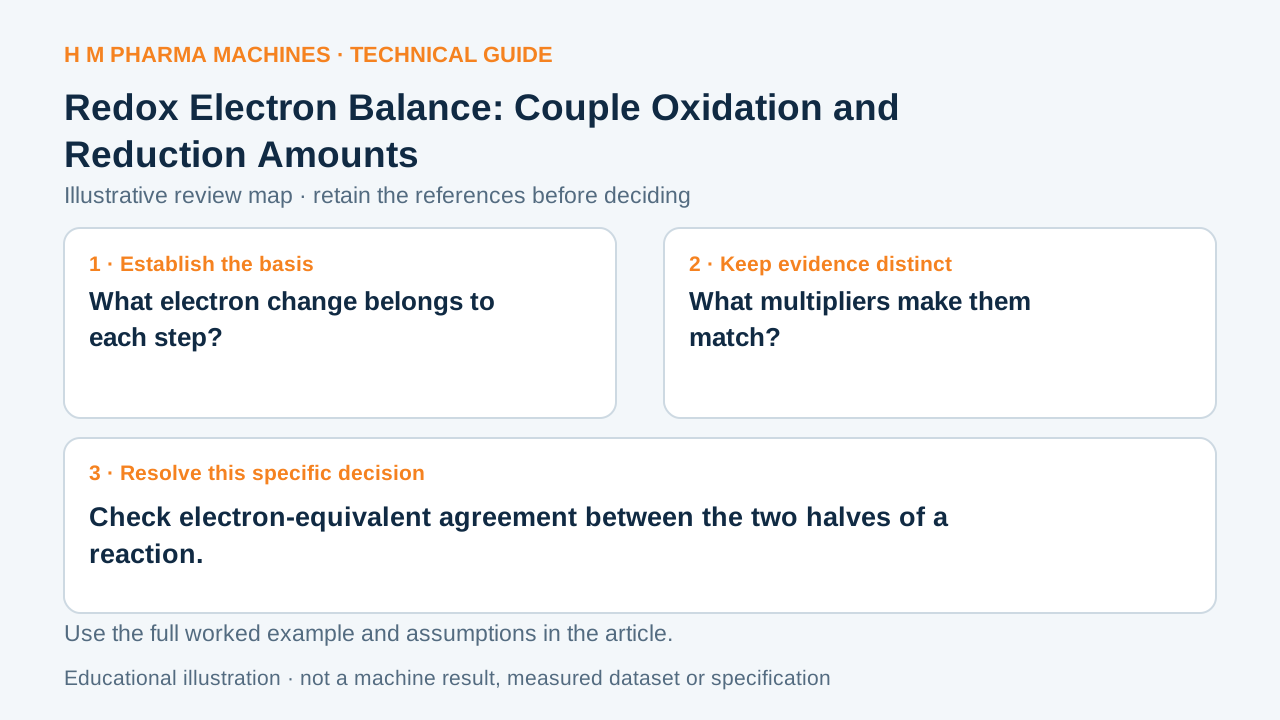
Oxidation and reduction half-reactions must exchange the same number of electrons. Equal counts of chemical species do not automatically satisfy that requirement.
Identify the electron changes
In half-reaction bookkeeping, oxidation produces electrons and reduction consumes them. Multiplying half-reactions by appropriate factors permits those electron terms to cancel in the combined reaction. Atom and charge balances still need their own checks for the named chemical species. Primary reference.
Combine an invented pair of half-reactions
Construct an abstract metal change M²⁺ → M³⁺ + e⁻, and a second abstract change Ox²⁺ + 2e⁻ → Red. Assume Ox and Red represent the same elemental inventory on their respective stated charge bases. Twice the first half-reaction supplies the second’s two electrons.
The combined model is 2M²⁺ + Ox²⁺ → 2M³⁺ + Red. Its left charge is +6 and its right charge is also +6, with no electron remaining. One M entity per Ox entity would fail the electron balance in this constructed pair.
Check what the balanced result establishes
Create an original reaction ledger retaining each half-reaction, multiplier, electron count and complete species charge. In an actual aqueous equation, other atoms or species may require additional balancing terms appropriate to its defined conditions. This abstract example supplies no real chemical identities or solution environment.
The balanced model does not establish spontaneity, rate or a suitable process reagent. Its decision is whether the proposed reaction has a coherent electron exchange before further thermodynamic or material-balance interpretation. Keep any later potential calculation tied to the same reaction direction and electron count.
Solution review worksheet
This blank worksheet is for your own project. It contains no H M machine trial result.
| Question | Record to retain |
|---|---|
| What electron change belongs to each step? | Produced or consumed electrons |
| What multipliers make them match? | Smallest common exchanged count |
| Are atoms and charge also balanced? | Separate whole-reaction checks |
Customer Questions
How many M entities appear per Ox in the example?
Two.
How many electrons are exchanged?
Two per combined reaction as written.
Does electron balance prove a reaction will occur rapidly?
No.
Primary References
These references support the technical principles discussed in this guide. The worked examples and review questions are educational.
Discuss Your Machine Requirement
Share your product, container, required output and the evidence needed for your technical review.
Request a Technical Review