
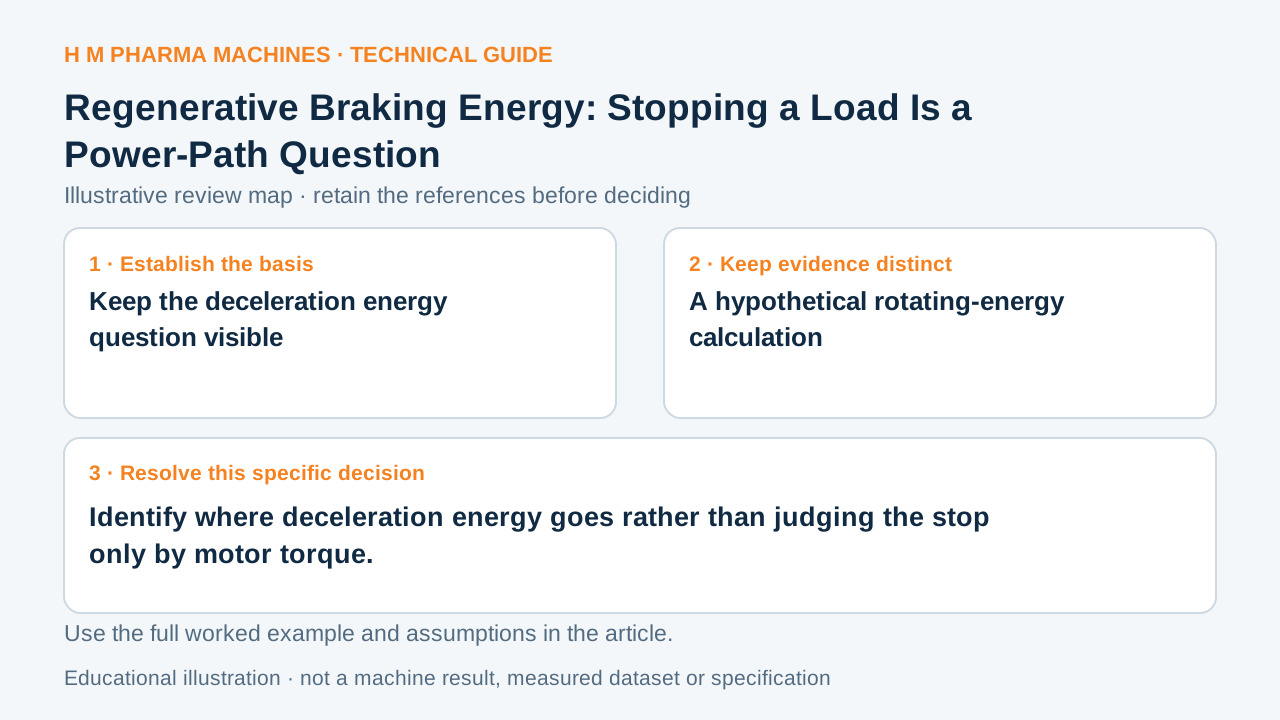
Stopping torque and the treatment of returned energy are separate parts of the proposed system.
Keep the deceleration energy question visible
Kollmorgen discusses regenerative energy and drive-bus overvoltage in deceleration duties. The energy-handling path belongs in the actual system review. Primary reference: Kollmorgen regeneration context.
Identify the driven load, movement cycle and proposed way the system handles returned energy. A motor's ability to develop a stated braking torque does not by itself describe the complete electrical energy path or its duty capability. Preserve any relevant repeated-cycle condition.
A hypothetical rotating-energy calculation
Assume a fictional rigid rotating inertia of 0.02 kg·m² at 50 rad/s. The simple kinetic-energy model gives ½×0.02×50² =25 J. At 100 rad/s, the same modeled inertia has 100 J. Doubling speed quadruples that model's energy; it does not state how much energy the actual electrical bus receives.
Record inertia, speed, modeled energy, other relevant loads and cycle timing. These values describe no HM drive, resistor or actual deceleration event. No resistor size, connection or permitted bus voltage is selected from the calculation.
Review the actual energy architecture
Ask the responsible drive designer which path accommodates the actual returning energy and repeated duty. Keep peak and longer-duration requirements distinct where the proposed arrangement requires that distinction.
If load, speed or stopping frequency changes, preserve the changed energy basis in the review. The guide gives a buyer a concrete reason to request the energy-handling scope alongside torque. It does not prescribe a braking circuit, promise recovered-energy savings or interpret a simple kinetic-energy estimate as a complete regeneration-capacity calculation for the selected machine. Keep energy per stop distinct from repeated-duty thermal loading.
Customer Questions
Does braking torque alone define the energy path?
No. Identify the actual drive-system energy-handling scope.
What happens to the simple model energy when speed doubles?
It increases fourfold for unchanged inertia.
Does 25 J specify a braking resistor?
No. The actual architecture and duty require their own assessment.
Primary References
These references support the technical principles discussed in this guide. The worked examples and review questions are educational.
Discuss Your Machine Requirement
Share your product, container, required output and the evidence needed for your technical review.
Request a Technical Review