
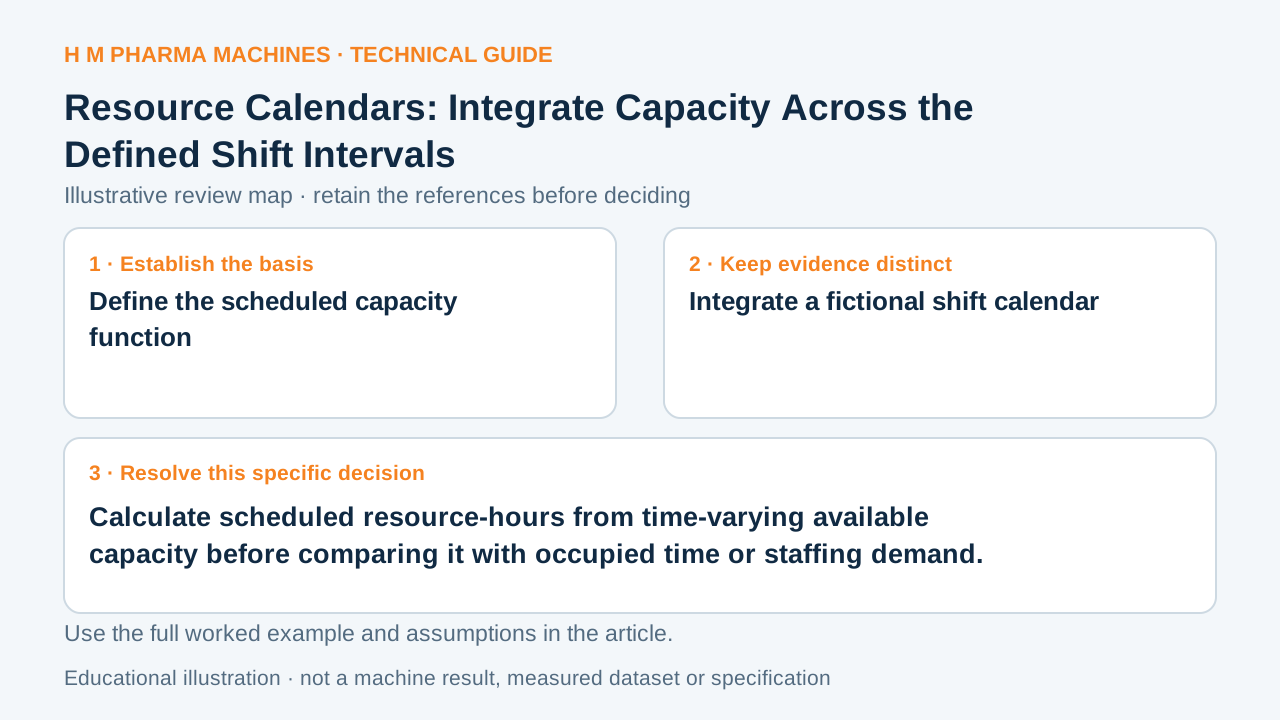
A calendar determines when resource units are scheduled to be available. Integrate its capacity over time before comparing that supply with occupation demand.
Define the scheduled capacity function
A resource calendar can assign different available counts to different intervals, including zero during an off interval. Scheduled resource-hours are obtained by multiplying each interval’s duration by its available resource count and summing. This capacity supply is different from the time resources are actually occupied. Primary reference: AnyLogic ResourcePool: time-dependent capacity and shift schedules.
For an original planning worksheet, state the clock convention, interval boundaries and whether overlapping shifts refer to distinct units. Counting the same individual twice in an overlap would create fictitious capacity. Also record how ongoing work is treated when scheduled capacity decreases; availability and interruption rules are separate definitions.
Integrate a fictional shift calendar
Consider a hypothetical schedule with two available resource units from 08:00 to 12:00, none from 12:00 to 13:00, and one from 13:00 to 17:00. The scheduled supply is 2 × 4 + 0 × 1 + 1 × 4 = 12 resource-hours across the nine-hour clock span.
Using two units for all nine hours would instead claim 18 resource-hours and ignore the defined break and afternoon count. Twelve resource-hours still does not mean twelve hours of observed productive work. Occupation, task eligibility and coincident demand must be reviewed separately.
Review interval identity and demand
Prepare an original calendar ledger with start, end, count and resource identities for every interval. Sort boundaries and check gaps and overlaps before integrating. Keep the result’s resource-hour unit visible so it is not compared directly with clock hours without accounting for simultaneous units.
Then compare a separately defined demand ledger with the available intervals, not just their summed total. Equal daily totals can conceal a task requesting capacity during an off interval. The example does not establish actual HM shifts, staffing or labor policy; it checks the modeled calendar’s capacity arithmetic.
Customer Questions
Are resource-hours the same as elapsed clock hours?
No. Simultaneously available units multiply capacity over an interval.
What supply is in the fictional calendar?
Twelve scheduled resource-hours across a nine-hour clock span.
Does enough total supply prove every task can be scheduled?
No. Demand must also fit the intervals and resource requirements.
Primary References
These references support the technical principles discussed in this guide. The worked examples and review questions are educational.
Discuss Your Machine Requirement
Share your product, container, required output and the evidence needed for your technical review.
Request a Technical Review