
A linear solvent-strength parameter belongs to an analyte, column and solvent system rather than to every reversed-phase separation.
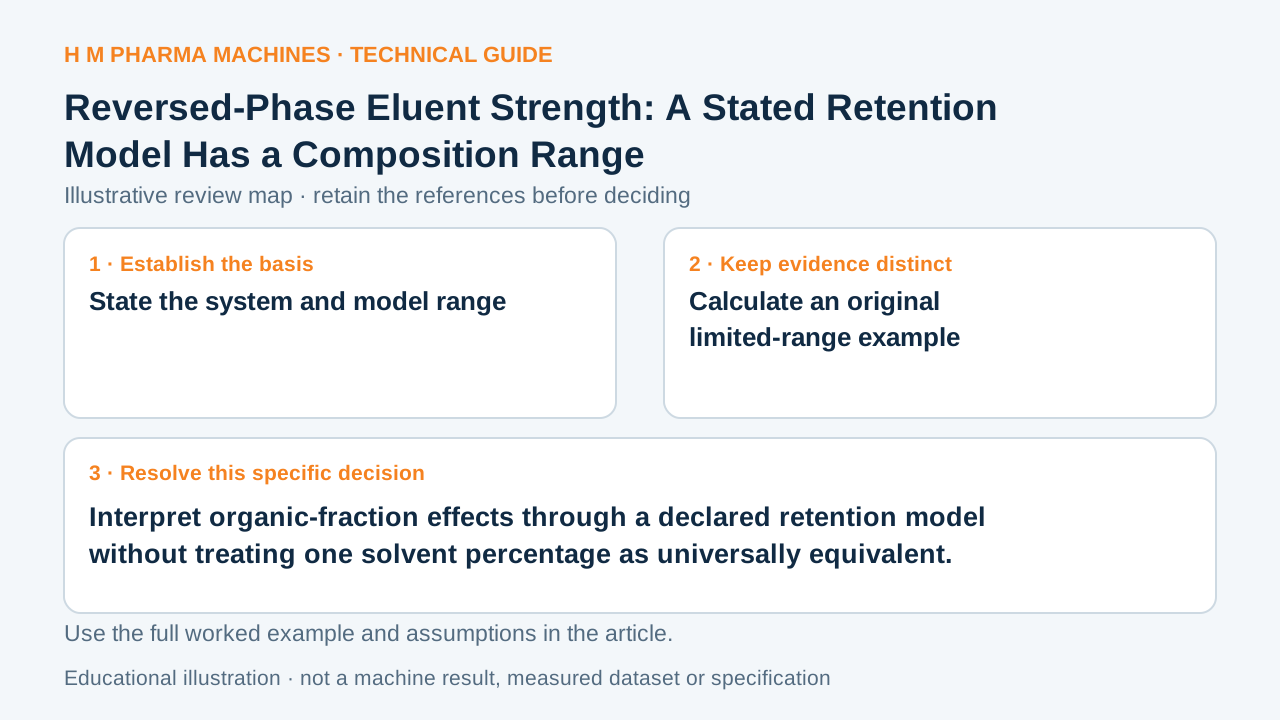
State the system and model range
Research on the linear solvent-strength model examines log retention factor against organic-solvent volume fraction. The slope and intercept depend on the column, solvent and compound; an average solvent parameter is not automatically suitable for method development. A linear range must be identified rather than assumed over every composition. Primary reference: Poole and Atapattu: analysis of the solvent strength parameter.
For this guide, define the model log10(k) = a - S phi, with phi expressed as a fraction from 0 to 1. The coefficients and applicable range belong to the stated system. A percent label must first be converted to that fraction.
Calculate an original limited-range example
An invented model sets a = 2 and S = 4, valid only for phi from 0.20 to 0.40. At phi = 0.25, log10(k) = 1 and k = 10. At phi = 0.35, log10(k) = 0.6 and k is approximately 3.9811. Those calculated values describe the chosen model, not an observed compound.
Entering 25 instead of 0.25 would produce log10(k) = -98, revealing a percentage-basis error. Extrapolating to phi = 0.80 would also leave the declared range even though the arithmetic still produces a number. Neither result is supported by this fictional model specification.
Audit model applicability before settings
Record analyte, column, organic modifier, temperature, composition basis, coefficient evidence and supported range. Mark each proposed phi as inside or outside that range before calculating k. Keep the computed retention factor separate from an observed chromatographic retention time.
Use actual method-development evidence to evaluate the relevant system and proposed changes. The worksheet cannot select an eluent composition or guarantee a separation from invented coefficients. Its decision is to check the scope and unit of a retention model before a convenient equation is treated as a universal operating recipe.
Customer Questions
What is phi for 25 percent by volume?
It is 0.25 on this basis.
Is the toy model valid at phi = 0.80?
That is outside its stipulated range.
Are a and S universal solvent constants?
They belong to the stated model system.
Primary References
These references support the technical principles discussed in this guide. The worked examples and review questions are educational.
Discuss Your Machine Requirement
Share your product, container, required output and the evidence needed for your technical review.
Request a Technical Review