
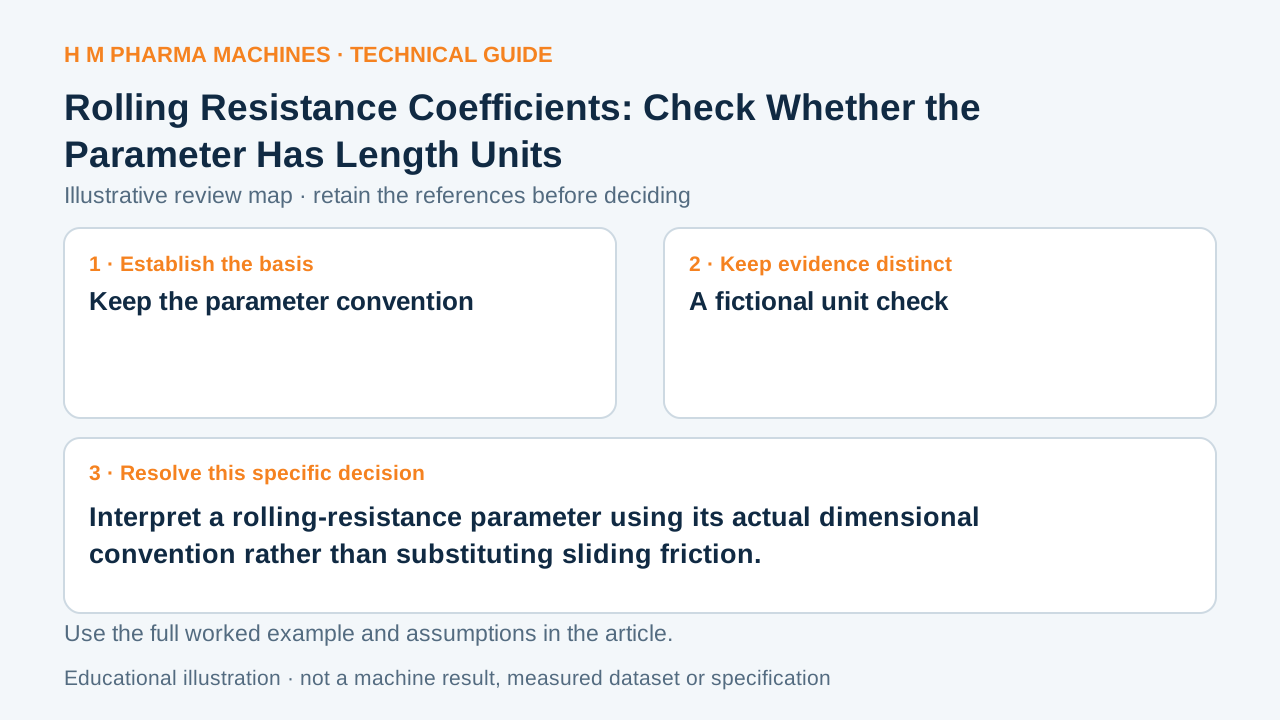
Check the units of a rolling-resistance parameter before using it in a wheel-force calculation.
Keep the parameter convention
Hamilton uses a rolling-resistance form F = fW/R in which f has the same length units as wheel radius R. This differs from a dimensionless F/W convention. Primary reference: rolling resistance parameter units.
The symbol alone does not identify the convention. Preserve the formula, units and contact conditions with a quoted value. Rolling resistance also differs from the sliding-friction coefficient used for a slipping contact.
A fictional unit check
Assume a hypothetical wheel load of 500 N, a radius of 50 mm and a length parameter f = 1 mm. The stated form gives 10 N. The corresponding dimensionless ratio F/W is 0.02. Substituting 1 as a dimensionless coefficient would instead imply 500 N and lose the radius relationship.
If radius becomes 100 mm while this fictional f and load remain unchanged, the form gives 5 N. Actual parameter behavior may depend on the wheel, floor, speed and load, so the one-input comparison is not a performance prediction. No vendor table value is reused here.
Separate travel-force inputs
Create columns for each wheel load, radius, parameter convention and assumed resistance. Retain swivel, start-up, slope and bearing contributions as separate questions where relevant. A straight-line rolling model does not automatically include them.
Ask for the intended wheel/floor evidence before comparing purchase offers or estimating travel effort. Keep the actual load distribution visible; total equipment weight divided equally by wheel count may be unjustified. This guide reviews units, without approving manual handling or a particular caster arrangement.
Customer Questions
Must f be dimensionless?
Its units depend on the stated convention.
Can mm and m be mixed in f/R?
Convert them to consistent length units.
Does this include every travel-force contribution?
Other contributions need their own assessment.
Primary References
These references support the technical principles discussed in this guide. The worked examples and review questions are educational.
Discuss Your Machine Requirement
Share your product, container, required output and the evidence needed for your technical review.
Request a Technical Review