
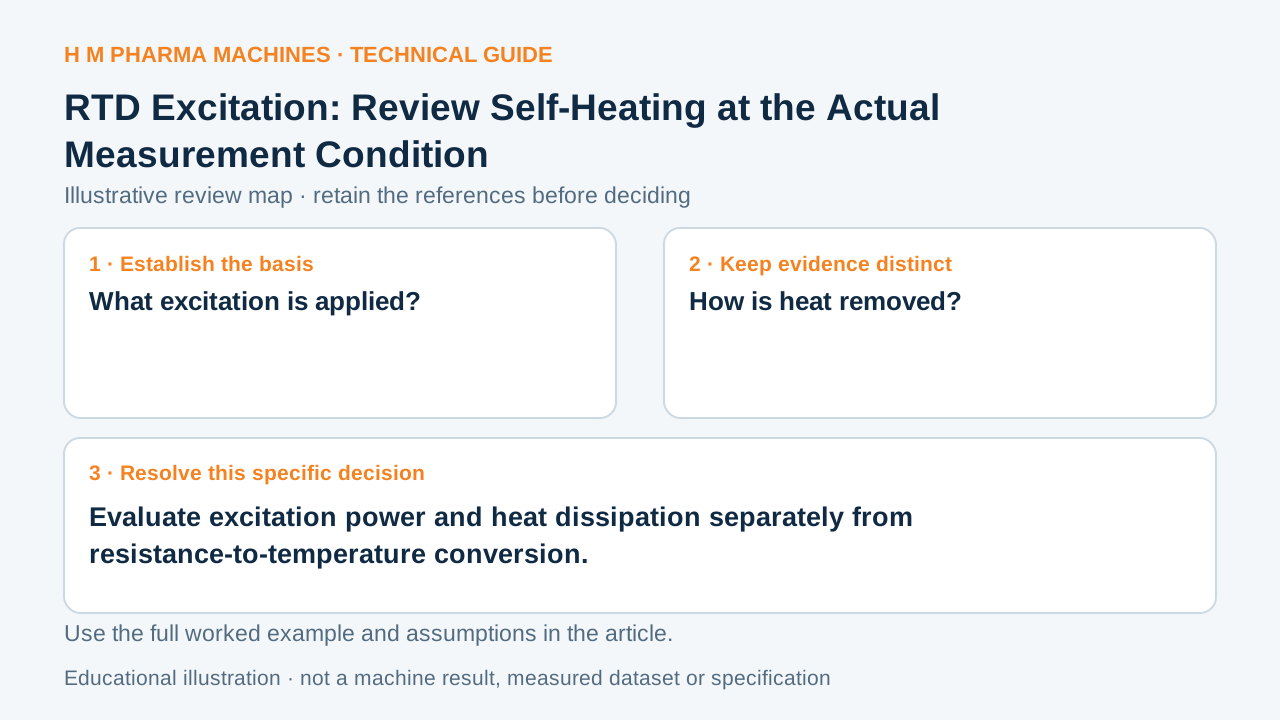
An RTD requires electrical excitation. The associated heat can affect the element temperature, so review excitation together with its surrounding medium.
Identify the thermal influence
Excitation dissipates electrical power in the RTD. The resulting temperature rise depends on heat dissipation as well as the current and resistance. A dissipation constant quoted for one medium or flow condition cannot automatically represent another installation.
Work through invented power values
At an illustrative resistance of 100 Ω, a continuous current of 1 mA produces I²R = 0.10 mW. At 2 mA it produces 0.40 mW: doubling current multiplies power by four. If an invented applicable dissipation constant were 2 mW/°C, those powers would correspond to 0.05 °C and 0.20 °C under that simplified steady model.
These numbers do not select an excitation setting. Pulsed excitation, sensor construction and changing heat transfer require the actual manufacturer’s treatment. Retain the power model and stated conditions so the arithmetic is not mistaken for a measured installation result.
Ask for comparable evidence
Compare the offered input’s excitation with the probe’s relevant self-heating information. Identify whether the information concerns air, liquid or a different condition, and whether it covers the intended duty. Include the contribution in the measurement review rather than treating a correct resistance curve as sufficient proof of thermal suitability.
Primary reference: Manufacturer technical reference.
Instrument evidence worksheet
This blank worksheet is for your own project. It contains no H M machine trial result.
| Review question | Evidence to retain |
|---|---|
| What excitation is applied? | Current, timing and input model |
| How is heat removed? | Applicable medium and dissipation statement |
| What calculation was used? | Power model, units and assumptions |
Customer Questions
Does twice the current mean twice the power?
At fixed resistance, power increases by four.
Can an air dissipation value represent every liquid installation?
No. Conditions must be applicable.
Are the example temperatures observed results?
No. They are calculations from invented inputs.
Primary References
These references support the technical principles discussed in this guide. The worked examples and review questions are educational.
Discuss Your Machine Requirement
Share your product, container, required output and the evidence needed for your technical review.
Request a Technical Review