
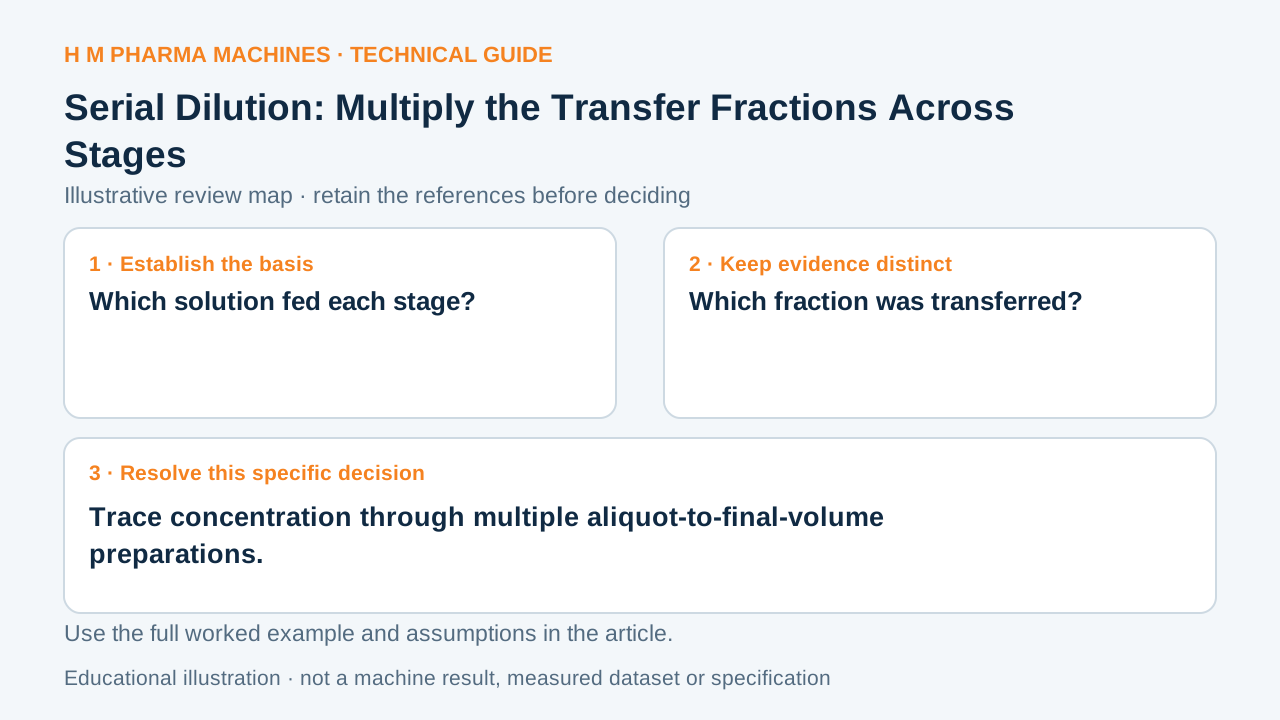
Several dilution steps form one transfer history. A final concentration should follow the fraction retained at every aliquot stage, using final solution volumes.
Retain each aliquot and final volume
For a nonreacting homogeneous solute, an aliquot carries the stock’s amount concentration multiplied by aliquot volume. Dilution to a known final volume changes concentration while conserving that transferred amount. Applying several stages requires the transfer fraction from each stage. Primary reference.
Trace a fictional two-stage preparation
Start an invented preparation at 2.00 mol/L. Transfer 5.00 mL and make that solution up to a final 50.0 mL: its concentration is 2.00 × 5.00/50.0 = 0.200 mol/L. Then transfer 2.00 mL of that solution and make up to final 100 mL, giving 0.00400 mol/L.
The combined retained concentration fraction is (5/50) × (2/100) = 0.002. The inverse overall dilution factor is 500 under this convention. Describing the second stage as a fifty-fold dilution should not erase the first stage’s ten-fold change.
Keep the original stock connected to the result
Prepare an original stage register with stock identity, aliquot source, transfer volume and final volume. Keep make-up-to-final-volume distinct from adding that many millilitres of diluent. A skipped stage or a wrong source bottle can produce a plausible final number with the wrong preparation history.
The arithmetic assumes the selected solute remains dissolved, homogeneous and unreacted. It is not a recommended sampling procedure, laboratory uncertainty evaluation or machine recipe. The review decision is whether the final concentration can be reconstructed from the complete stated sequence.
Solution review worksheet
This blank worksheet is for your own project. It contains no H M machine trial result.
| Question | Record to retain |
|---|---|
| Which solution fed each stage? | Stock or preceding stage identity |
| Which fraction was transferred? | Aliquot volume divided by final solution volume |
| Which factor convention is reported? | Retained fraction or its inverse |
Customer Questions
What is the fictional final concentration?
0.00400 mol/L.
What is the overall inverse dilution factor?
500 under the defined convention.
Is final volume the same as added diluent volume?
Not by definition. The preparation record must distinguish them.
Primary References
These references support the technical principles discussed in this guide. The worked examples and review questions are educational.
Discuss Your Machine Requirement
Share your product, container, required output and the evidence needed for your technical review.
Request a Technical Review