
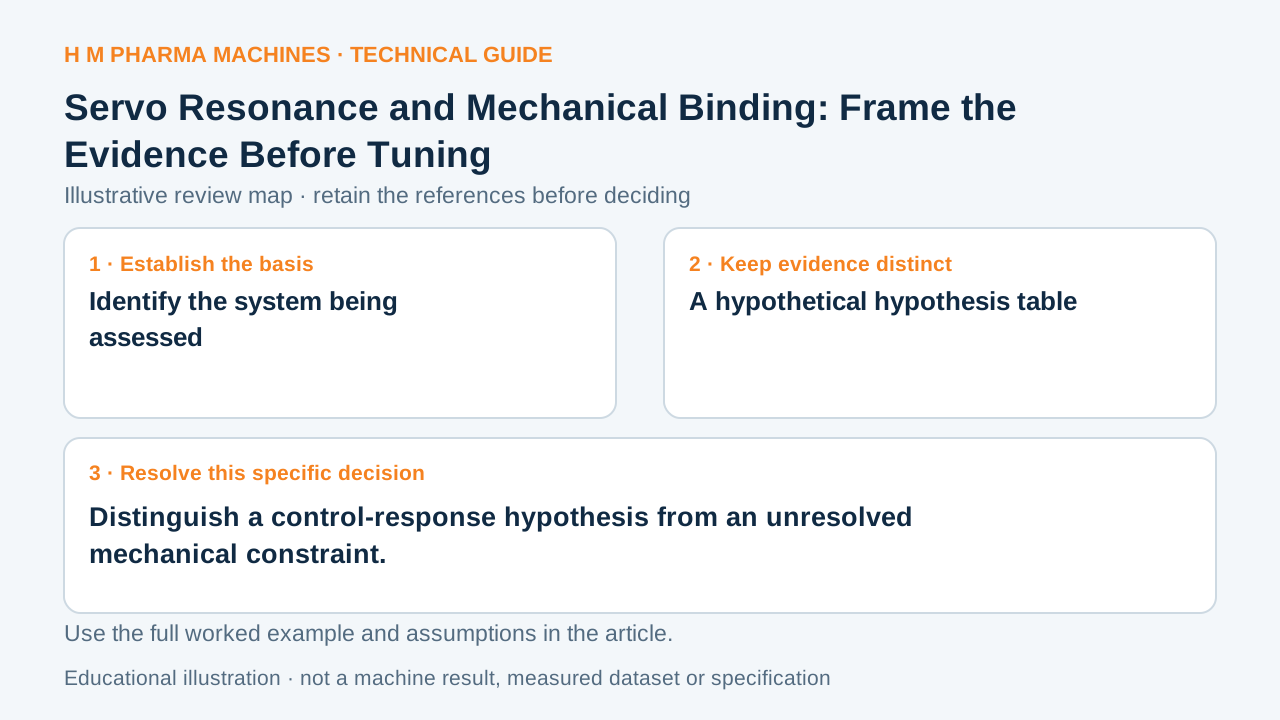
A control-response hypothesis and a mechanical constraint require distinguishable evidence.
Identify the system being assessed
Kollmorgen's tuning guidance starts with understanding the actual plant and its data. Mechanical properties belong in that system description. Primary reference: Kollmorgen plant understanding.
A positioning symptom can justify a control-response hypothesis without proving that a gain change is the remedy. Record the drive, motor, transmission and observed condition. Keep possible mechanical restriction or changed assembly condition visible rather than accepting a software explanation from the alarm wording alone.
A hypothetical hypothesis table
Imagine a fictional axis showing an unexpected response after a mechanical assembly change. One proposed explanation is a resonance issue; another is an unresolved constraint. Make separate rows for their required evidence. The timing of the change is useful context but does not prove either mechanism.
Record the configuration, symptom, specialist observation method and findings supporting each hypothesis. Do not change gains to manufacture a favorable demonstration from this educational table. It contains no HM response plot, resonance frequency, corrective setting or verified fault diagnosis.
Close the identified cause
Ask the responsible specialist how the actual mechanical and control evidence supports the proposed action. Keep the accepted correction and defined verification scope with the original configuration record.
If an intervention changes several conditions, preserve them rather than crediting every observed improvement to one setting. A system-specific review can distinguish a plant property, assembly concern and control response without assuming they are interchangeable. This guide provides a diagnostic evidence framework; it does not reproduce a tuning procedure, prescribe filter or gain values or imply that an audible symptom identifies a particular mechanical resonance by itself.
Customer Questions
Does a servo alarm prove a gain problem?
No. Preserve the actual system and evidence.
Can a mechanical change matter to response?
Yes. It belongs in the plant/configuration review.
Does this article provide tuning values?
No. It frames a system-specific evidence request.
Primary References
These references support the technical principles discussed in this guide. The worked examples and review questions are educational.
Discuss Your Machine Requirement
Share your product, container, required output and the evidence needed for your technical review.
Request a Technical Review