
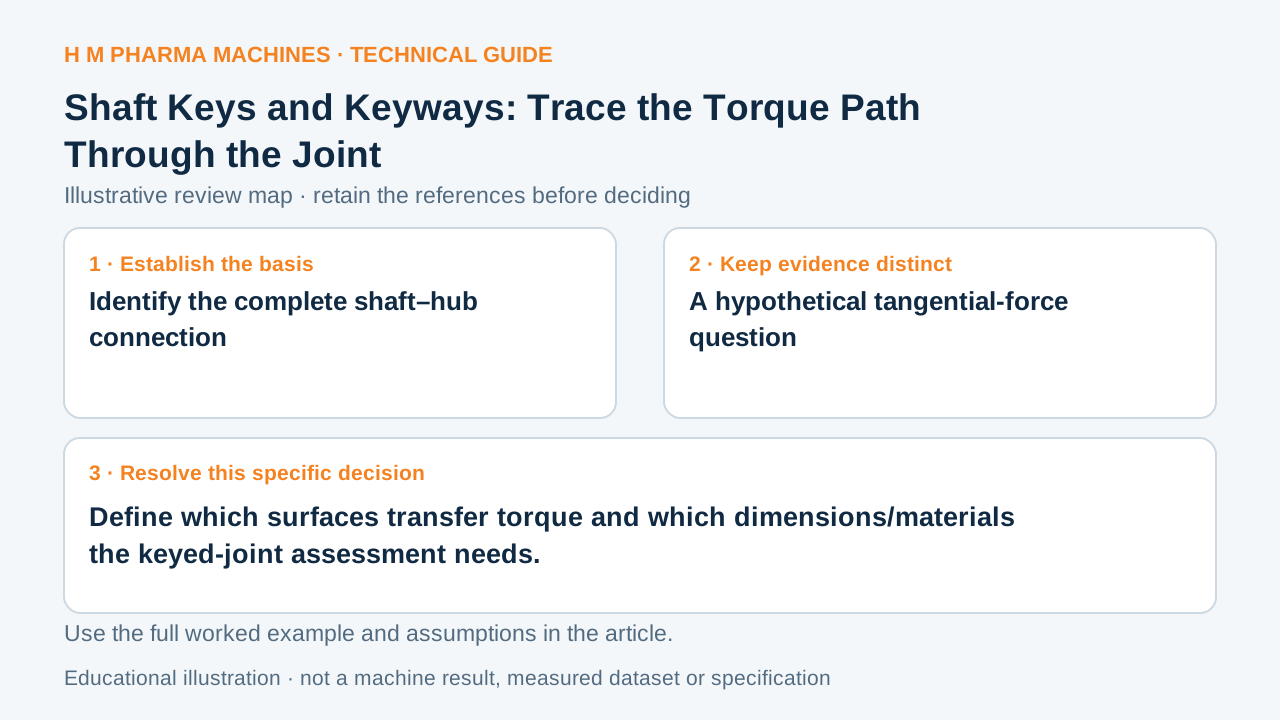
A key is part of a defined shaft–hub connection. Matching its nominal width does not complete the torque-path review.
Identify the complete shaft–hub connection
KTR's coupling instructions distinguish shaft–hub torque transmission from the coupling's own rating and reference shaft, bore, key and keyway geometry. Primary reference: KTR shaft–hub connection instructions.
For a keyed joint, identify which contact surfaces transfer torque. Retain shaft diameter, key and keyway dimensions, effective engagement and material references. A coupling torque rating does not automatically qualify an unidentified connection between that coupling and its shaft.
A hypothetical tangential-force question
Imagine a simplified fictional torque path carrying 10 N·m at an effective radius of 0.02 m. The corresponding tangential force is 10/0.02 = 500 N. This elementary relation identifies a force to consider; it does not calculate an approved key size, contact pressure or joint safety factor.
Put that model force beside the actual geometry and material questions in a worksheet. A short unidentified key and a properly defined engagement cannot be assumed equivalent from width alone. The example specifies no HM shaft, key or permissible torque.
Keep the joint assessment separate from component approval
Ask which reference establishes the selected joint's transmission capability and how it relates to the planned duty. Preserve any limitations for reversal, loading or engagement stated by the responsible designer. Do not transfer a nominal gear or coupling capacity to the shaft connection without its own assessment.
For replacement procurement, supply the complete drawing and identities rather than only a loose key measurement. The review should distinguish positive identification from engineering suitability. A correct replacement description is necessary, but the accepted torque-path basis must remain connected to the actual assembly and its operating case.
Customer Questions
Does a coupling's torque rating approve every shaft connection?
No. The identified shaft–hub connection needs its own basis.
Can key width alone establish torque capacity?
No. Engagement, geometry, materials and the application case also matter.
Does the example force size a key?
No. It is only a simplified force relation for an explicitly hypothetical torque path.
Primary References
These references support the technical principles discussed in this guide. The worked examples and review questions are educational.
Discuss Your Machine Requirement
Share your product, container, required output and the evidence needed for your technical review.
Request a Technical Review