
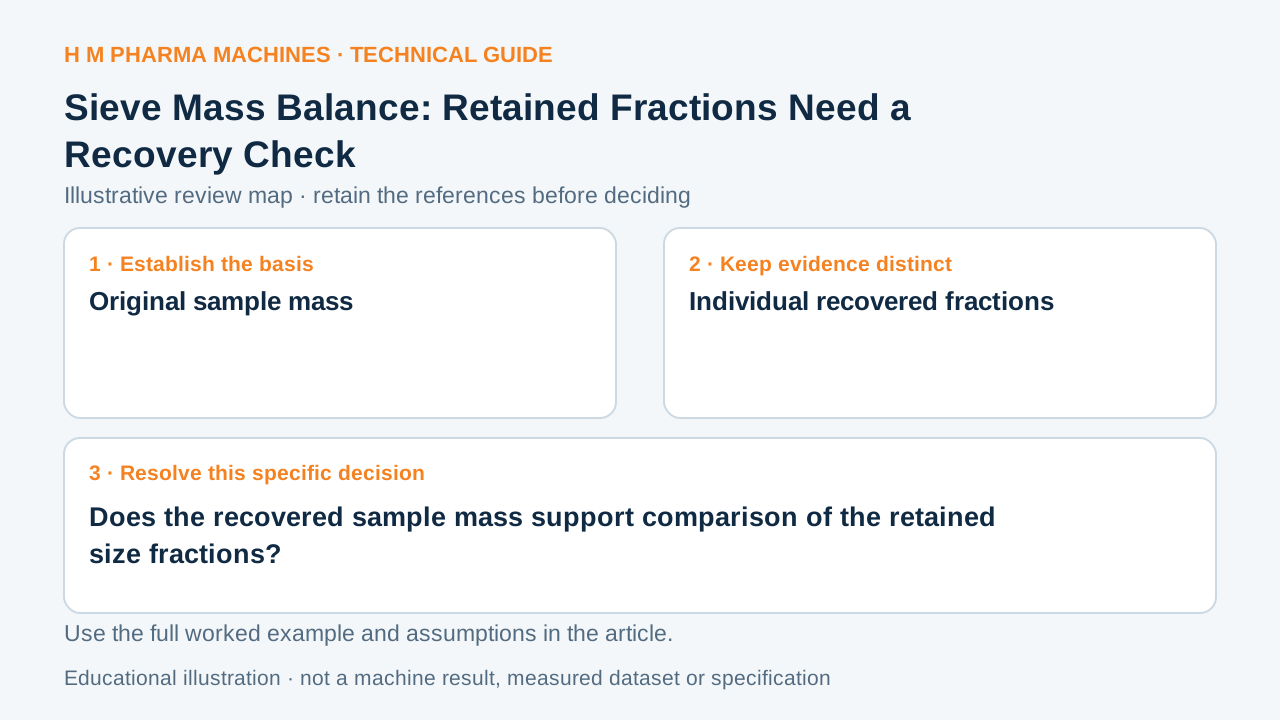
Check recovered mass before normalizing a sieve result so that unaccounted material remains visible beside the retained fractions.
Identify the Material Response
RETSCH describes weighing the original sample and sieve fractions so that material loss can be recognized. A distribution calculation should retain its denominator and recovery evidence. Primary reference: sample and retained-fraction mass.
Review a Hypothetical Comparison
Imagine 100 g enters a fictional sieve comparison, while the recorded fractions contain 10, 30 and 58 g. Recovery is 98 g, leaving 2 g unaccounted. The first fraction is 10 percent of the original mass but about 10.20 percent of the recovered mass. Normalizing the latter fractions to 100 percent does not demonstrate complete recovery.
Keep the Evidence with the Decision
Keep original mass, each tared fraction, pan fraction and recovered total on separate rows. Identify which denominator the reported percentages use. If recovery differs between tests, review the handling and measurement evidence before interpreting a changed fraction as a real change in the incoming material.
Define the applicable method and its actual recovery criterion with the responsible laboratory. The invented 2 percent shortfall is neither a recommended acceptance limit nor proof of a particular loss mechanism. A clear closure record prevents a mathematically normalized chart from hiding material that was never assigned to a size fraction.
Does the recovered sample mass support comparison of the retained size fractions?
This blank worksheet is for your own project. It contains no H M machine trial result.
| Review field | Reference or result | Responsible person |
|---|---|---|
| Original sample mass | To complete | To complete |
| Individual recovered fractions | To complete | To complete |
| Total recovery and unaccounted mass | To complete | To complete |
| Percentage denominator and method criterion | To complete | To complete |
Customer Questions
Can normalized fractions total 100 percent after loss?
Yes. Normalization does not establish recovery.
Which denominator gives the fictional 10.20 percent?
The 98 g recovered mass.
Is 2 percent a permitted recovery limit here?
No. Use the actual method criterion.
Primary References
These references support the technical principles discussed in this guide. The worked examples and review questions are educational.
Discuss Your Machine Requirement
Share your product, container, required output and the evidence needed for your technical review.
Request a Technical Review