
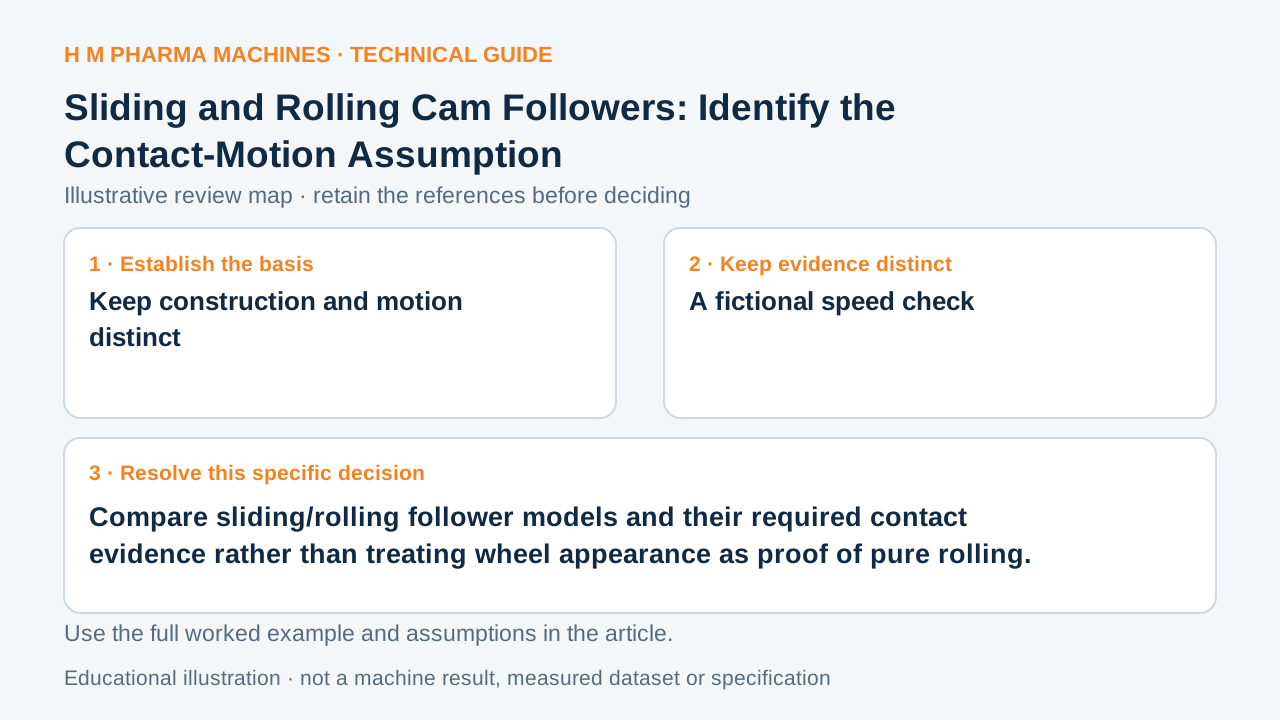
Identify the contact motion assumed by a sliding or rolling follower model.
Keep construction and motion distinct
IKO describes roller followers with rolling elements supporting outer-ring rotation against a mating track. The construction enables rotation; actual contact motion still belongs to the application. Primary reference: roller follower construction.
A rounded exterior alone does not demonstrate pure rolling. A sliding follower model and a rotating-ring model describe different relative motions. Preserve both the follower construction and the modeled contact condition before comparing friction or wear interpretations.
A fictional speed check
Imagine a hypothetical local track speed relative to the follower center is 0.2 m/s. A roller with effective contact radius 0.01 m would require angular speed 20 rad/s to match that tangential speed under the stated pure-rolling condition. If its ring were stationary, that matching condition would not hold.
This local comparison does not calculate an actual cam’s complete motion or establish slip from appearance. Real geometry, direction, center motion and contact evidence must be reconciled. The invented values supply no follower rating, lubrication specification or operating recommendation.
Prepare a contact-motion record
Ask which member rotates, where the relative velocity is evaluated and what evidence supports the assumed rolling condition. Keep the track direction and follower-center motion visible. An observed outer-ring speed needs the same reference frame as the calculated contact speed.
Request the selected mechanism’s actual contact and component assessment when comparing alternatives. No HM follower construction or wear performance is claimed. This guide helps distinguish a component capable of rotation from proof of the contact-motion assumption used by a particular engineering model.
Customer Questions
Does a circular surface prove pure rolling?
Actual relative contact motion must be established.
What does v/r assume here?
The stated local tangential matching condition.
Does this select a follower?
Component and application assessment remain separate.
Primary References
These references support the technical principles discussed in this guide. The worked examples and review questions are educational.
Discuss Your Machine Requirement
Share your product, container, required output and the evidence needed for your technical review.
Request a Technical Review