
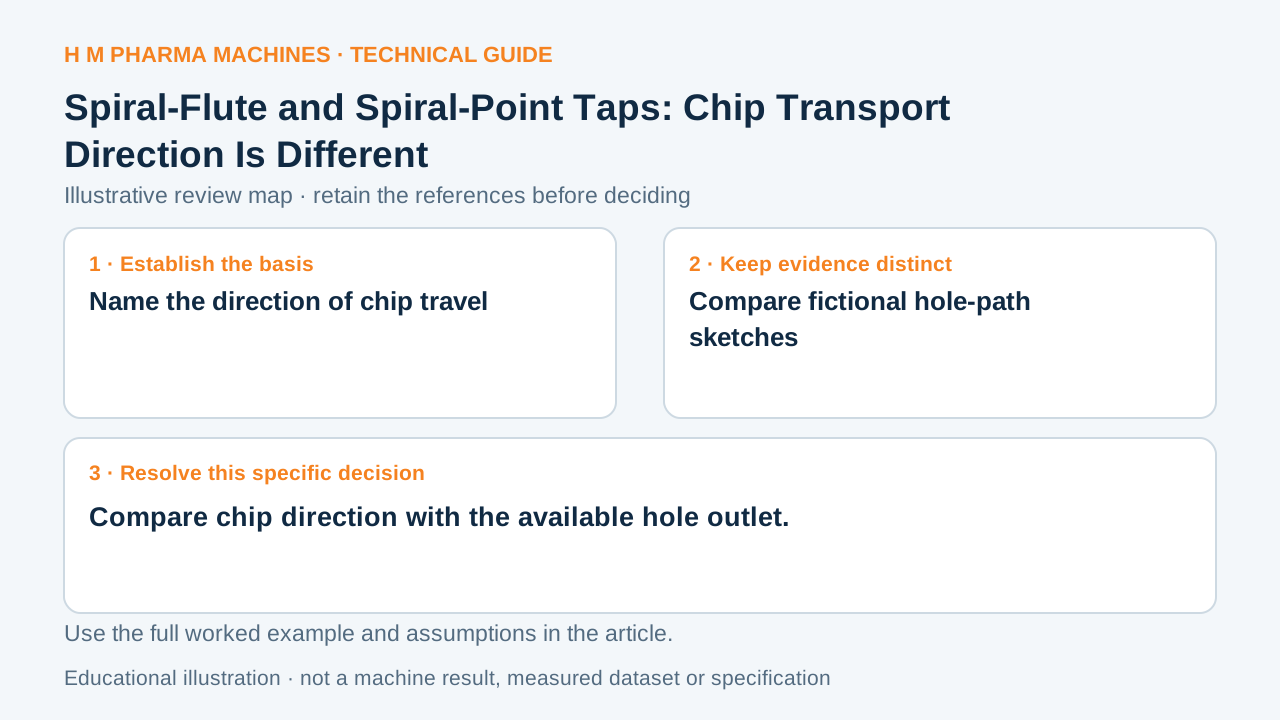
Connect tap geometry to the available chip exit.
Name the direction of chip travel
Gühring describes forward chip travel for spiral-point taps and backward travel along right-hand spiral flutes. Retain the tool and cutting-direction context. Primary reference: Gühring tapping guide.
Compare fictional hole-path sketches
Imagine hole A passes fully through the component, with an unobstructed outlet beyond the intended thread. Hole B ends within the component and has no such outlet.
A proposed forward chip path can be drawn through A, but it cannot simply continue outside B. A backward path along the flutes describes another route to examine. These sketches show accessibility only; they do not prove chips will move successfully, select a tap geometry or establish that either hole is correctly prepared for the actual material.
Connect the tap to the available route
Record cutting direction, flute geometry, hole type and exit obstruction on the same sketch. Preserve adjacent features that could close an otherwise visible outlet. Keep actual chip observations with a proposed evacuation claim.
The labels spiral and point should not replace a documented geometry. Tapping designs and materials differ, and a route that is geometrically available can still fail to carry actual chips. The useful outcome is a precise question about where chips are intended to go and which evidence supports that path, rather than assuming the longest flute or most familiar tap name solves every hole.
Customer Questions
Which hole has a forward outlet?
Hole A.
Does a path guarantee evacuation?
Observe actual chip movement.
Can every spiral tap be treated identically?
Retain flute and cutting-direction identity.
Primary References
These references support the technical principles discussed in this guide. The worked examples and review questions are educational.
Discuss Your Machine Requirement
Share your product, container, required output and the evidence needed for your technical review.
Request a Technical Review