
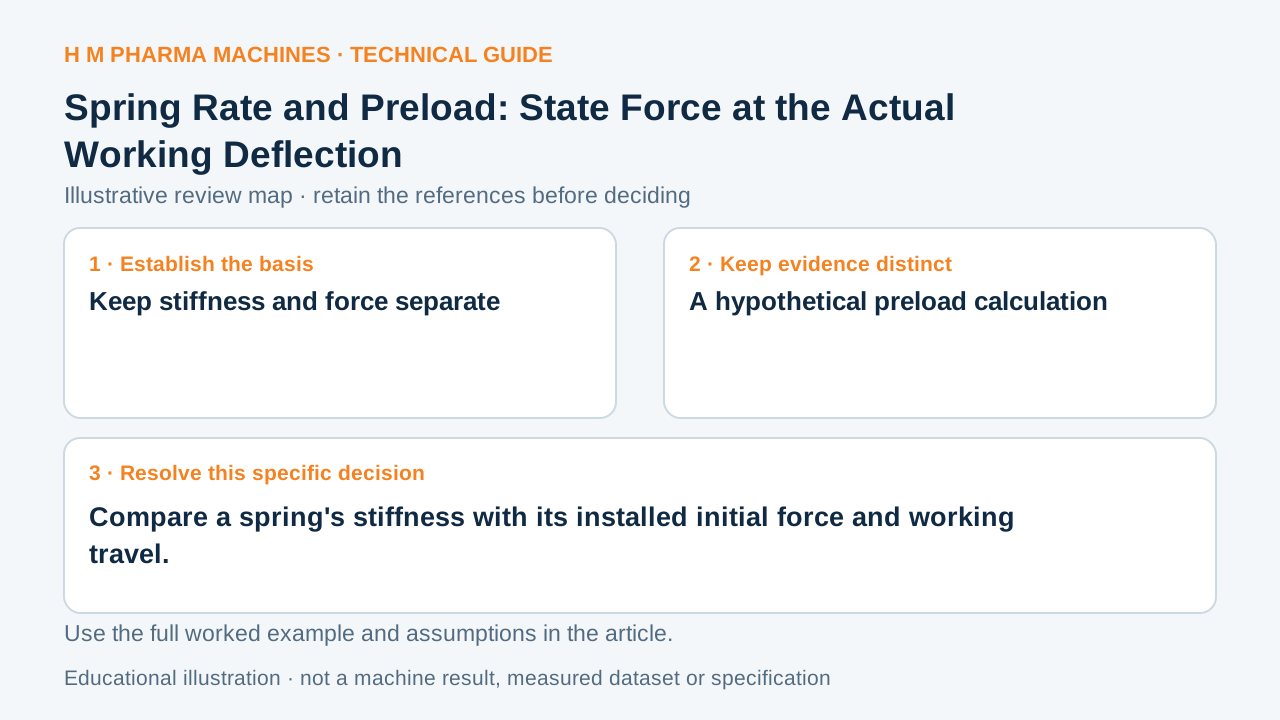
Spring rate describes force change per travel. The initial installed force determines where that relationship starts.
Keep stiffness and force separate
Lee Spring defines spring rate as change in force per change in length. A rate in N/mm is not itself a force in newtons. Primary reference: Lee Spring compression springs.
For an ideal linear compression-spring model, the force depends on the stated compression from its reference condition. An installed spring can already carry force before the additional working movement begins. Preserve that initial condition alongside the rate instead of recording only the operating travel.
A hypothetical preload calculation
Imagine a fictional linear spring with rate 2 N/mm and initial installed compression of 5 mm. Its modeled initial force is 10 N. An additional 3 mm compression adds 6 N, giving 16 N at that position. Calling the 3 mm travel the complete compression would instead produce 6 N and omit the modeled preload.
Record reference length, installed length, added movement, rate and resulting force separately. These invented values identify no HM spring, permitted travel or acceptance force. The calculation assumes the stated linear model over that range; the actual spring requires its own documented characteristics.
Compare the whole working range
Ask for force at the relevant start and end positions, not only at one convenient length. Check that the defined range belongs within the spring's appropriate operating basis, including its geometry and duty. A matching rate does not mean two springs have the same installed force.
Keep the accepted spring identity, position references and application requirements together for future replacements. If an assembly length changes, reassess the actual compression and force rather than assuming an unchanged spring part number preserves the original behavior. The worksheet makes a load requirement explicit without selecting a universal preload.
Customer Questions
Is N/mm a force?
No. It is a force-change-per-length quantity.
Can two springs with equal rate have different installed forces?
Yes. Their initial compression or other defined force basis can differ.
Does the linear example establish permitted travel?
No. The actual spring's operating range requires its own assessment.
Primary References
These references support the technical principles discussed in this guide. The worked examples and review questions are educational.
Discuss Your Machine Requirement
Share your product, container, required output and the evidence needed for your technical review.
Request a Technical Review