
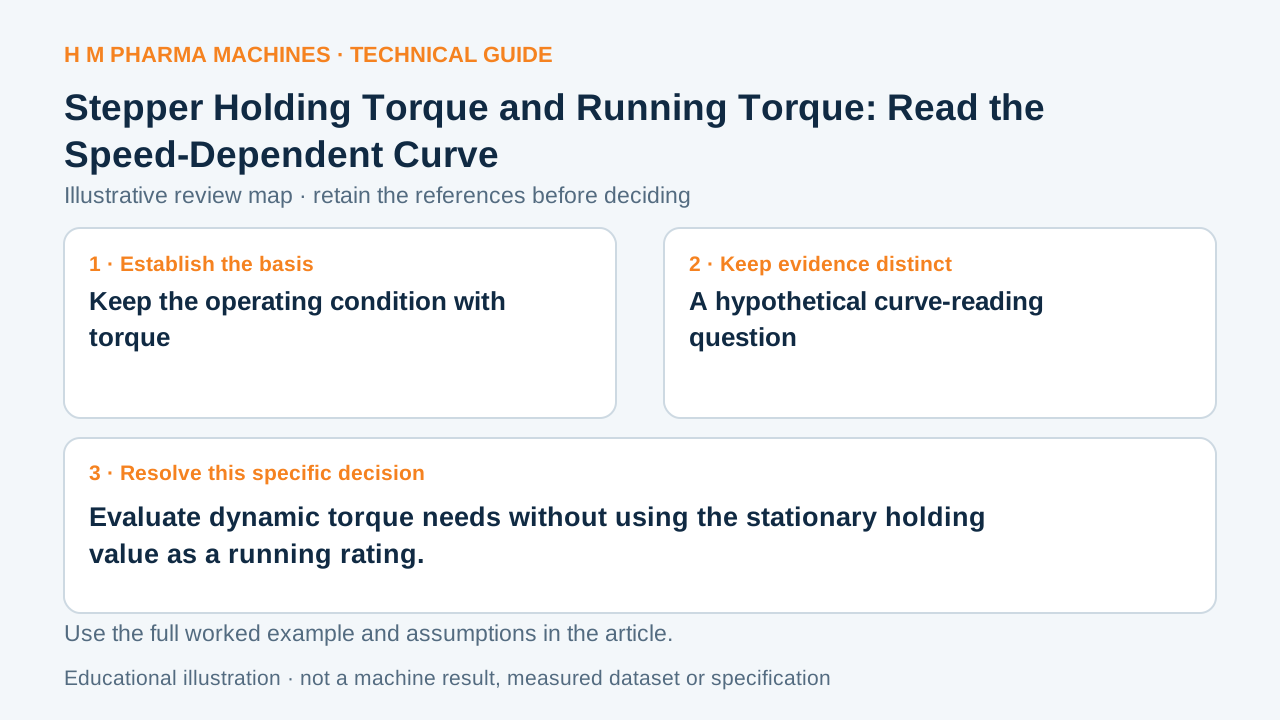
Holding torque describes a stated stationary condition, not every running speed.
Keep the operating condition with torque
Oriental Motor defines holding torque for a powered motor at rest and separately presents speed–torque characteristics. Preserve those different conditions. Primary reference: Oriental Motor stepper specifications.
Identify the actual motor, driver and relevant operating basis for any running curve. A stationary torque value does not supply the complete torque available during motion. The required acceleration and load conditions should remain visible beside the running-speed requirement.
A hypothetical curve-reading question
Imagine a fictional offer highlighting 2 N·m holding torque while the application requires a defined torque at 800 rpm. The offer gives no applicable curve at that operating point. Enter the stationary value in its proper field and ask for running evidence; do not assume the same 2 N·m is available at 800 rpm.
Make columns for holding condition, running speed, required torque, applicable curve and driver identity. The numbers are invented labels, not an HM drive rating or a reproduced manufacturer curve. They establish no acceptable operating point or selected motor.
Compare the actual motion demand
Ask how the documented running and acceleration demands relate to the complete motor/driver operating envelope. The fact that the motor can hold a load at rest does not answer how the proposed system reaches and maintains its commanded movement.
When a driver, supply condition or speed schedule changes, keep that difference in the application review. This guide helps reconcile a catalog holding figure with a real motion question without prescribing a universal stepper speed, inventing a pull-out curve or claiming that one stationary rating proves the proposed dynamic duty will be achieved.
Customer Questions
Is holding torque a universal running torque?
No. Use the relevant speed–torque and operating-condition evidence.
Why identify the driver?
The documented motor/driver basis belongs with the curve.
Does the 2 N·m example select a motor?
No. It identifies a missing running-condition comparison.
Primary References
These references support the technical principles discussed in this guide. The worked examples and review questions are educational.
Discuss Your Machine Requirement
Share your product, container, required output and the evidence needed for your technical review.
Request a Technical Review