
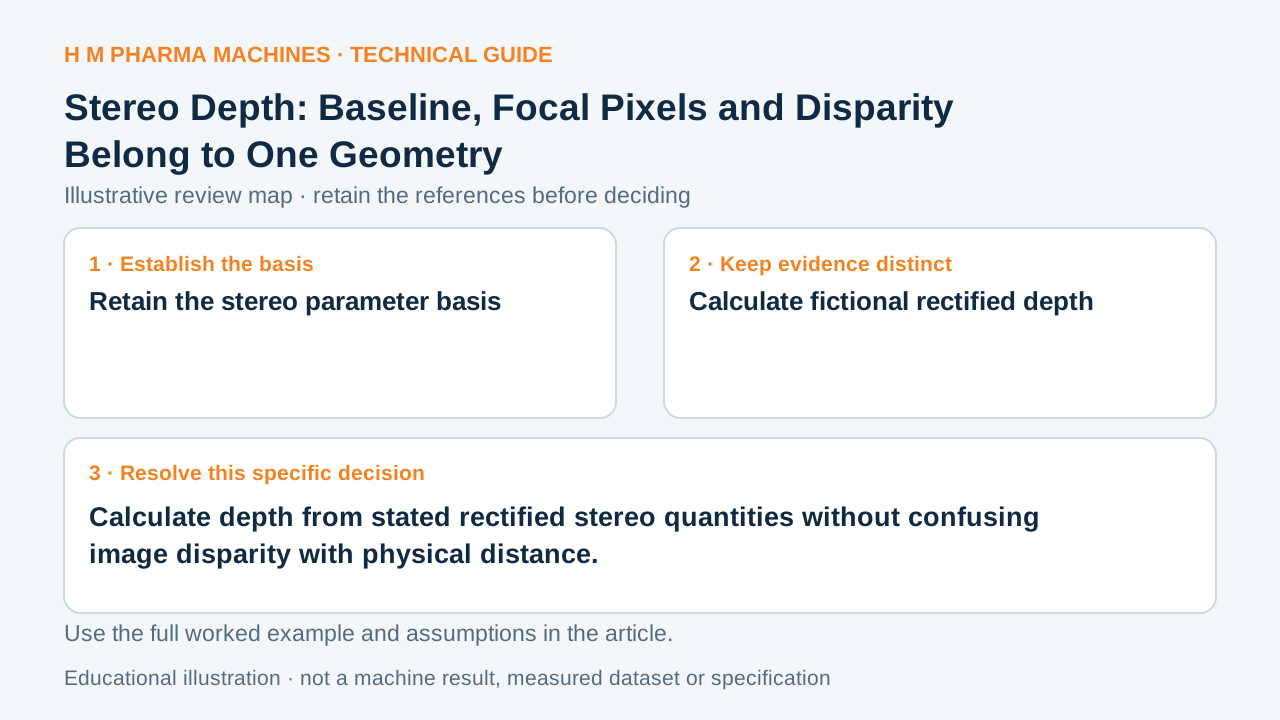
Disparity is an image-coordinate difference. Turning it into depth needs the matching stereo parameters and units.
Retain the stereo parameter basis
Rectified stereo reprojection uses image disparity together with the matching camera geometry. The focal quantity belongs to the image coordinate system, while baseline supplies a length scale. Valid correspondences and the reprojection convention are required before a disparity value can be interpreted as a physical depth. Primary reference: MathWorks rectified disparity reprojection geometry.
For an original worksheet, retain the rectified frame identity, disparity units and calibration parameters. Keep invalid correspondence values separate from valid small disparities. Do not interpret a value simply labeled distance as a physical depth without knowing which coordinate system produced it.
Calculate fictional rectified depth
In a defined ideal rectified model, let focal length be 800 pixel units, baseline 100 mm and disparity 40 pixel units. Z = fB/d gives 2,000 mm. For disparity 20 under the same geometry, the calculated depth is 4,000 mm. The inverse dependence follows the stated formula.
Pixel units cancel between focal value and disparity, leaving the baseline's length unit. These invented numbers assume valid matched points and the stated sign convention. They do not quantify stereo uncertainty, guarantee a correspondence or provide a usable camera operating range.
Keep the matching geometry attached
Prepare an original calculation table with focal pixels, baseline, disparity and resulting depth. If rectification or image scale changes, review the corresponding parameters rather than reusing a disparity conversion blindly. Preserve the selected correspondence and any invalid-support information beside the numerical output.
The guide claims no HM stereo capability or depth accuracy. Its reader decision is whether a derived depth comes from one coherent rectified geometry with explicit units. Physical comparison and acceptance need their own evaluated imaging conditions beyond this ideal relationship.
Customer Questions
What is the fictional depth at disparity forty?
Two thousand millimeters.
What happens when disparity becomes twenty here?
Depth becomes four thousand millimeters.
Does valid depth follow from any numeric disparity?
No. Correspondence validity and geometry must be retained.
Primary References
These references support the technical principles discussed in this guide. The worked examples and review questions are educational.
Discuss Your Machine Requirement
Share your product, container, required output and the evidence needed for your technical review.
Request a Technical Review