
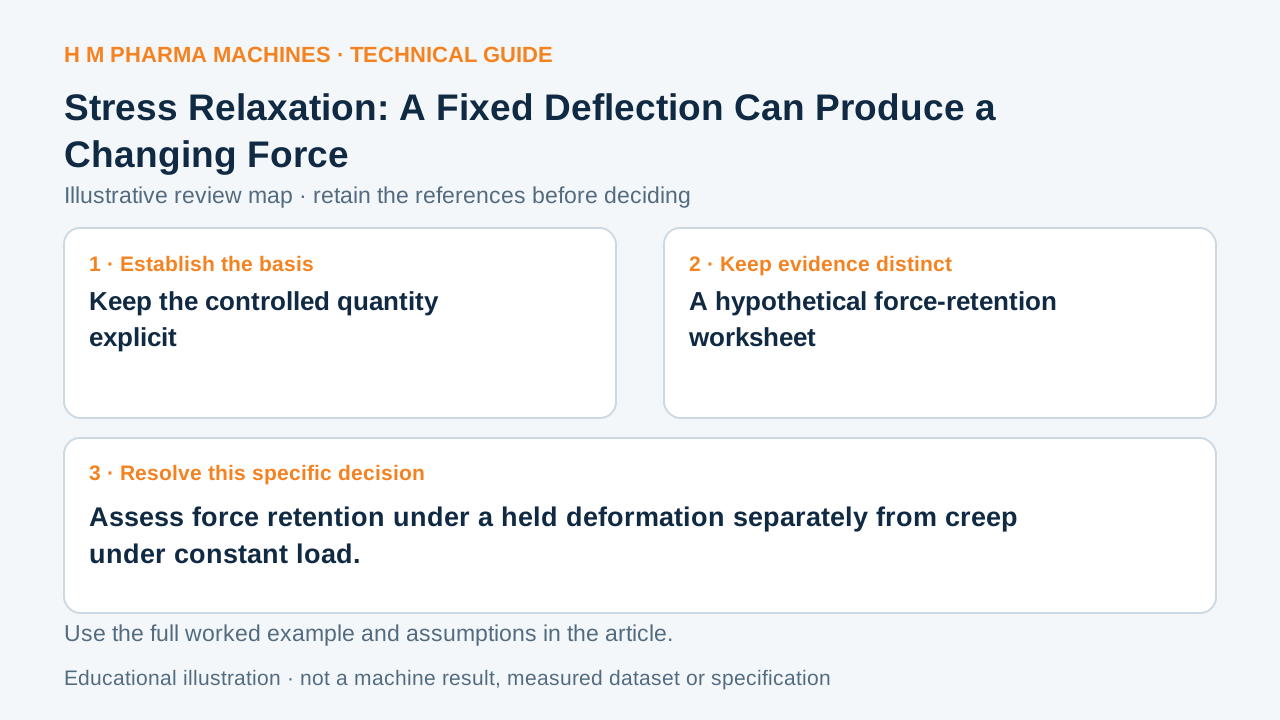
A part can remain at the same deflection while the force it develops changes.
Keep the controlled quantity explicit
Instron's stress-relaxation glossary describes a time-dependent reduction in stress under held deformation. The controlled condition differs from a sustained-load creep question. Primary reference: Instron stress relaxation.
For an assembly review, identify the constrained position and the force function it must maintain. A dimension that stays fixed does not prove that contact force stays fixed. Preserve time, temperature and actual material condition with the applicable evidence.
A hypothetical force-retention worksheet
Assume a fictional polymer element held at the same stated compression. Its recorded force is 20 N initially and 14 N at a later defined time. The reduction is 6 N, or 30% of the initial value, under those invented conditions. The result describes the teaching record; it establishes no acceptable retention criterion or HM material behavior.
Make rows for held displacement, initial force, elapsed time, later force and exposure. If the displacement was not actually maintained, do not label the data a controlled fixed-deformation comparison without checking the method. Keep observations distinct from inferred material mechanism.
Request the function that must persist
Ask which retained force the application needs over the relevant time and condition range. A short-term elastic calculation can define an initial state without answering that longer-duration function.
For an alternative material or geometry, compare the relevant force-retention basis rather than merely the initial stiffness. Retain the accepted limits and actual test context with the design record. This article distinguishes a held-position force question from a held-force movement question; it does not provide a universal preload, guarantee permanent contact force or convert a single invented observation into a material lifetime prediction.
Customer Questions
Can force change while position is held?
Yes. Stress relaxation concerns that time-dependent condition.
Is that the same controlled condition as creep?
No. Creep holds the loading basis while observing deformation.
Does a 30% teaching reduction define rejection?
No. Acceptance needs the actual application requirement.
Primary References
These references support the technical principles discussed in this guide. The worked examples and review questions are educational.
Discuss Your Machine Requirement
Share your product, container, required output and the evidence needed for your technical review.
Request a Technical Review