
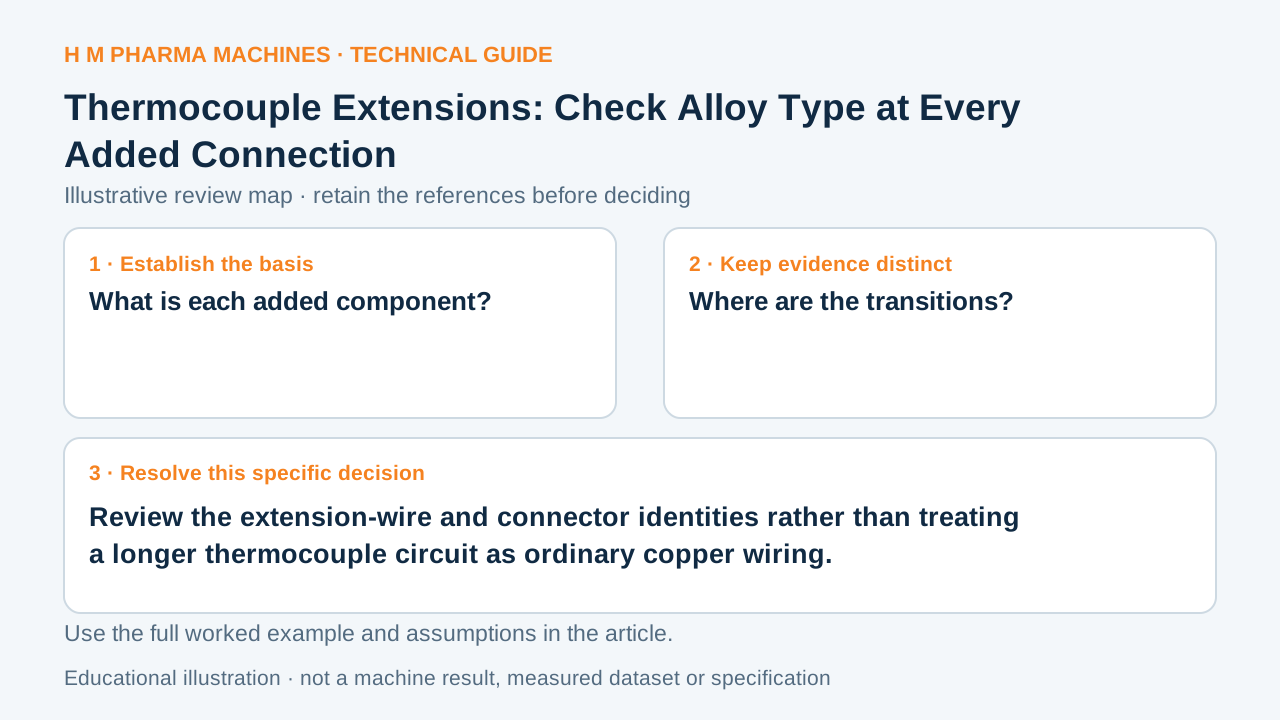
A thermocouple extension changes the electrical path. Document the wire and connector types before accepting a drawing that simply labels the cable “temperature”.
Identify each transition
The USB-TC01 guide calls for connector and extension-wire materials appropriate to the thermocouple type. Added dissimilar-material transitions can affect the measurement, particularly where their temperatures differ. A cable’s colour or connector shape is not a complete type identification.
Build a hypothetical connection register
Consider a probe, an extension cable, an intermediate connector and the acquisition terminal. Give each item its own row: supplier part, declared thermocouple or extension type, polarity identification and temperature-rating evidence. Mark where one item joins the next.
If an extension is replaced during a trial, retain both part identities and the resulting circuit version. A comparison made before replacement may no longer describe the installed path. Do not silently relabel an unidentified lead to make the drawing appear consistent.
Resolve compatibility before extending the circuit
Ask the input and probe suppliers to confirm the proposed extension assembly, its permitted conditions and the approved connection method. Include transitions in the measurement review. This guide addresses identity and compatibility evidence; it supplies no universal wire-colour rule, cable-length allowance or field rewiring procedure.
Primary reference: Manufacturer technical reference.
Instrument evidence worksheet
This blank worksheet is for your own project. It contains no H M machine trial result.
| Review question | Evidence to retain |
|---|---|
| What is each added component? | Part identity and declared type |
| Where are the transitions? | Versioned connection register |
| What compatibility is documented? | Applicable manufacturer confirmation |
Customer Questions
Is connector shape a reliable type specification?
No. Obtain its declared material/type identity.
Should a replaced extension be recorded?
Yes. It changes the documented circuit.
Is ordinary copper automatically an acceptable extension?
Do not assume that. Review the compatible circuit and reference arrangement.
Primary References
These references support the technical principles discussed in this guide. The worked examples and review questions are educational.
Discuss Your Machine Requirement
Share your product, container, required output and the evidence needed for your technical review.
Request a Technical Review