
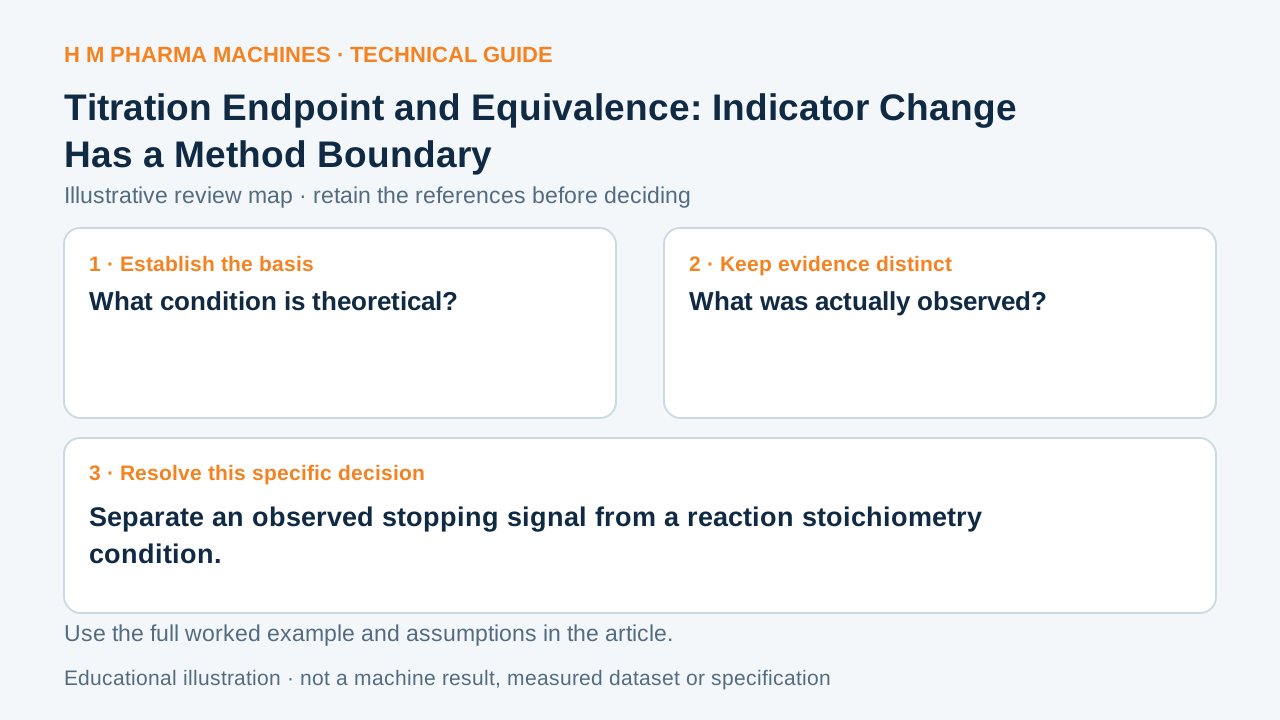
An observed titration stopping signal and the stoichiometric equivalence condition answer different questions. Their difference belongs to the specific analytical method.
Identify what establishes equivalence
Equivalence is the condition where titrant and analyte have reacted in their specified stoichiometric amounts. An endpoint is an observed signal used to stop or interpret a titration. A color change or instrumental threshold needs an established relationship to the equivalence condition. Primary reference.
Compare a constructed stopping signal
Use a fictional 1:1 acid/base model with 25.0 mL of 0.100 mol/L acid, containing 2.50 mmol. A 0.100 mol/L base reaches the modeled equivalence at 25.0 mL. Suppose an invented observed endpoint occurs at 25.2 mL.
The excess titrant is 0.200 mL × 0.100 mol/L = 0.0200 mmol, or 0.800% of the modeled analyte amount. These numbers describe the constructed endpoint offset; they do not define an acceptable analytical error, a real indicator or a production stopping criterion.
Preserve the actual method observation
Prepare an original record retaining analyte amount basis, titrant concentration, observed signal and the interpretation procedure. Separate a delivered-volume correction from endpoint interpretation. A numerical difference cannot identify whether its cause was indicator selection, response delay, dosing or another method condition.
This guide supplies no laboratory operating instructions or chemical acceptance limits. Its decision is whether the reported titration result makes the relationship between its signal and stoichiometric condition visible. Preserve the method evidence before translating that distinction into a claimed concentration or neutralization demand.
Solution review worksheet
This blank worksheet is for your own project. It contains no H M machine trial result.
| Question | Record to retain |
|---|---|
| What condition is theoretical? | Reaction-based equivalence |
| What was actually observed? | Endpoint signal and titrant volume |
| How does the method connect them? | Documented interpretation and applicable corrections |
Customer Questions
What is the fictional equivalence volume?
25.0 mL.
What excess amount follows from the 25.2 mL signal?
0.0200 mmol in the stated model.
Does the 0.800% difference define an acceptance limit?
No.
Primary References
These references support the technical principles discussed in this guide. The worked examples and review questions are educational.
Discuss Your Machine Requirement
Share your product, container, required output and the evidence needed for your technical review.
Request a Technical Review