
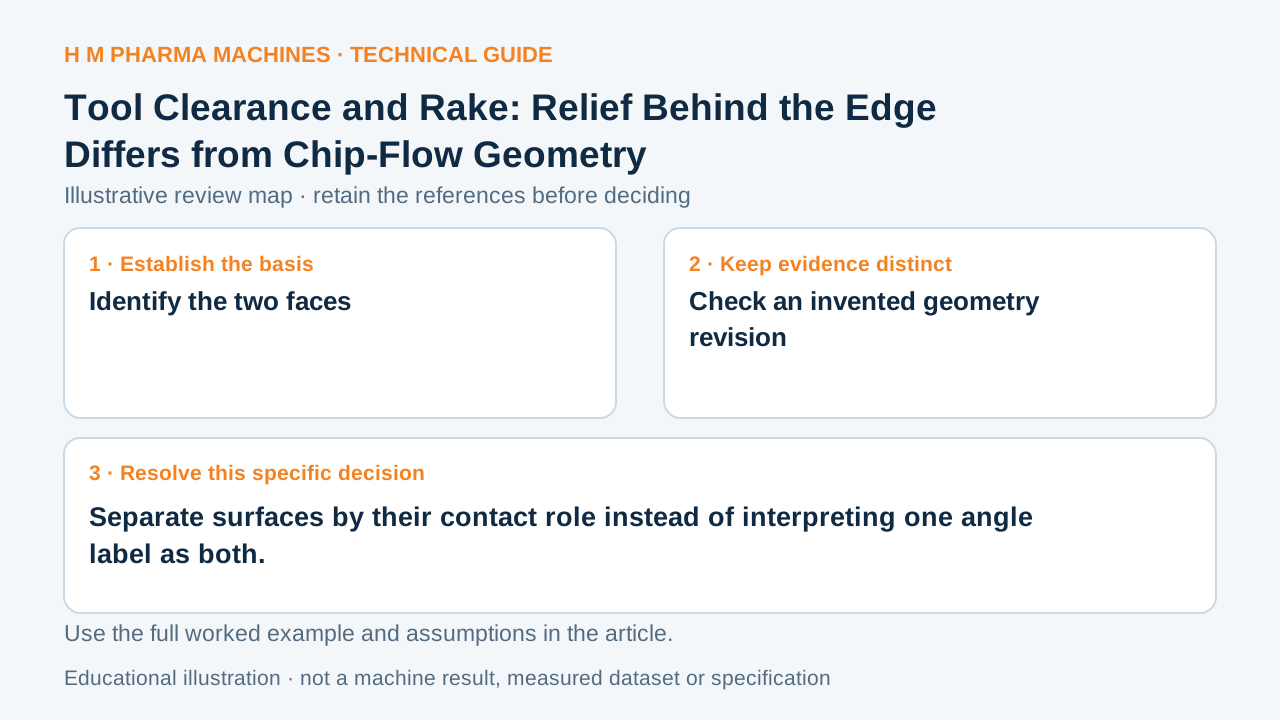
Clearance and rake concern different faces and can change independently.
Identify the two faces
NPTEL defines rake on the chip-flow face and clearance between the flank and generated work surface. Retain the designated reference plane. Primary reference: NPTEL machining lesson.
Check an invented geometry revision
Imagine a fictional orthogonal section initially assigned rake 10°, clearance 6° and wedge 74°. A revised section keeps rake at 10° but changes clearance to 9°, so the simple section relation gives wedge 71°.
The chip-flow-face rake did not change merely because clearance increased. Calling the revision a three-degree rake increase would describe the wrong face. The example assumes an ideal geometric section and says nothing about elastic deflection, actual rubbing marks or tool strength after grinding.
Connect observations to the correct surface
Mark rake face, flank, edge and newly generated work surface on the section sketch. Record whether an observed contact or wear mark lies behind the edge or on the chip-flow face.
Keep tool mounting and working geometry with the sketch. Actual rubbing can involve deflection or setup errors beyond the nominal clearance angle, so a catalog angle alone cannot diagnose it. The practical outcome is a precise question about which face and reference relationship changed, instead of an ambiguous request for a more open tool that could alter rake, clearance or both.
Customer Questions
Which invented angle remained unchanged?
The ten-degree rake.
Where is clearance identified?
Between the flank and generated surface in the stated section.
Does a nominal clearance prove no rubbing?
Working geometry and actual contact still need evidence.
Primary References
These references support the technical principles discussed in this guide. The worked examples and review questions are educational.
Discuss Your Machine Requirement
Share your product, container, required output and the evidence needed for your technical review.
Request a Technical Review