
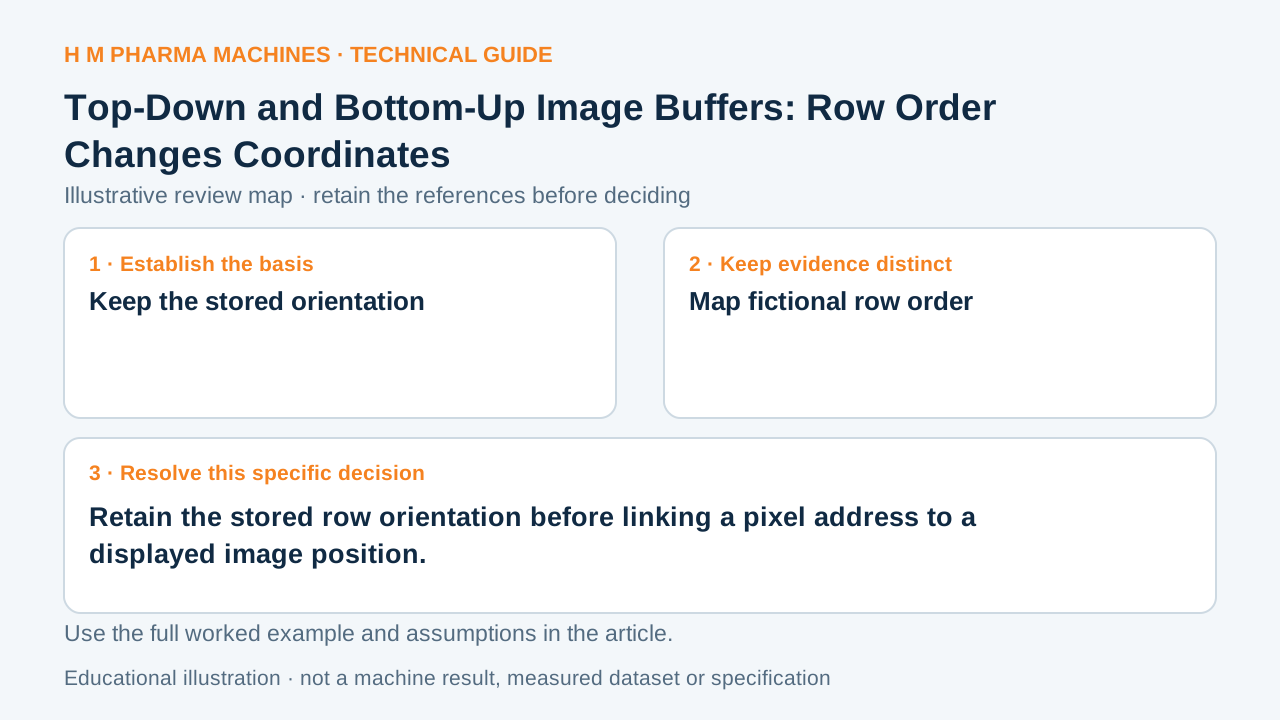
The first stored row can represent the bottom of an image. Buffer order and displayed top-to-bottom order need separate definitions.
Keep the stored orientation
A top-down image buffer starts with the top displayed row, while a bottom-up buffer starts with the bottom displayed row. The row orientation therefore belongs to the buffer's coordinate interpretation. A first-row address cannot automatically be called the displayed top without that layout definition. Primary reference: Microsoft top-down and bottom-up image buffers.
For an original worksheet, label both storage-row index and displayed-row index. Retain the actual format's orientation indication instead of guessing from a familiar screenshot. This guide distinguishes the layout principle; it does not prescribe one height-sign convention for every possible image format.
Map fictional row order
Imagine a displayed two-by-two image whose top row is [10,20] and bottom row is [30,40]. A compact top-down buffer stores [10,20,30,40]. A compact bottom-up buffer stores [30,40,10,20]. Both can represent the same displayed image under their stated orientation rules.
In the bottom-up record, displayed coordinate (x = 1,y = 0) is the value 20 at byte offset 3, not value 40 at offset 1. The invented one-byte format contains no padding. Its row mapping does not indicate that the physical scene was flipped between acquisitions.
Keep both coordinate meanings
Prepare an original orientation diagram with the first memory address and display origin marked. Check which reference later region coordinates use. If software converts row order, retain that conversion so a coordinate from the pre-conversion buffer is not compared directly with a displayed location.
This guide gives no HM camera storage orientation. Its reader decision is whether a pixel address has been connected to the correct displayed row. Keep orientation separate from row stride and from metadata-driven viewing rotations; each affects a different part of the representation record.
Customer Questions
Which row starts the fictional bottom-up buffer?
The displayed bottom row.
Which value is at displayed (1,0)?
Twenty under the stated mapping.
Does reversed storage imply a reversed scene?
No. The representation rule can differ.
Primary References
These references support the technical principles discussed in this guide. The worked examples and review questions are educational.
Discuss Your Machine Requirement
Share your product, container, required output and the evidence needed for your technical review.
Request a Technical Review