
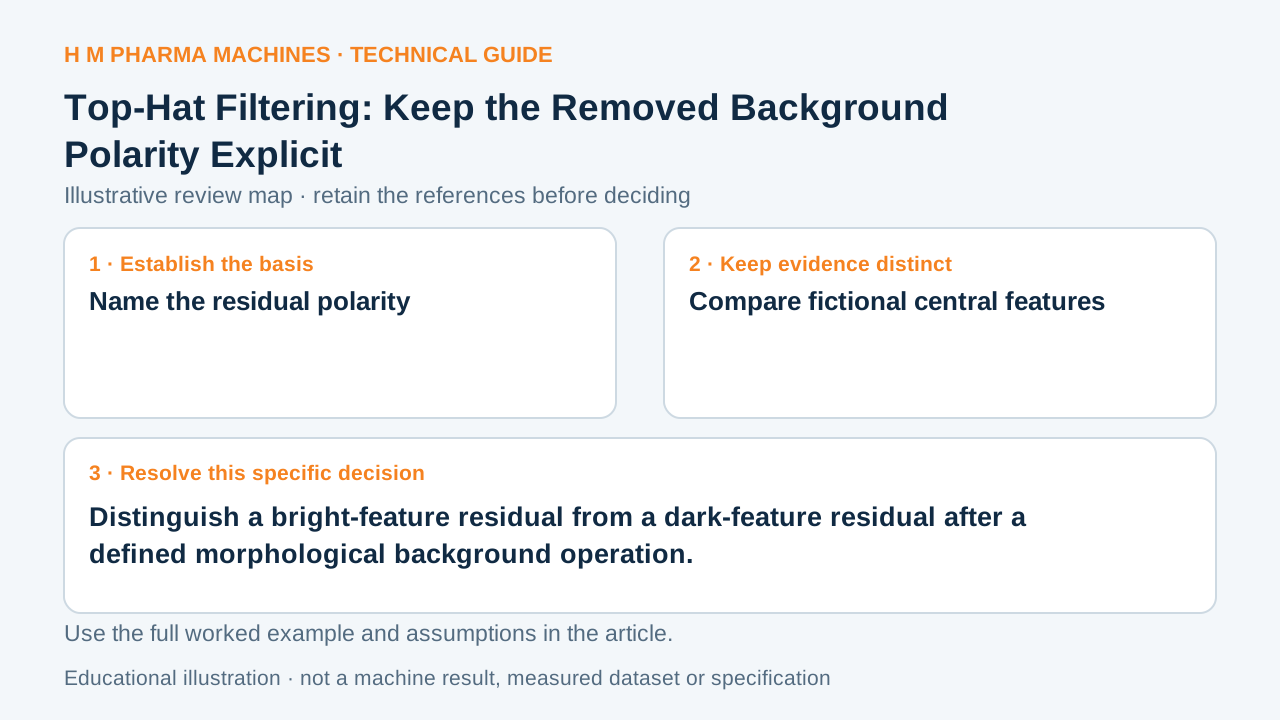
The subtraction direction controls residual polarity. Bright-feature and dark-feature outputs should retain their separate definitions.
Name the residual polarity
A top-hat residual subtracts a morphological opening from the input. A bottom-hat residual subtracts the input from its morphological closing. These definitions use different background operations and subtraction directions, so an output magnitude needs its operation name and structuring element beside it. Primary reference: MathWorks top-hat residual.
For an original processing sheet, record the input intensity scale, element and selected residual. Keep bright and dark results in separate fields. Do not interpret the word background as proof that the removed values came from illumination alone rather than from a feature affected by the operation.
Compare fictional central features
For a horizontal three-position element, consider the interior center of [10,10,30,10,10]. Its opened center is 10, making the bright residual 30 − 10 = 20. Now consider [30,30,10,30,30]; its closed center is 30, giving a dark residual 30 − 10 = 20.
The equal residual magnitudes came from opposite feature polarities and different operations. Only interior center values are used in this invented exercise, so no outside-image padding default is assumed. The numbers are image values, not physical brightness or defect severity measurements.
Retain the removed reference
Prepare an original comparison with the input, opening or closing reference, and signed subtraction definition. Preserve both reference values instead of keeping only a colorful residual display. Check whether the feature question concerns a bright departure or a dark departure before choosing which result is relevant.
This guide recommends no neighborhood scale and claims no actual classification performance. The two teaching arrays demonstrate why an equally large residual can have a different meaning. Their reader decision is whether polarity and the removed morphological reference remain visible in the result record.
Customer Questions
What does the bright residual subtract?
The opened reference from the input.
What does the dark residual subtract?
The input from the closed reference.
Do equal residual magnitudes imply equal polarity?
No. The subtraction definitions differ.
Primary References
These references support the technical principles discussed in this guide. The worked examples and review questions are educational.
Discuss Your Machine Requirement
Share your product, container, required output and the evidence needed for your technical review.
Request a Technical Review