
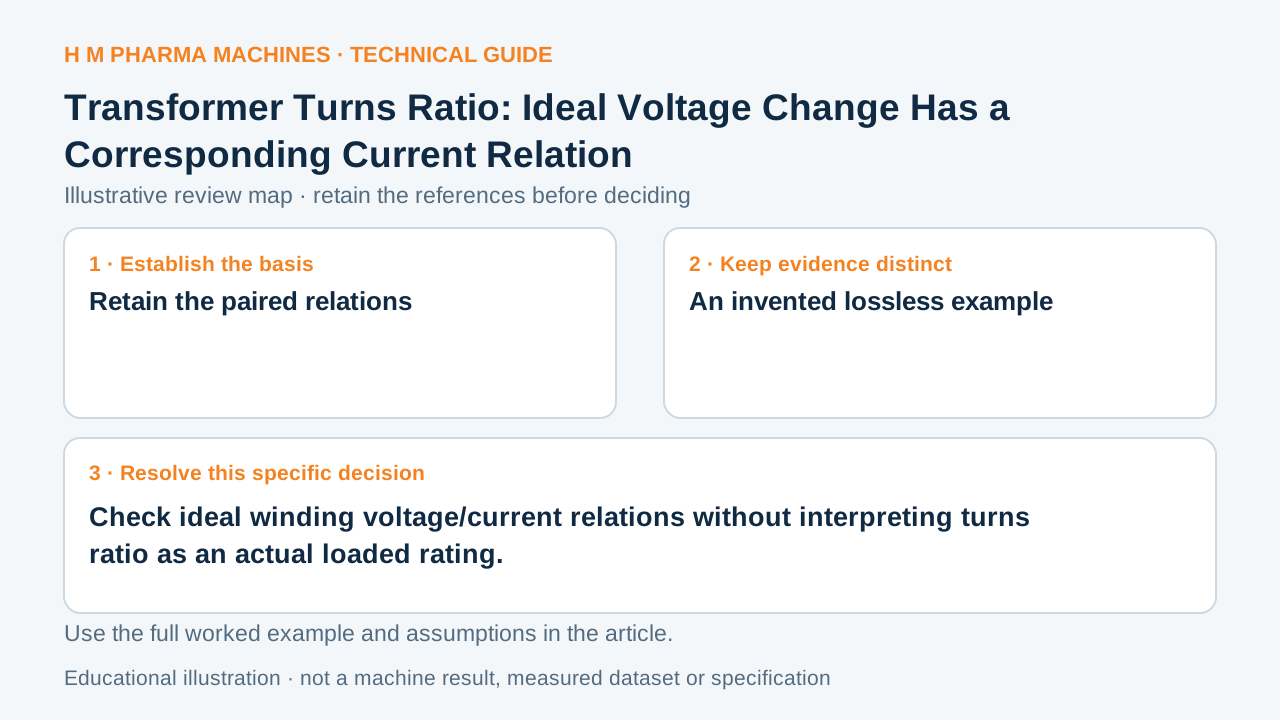
Compare ideal transformer winding voltage and current ratios while retaining the lossless model assumptions.
Retain the paired relations
The ideal transformer voltage ratio follows its turns ratio; current magnitude follows the inverse ratio under the corresponding lossless load model. Primary reference: ideal transformer relations.
A turns ratio describes an electrical relationship, rather than the permitted thermal load of an actual transformer. Real winding resistance, magnetic behavior and operating conditions belong to the separate component assessment. Keep primary and secondary names fixed across every ratio.
An invented lossless example
Suppose a fictional primary has 500 turns and a secondary 100 turns. With 120 V RMS on the primary, the ideal secondary voltage is 24 V RMS. If the modeled secondary supplies 2 A to a resistive load, its power is 48 W and the ideal primary load current is 0.40 A.
The example reduces voltage by five while increasing load-current magnitude by five. It does not create additional power. These values neither describe an installed HM transformer nor establish a 48 VA component selection, because the actual component rating and conditions have not been evaluated.
Separate ratio and rating questions
Create fields for winding identity, turns ratio, voltage convention, modeled load and power relation. Ask separately for the component’s documented operating frequency and actual applicable rating.
If an offered result concerns loaded output voltage, retain the load and regulation evidence as well. A coherent review distinguishes what the ideal ratio predicts from what a particular transformer is permitted and demonstrated to deliver.
Customer Questions
Does voltage step-down create power?
The ideal model trades voltage and current while conserving power.
Is the turns ratio a load rating?
Actual permitted loading requires component evidence.
Are real losses included here?
This comparison explicitly uses a lossless model.
Primary References
These references support the technical principles discussed in this guide. The worked examples and review questions are educational.
Discuss Your Machine Requirement
Share your product, container, required output and the evidence needed for your technical review.
Request a Technical Review