
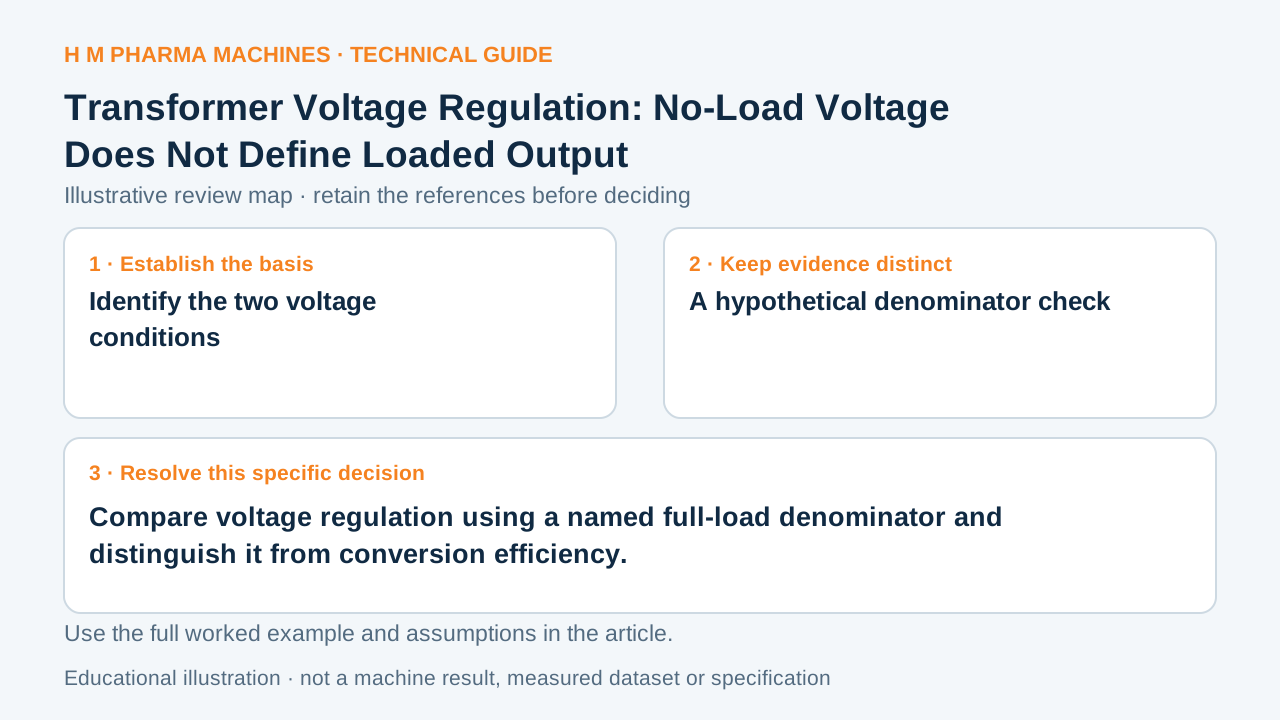
Interpret transformer voltage regulation with its stated load condition and denominator before comparing offers.
Identify the two voltage conditions
Hammond defines voltage regulation from the difference between secondary no-load and full-load voltage, referenced to full-load voltage. Primary reference: voltage regulation.
The denominator matters. An unexplained percentage is incomplete if another document uses a different reference. Keep the stated load condition, input condition and voltage convention beside both quantities rather than comparing an unloaded reading with a loaded requirement.
A hypothetical denominator check
Imagine a fictional secondary gives 26 V under the specified no-load condition and 24 V under the specified full-load condition. Using the stated definition, regulation is (26−24)/24×100, approximately 8.33%. Referencing the same 2 V difference to 26 V would give approximately 7.69%.
Those percentages differ without a change in either voltage. They are not efficiency figures: neither calculation contains input and output power. The invented case establishes no accepted regulation target or machine supply voltage. It exposes a definition mismatch before a specification comparison.
Request comparable records
List primary voltage and frequency, relevant secondary load, voltage result, temperature condition if applicable, and the percentage equation used. Identify whether no-load and loaded records actually share the intended basis.
Ask the supplier which operating condition supports the application requirement. A useful comparison preserves both actual voltages and the definition, so an apparently better percentage does not replace the evidence needed for the loaded output discussion.
Customer Questions
Is regulation the same as efficiency?
It compares voltage conditions rather than input/output power.
Does the percentage denominator matter?
Changing it changes the reported percentage.
Does this set an acceptable voltage range?
The actual application requires its own defined limits.
Primary References
These references support the technical principles discussed in this guide. The worked examples and review questions are educational.
Discuss Your Machine Requirement
Share your product, container, required output and the evidence needed for your technical review.
Request a Technical Review