
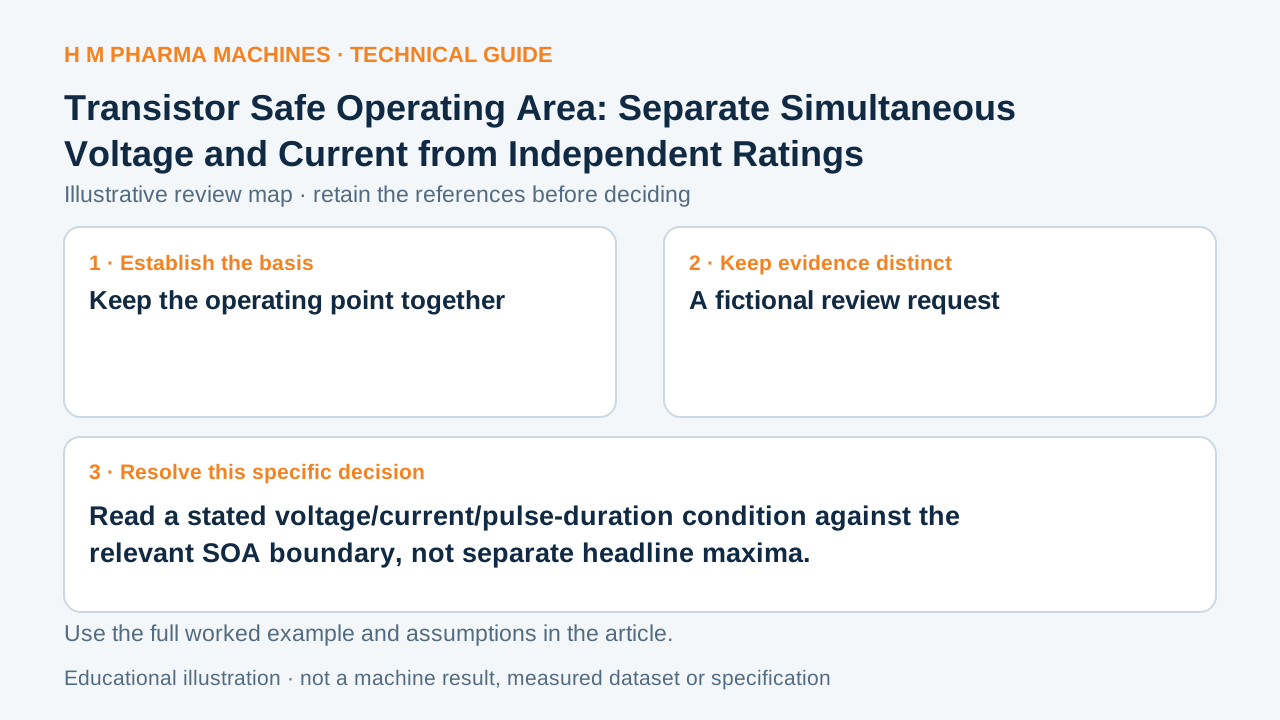
Review simultaneous voltage, current and duration against the appropriate transistor safe-operating-area evidence.
Keep the operating point together
TI’s MOSFET SOA guidance describes a graph constrained by several electrical and thermal mechanisms. A voltage/current point must retain its applicable duration and conditions. Primary reference: SOA graph review.
Separate headline maximum voltage and maximum current do not establish that both can occur simultaneously. A graph for one pulse duration or thermal condition should not be silently treated as a continuous operating permission. Identify exactly which boundary the offered statement relies on.
A fictional review request
Imagine a proposal states a device has separate headline ratings of 100 V and 20 A. An intended transient is 40 V with 5 A for 10 ms. The product 40×5 =200 W identifies instantaneous electrical power but does not itself prove that this transient lies inside the applicable SOA.
The reviewer needs the relevant 10 ms boundary and its stated thermal basis, along with the real waveform. Mark those records as missing if the offer contains only two maxima. The example uses invented numbers and supplies no accepted transistor or permissible pulse.
Make the evidence auditable
Prepare a row containing voltage, current, pulse duration, repetition, thermal starting condition and the selected source boundary. Preserve whether the operation is switching or a prolonged partially conducting condition.
Ask for an application-specific assessment if the conditions differ from the graph. The worksheet gives a buyer a concrete documentation request without converting a maximum-rating list into an unsupported component approval.
Customer Questions
Can independent maxima be combined automatically?
The simultaneous operating condition needs SOA evidence.
Does computed power alone establish acceptability?
Duration and applicable electrical/thermal boundaries also matter.
Does this select a transistor?
It defines a review record rather than a selection approval.
Primary References
These references support the technical principles discussed in this guide. The worked examples and review questions are educational.
Discuss Your Machine Requirement
Share your product, container, required output and the evidence needed for your technical review.
Request a Technical Review