
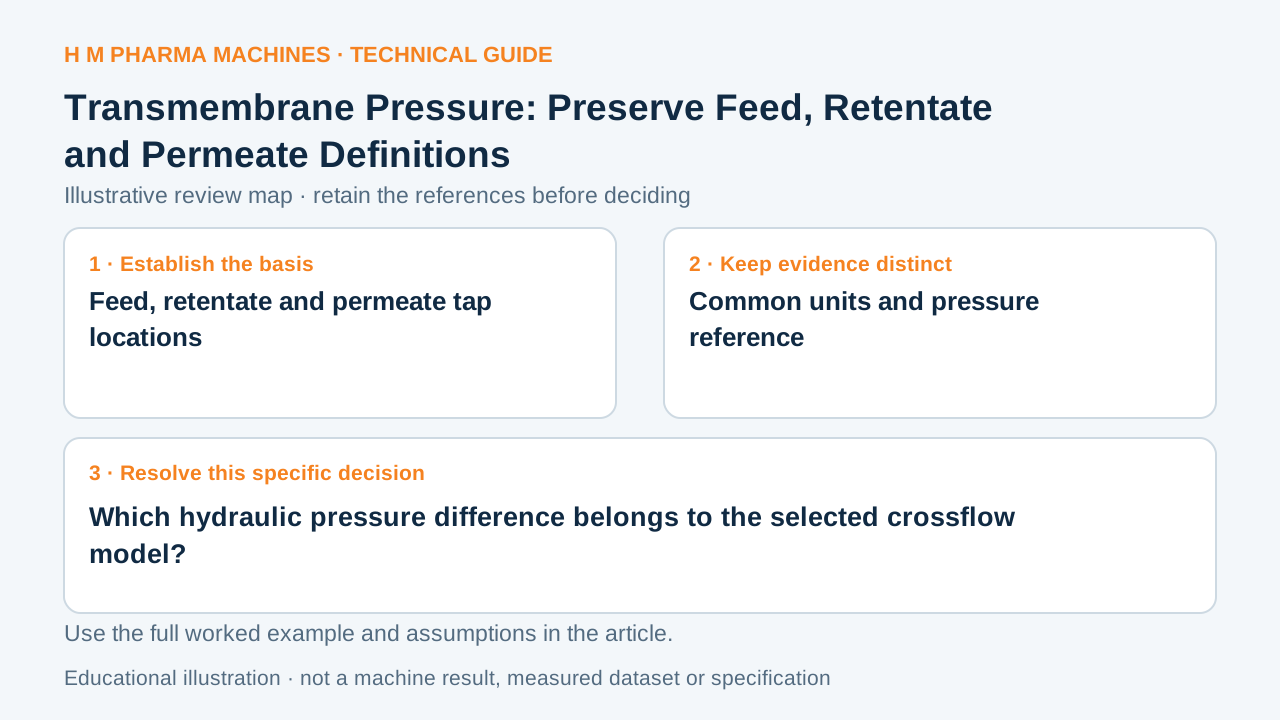
A crossflow module has feed, retentate and permeate pressures; the axial pressure loss and transmembrane comparison are different.
Define the Interface or Transport Basis
Repligen's KrosFlo user guide reports transmembrane pressure using the average of feed and retentate pressure minus permeate pressure. Under this convention, TMP=(Pf+Pr)/2−Pp. The separate difference Pf−Pr describes the feed-side axial pressure loss, not the same quantity.
Review a Hypothetical Comparison
Assign simultaneous hypothetical readings Pf=3 bar, Pr=1 bar and Pp=0.5 bar, all with the same pressure reference. Their reported TMP is 1.5 bar, while axial feed-side loss is 2 bar. Using feed pressure alone against permeate would instead give 2.5 bar. Those numbers describe different selected pressure differences; none is an observed membrane rating or operating recommendation.
Keep the Evidence with the Decision
Draw the three pressure locations and label which lines connect to them. Keep the unit and pressure reference consistent. Record whether the module convention uses a simple endpoint average or another justified spatial treatment. Pair readings from the same state; a feed reading before a valve change and a retentate reading afterward do not define that state's TMP.
The endpoint average is a reporting convention, not proof of uniform pressure along a membrane. This guide checks the hydraulic comparison and does not provide a controller setting, allowable pressure or filter-integrity criterion.
Which hydraulic pressure difference belongs to the selected crossflow model?
This blank worksheet is for your own project. It contains no H M machine trial result.
| Review field | Reference or result | Responsible person |
|---|---|---|
| Feed, retentate and permeate tap locations | To complete | To complete |
| Common units and pressure reference | To complete | To complete |
| Simultaneous state and averaging convention | To complete | To complete |
| TMP and separate axial pressure loss | To complete | To complete |
Customer Questions
Is feed pressure alone the TMP?
Not under the three-pressure average convention described here.
Can axial pressure loss equal TMP by definition?
No. They use different pressure locations and answer different hydraulic questions.
Why must the readings share a time state?
Otherwise the arithmetic combines conditions that did not coexist.
Primary References
These references support the technical principles discussed in this guide. The worked examples and review questions are educational.
Discuss Your Machine Requirement
Share your product, container, required output and the evidence needed for your technical review.
Request a Technical Review