
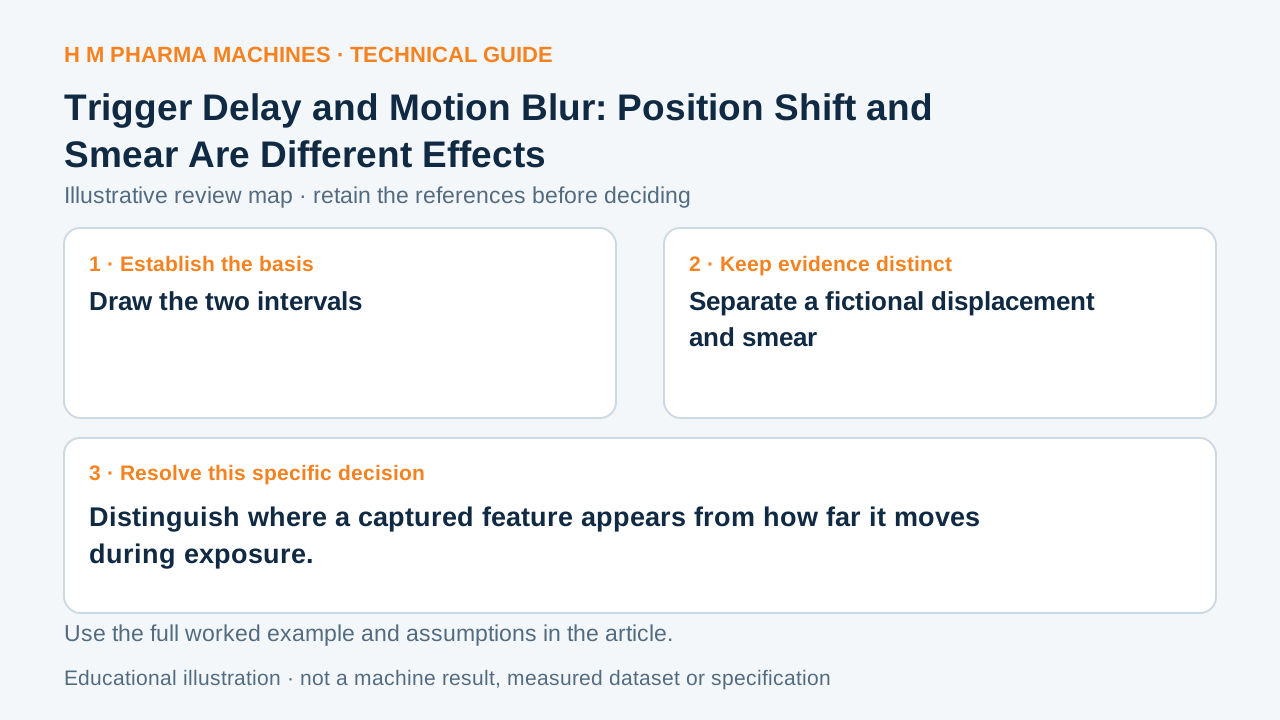
A feature can appear in the wrong place while remaining sharp, or in the expected place while blurred. Trigger delay and exposure duration explain different parts of that result.
Draw the two intervals
Trigger-to-exposure delay ends when the actual exposure begins. Exposure duration then determines how long the image collects light. Camera acquisition information may distinguish input propagation, debounce and other applicable timing components; use the terms supplied for the selected model. Primary reference: Basler: acquisition timing information.
Put the triggering event, exposure start and exposure end on the same timing sketch. Moving the start changes the object position recorded. Lengthening the interval changes the object travel within the record. These effects should not be merged into one unspecified camera delay.
Separate a fictional displacement and smear
Suppose a feature moves at a constant projected 0.80 m/s. An invented 3.0-millisecond trigger-to-start delay produces 2.4 mm of travel before exposure. A separate 0.20-millisecond exposure corresponds to 0.16 mm of travel while collecting light.
Reducing that delay could move the feature within the image without changing the 0.16 mm exposure travel. Shortening exposure could reduce the latter without moving its start. The example assumes a simple fixed velocity and provides no real timing specification or production adjustment instruction.
Record position and shape independently
During a trial, mark the expected feature position and examine the shape or contrast evidence separately. Retain the timing mode, relevant input event and documented effective intervals. If speed varies, identify the range represented by the observed positions rather than applying one travel value everywhere.
When a camera or trigger route changes, repeat both evidence checks. An altered interface may change the time origin used in a log. A successful read at one location does not show that the allowed positional range or image quality remained unchanged across the actual operating condition.
Customer Questions
Does delay necessarily blur the feature?
No. It can shift the exposure position while exposure duration remains unchanged.
Does shorter exposure remove the preceding delay?
No. The intervals describe different parts of acquisition.
Why state the timing origin?
It identifies which event the quoted delay starts from.
Primary References
These references support the technical principles discussed in this guide. The worked examples and review questions are educational.
Discuss Your Machine Requirement
Share your product, container, required output and the evidence needed for your technical review.
Request a Technical Review