
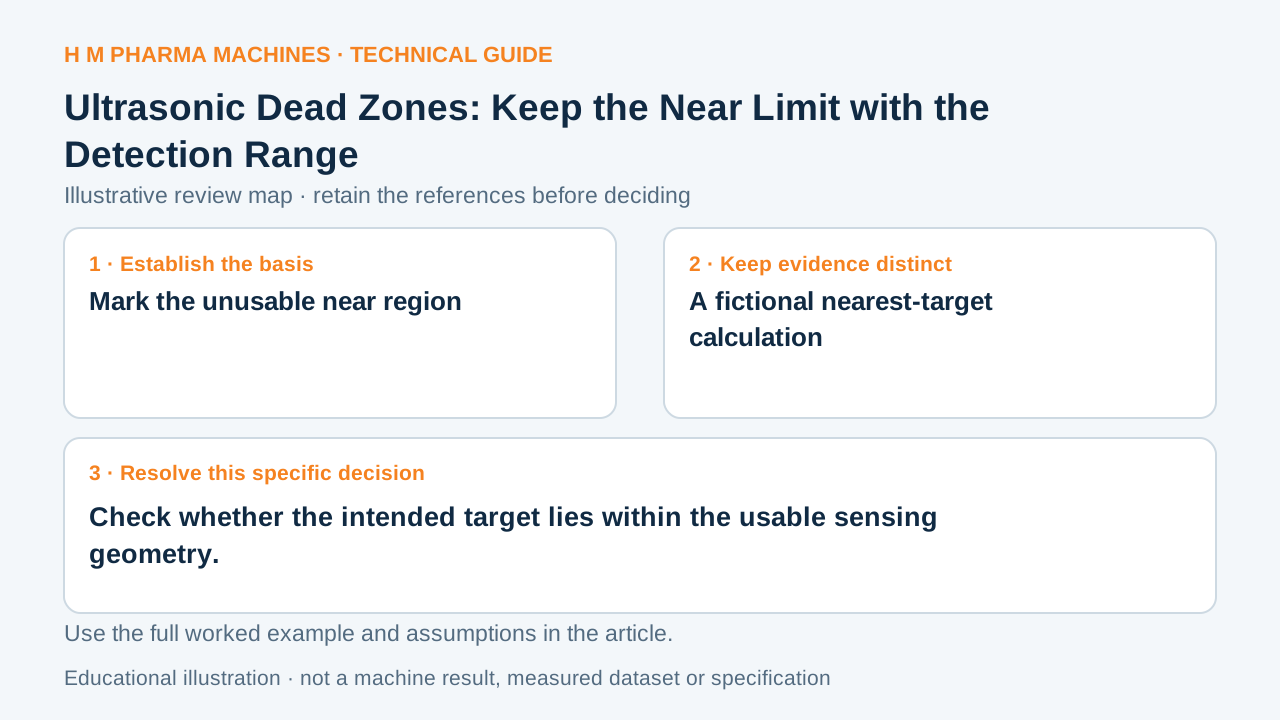
Retain the ultrasonic dead zone before comparing the target’s nearest position with an offered range.
Mark the unusable near region
Pepperl+Fuchs explains that ultrasonic transmission and transducer decay create a near region where a target echo cannot be used for detection. The far range alone is incomplete. Primary reference: ultrasonic deadband.
A target can be physically closer while lying outside the selected sensor’s useful echo region. A distance displayed in an illustration does not remove that boundary. Keep the actual product’s minimum useful distance with its maximum and target conditions.
A fictional nearest-target calculation
Assume an invented offer lists a 40 mm unusable near zone and a useful upper distance of 400 mm. A proposed target can approach to 25 mm. The 15 mm difference exposes a geometric scope gap even though 25 mm is less than the advertised upper limit. These numbers belong only to this example.
Do not infer what the output will do inside the gap. A device may provide a defined diagnostic or other behavior that needs its own documentation. Treat an unavailable detection region differently from an acceptable observed absence of a target.
Review the complete travel envelope
Place the closest and farthest intended target positions on the same drawing as the useful sensing region. Preserve approach geometry and the selected component’s target basis. Ask what state the control consumer should expect outside the defined useful region.
This guide identifies a coverage question, not a sensor relocation or adjustment procedure. No acoustic device or clearance is asserted on HM equipment. Revisit the nearest position after a format change instead of checking only whether the new pack remains below the far-range figure.
Customer Questions
Does a 400 mm far range include all nearer positions?
The selected dead zone can exclude near positions.
Is the example gap a measured HM fault?
It is fictional geometry only.
Should missing detection inside the gap mean no target?
Retain the documented output and diagnostic semantics.
Primary References
These references support the technical principles discussed in this guide. The worked examples and review questions are educational.
Discuss Your Machine Requirement
Share your product, container, required output and the evidence needed for your technical review.
Request a Technical Review