
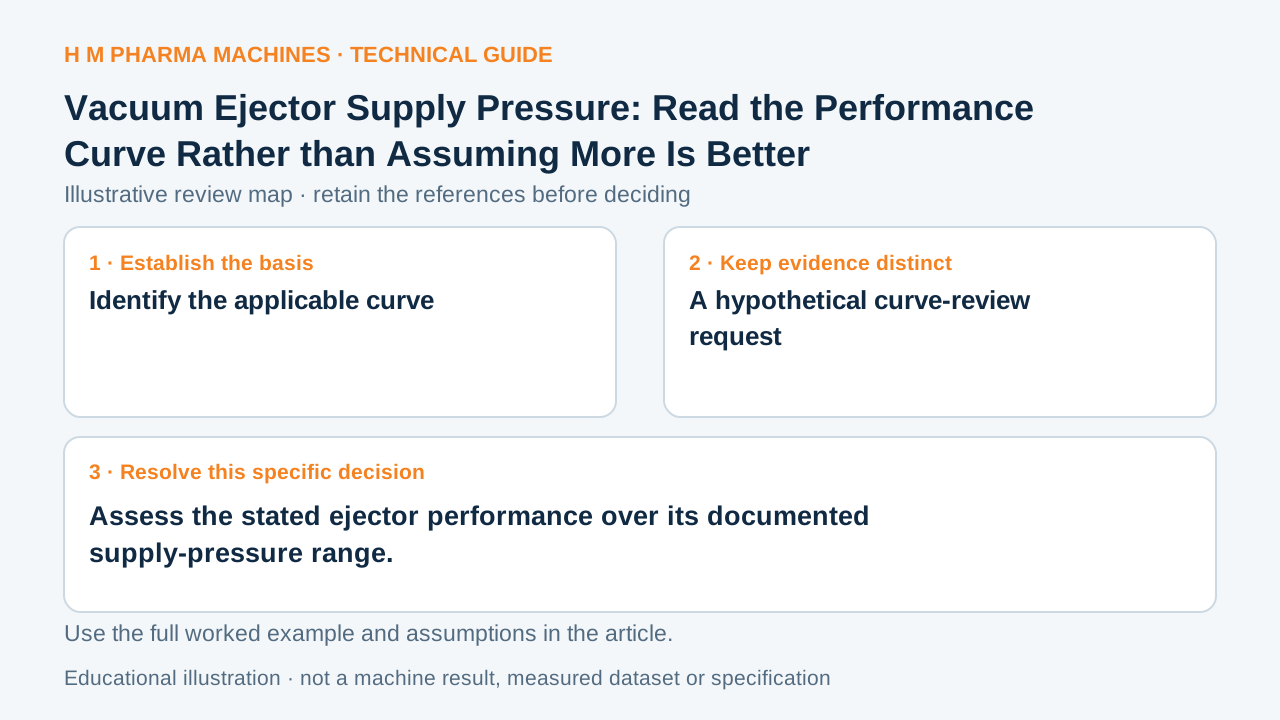
An ejector's operating-pressure curve is more informative than an unqualified higher-is-better rule.
Identify the applicable curve
Schmalz's identified ejector sheet provides achieved-vacuum behavior against operating pressure and identifies an optimum operating condition. Preserve the selected component's curve. Primary reference: Schmalz pressure-dependent performance.
This is product-specific evidence, not a universal optimum for every ejector. Read the quantity on each axis and its stated conditions. Keep vacuum level, suction capacity and air input as separately identified results rather than assuming they change in the same direction over every pressure interval.
A hypothetical curve-review request
Imagine a proposed supply increase is justified only by more pressure means more vacuum. Ask the supplier to mark the original and proposed points on the actual variant's relevant curves. Then compare the intended task requirement at those points. Leave the expected improvement unresolved when no applicable curve or observation supports it.
Build rows for supplied pressure, generator variant, vacuum requirement, suction requirement and input demand. The worksheet introduces no artificial vendor data or HM operating pressure. It does not recommend moving an installed regulator to another setting.
Compare the complete operating condition
The actual pressure available at the generator and the utility schedule should remain part of the application basis. A remote nominal supply label can omit local losses or operating variation. Preserve the evidence location and measurement condition.
If the ejector or nozzle changes, obtain the corresponding curve rather than retaining an earlier optimum label. This guide supports a condition-specific comparison without promising universal savings, asserting a performance trend for an unreviewed model or selecting supply pressure from a generic percentage-vacuum target alone.
Customer Questions
Is higher supply pressure universally better for every ejector result?
No. Use the selected variant's applicable curves.
Can one model's optimum be copied to another?
No. Preserve component identity and conditions.
Does the guide recommend a regulator setting?
No. It defines the evidence comparison.
Primary References
These references support the technical principles discussed in this guide. The worked examples and review questions are educational.
Discuss Your Machine Requirement
Share your product, container, required output and the evidence needed for your technical review.
Request a Technical Review