
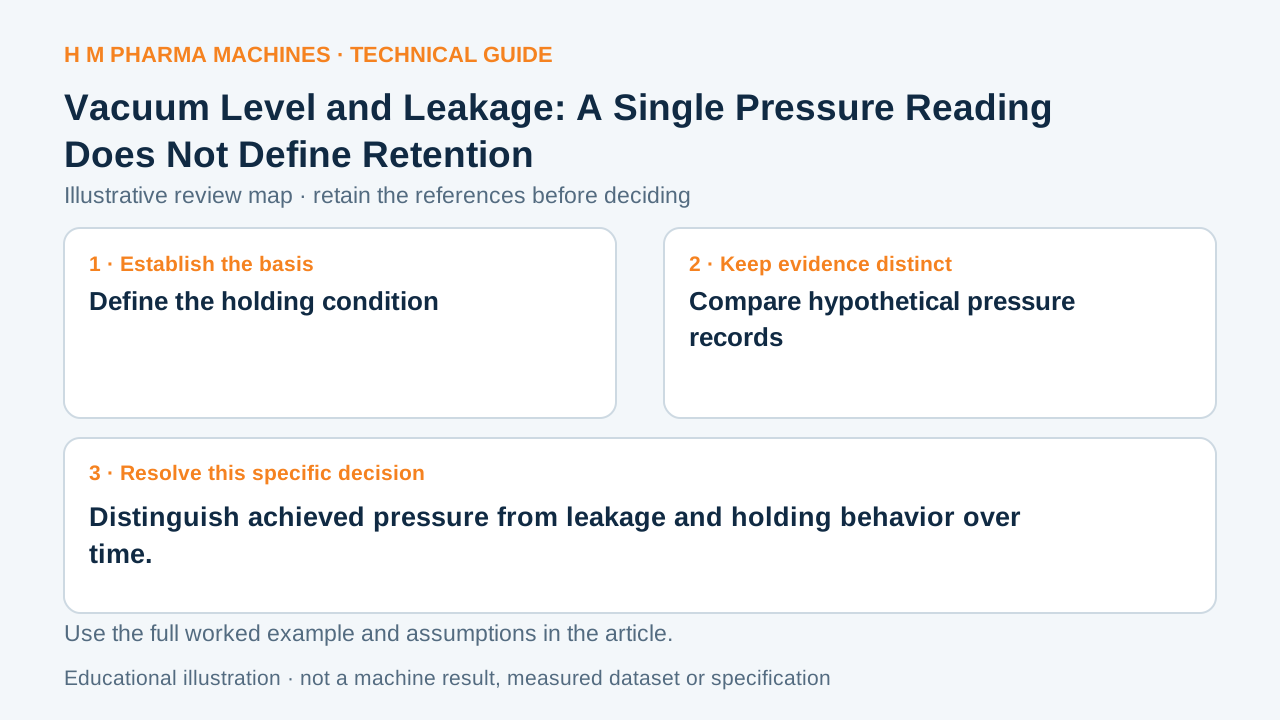
A pressure snapshot does not describe how that condition was maintained.
Define the holding condition
Piab describes vacuum retention in a sealed application as a distinct function of an identified non-return arrangement. Preserve that sealed-application boundary. Primary reference: Piab identified retention function.
A record should identify whether vacuum generation remained active, what path was isolated and which application interval was observed. A stable pressure while a generator is drawing air does not automatically demonstrate a leak-free volume or the same behavior when that source is absent.
Compare hypothetical pressure records
Imagine record A contains one absolute-pressure observation of 30 kPa with generation active. Record B identifies a controlled, approved isolated-volume observation from 30 to 35 kPa over 5 seconds under stated conditions. The records describe different evidence; neither alone supplies an actual gripping-release conclusion for an unidentified assembly.
A pressure-change record also needs relevant volume, temperature and path information before it can become a quantified leakage estimate. Keep those cells separate from the observed pressure difference. The example deliberately calculates no leak flow and reports no HM holding result.
Ask for the actual retention assessment
Define the required holding interval and permitted condition with the responsible application designer. Ask how the selected cups, workpiece surface, valves and source arrangement have been assessed for that duty. A product name should not silently establish the whole assembly's retained-grip behavior.
Preserve the observation method, generation state and accepted criterion with the result. If the product surface or circuit changes, review applicability. This guide clarifies the distinction between achieved level and time-dependent retention without instructing a live isolation test or treating an unrecorded pressure snapshot as proof of every future holding interval.
Customer Questions
Does one stable pressure value prove zero leakage?
No. Identify generation and observation conditions.
Does pressure change alone give leak flow?
No. The applicable physical model needs additional information.
Is the 5-second example an HM retention test?
No. It is a hypothetical evidence comparison.
Primary References
These references support the technical principles discussed in this guide. The worked examples and review questions are educational.
Discuss Your Machine Requirement
Share your product, container, required output and the evidence needed for your technical review.
Request a Technical Review