
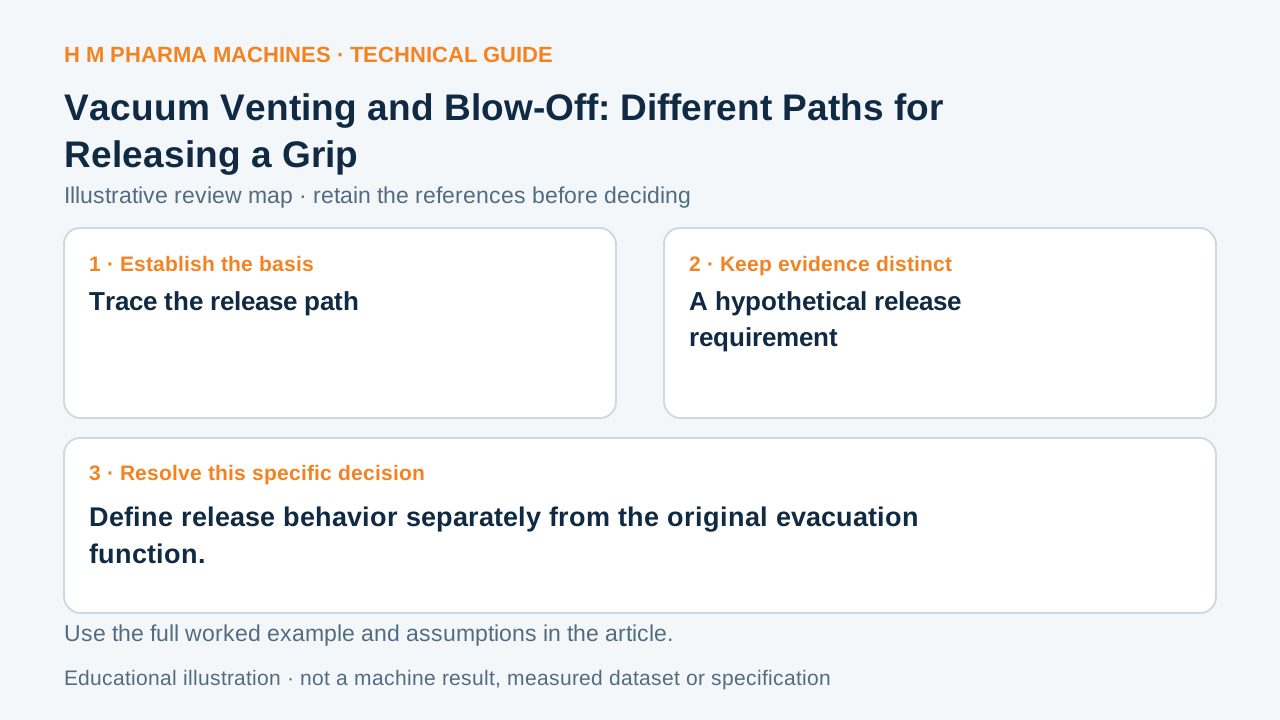
Stopping vacuum generation and equalizing the cup pressure are different functions.
Trace the release path
Piab identifies atmospheric quick release and compressed-air blow-off as separate options for its stated assembly. Keep the actual chosen release function identifiable. Primary reference: Piab release options.
Draw generation-off, atmospheric inlet and any blow-off path as distinct functions. Where a circuit retains vacuum after the source stops, generation-off alone should not silently become the entire release explanation. Read the actual valve and path relationship rather than assuming the output automatically falls to atmosphere.
A hypothetical release requirement
Imagine a task requests product separation within a defined interval after a command. One proposal names venting; another names a blow-off option. Compare their actual path, conditions and relevant observation method. A release label alone does not establish the elapsed time or how the product behaves at separation.
Build rows for generation state, pressure-equalizing path, additional air demand if applicable, separation criterion and supporting result. Keep unknown timing visible. The example gives no HM release time, blow-off pressure or universal equivalence between the two options.
Keep release and handling evidence connected
Ask the application designer to assess the selected function against the product and movement requirements. The intended release location and subsequent support should remain part of the task definition, so a command event is not treated as proof that the product has separated correctly.
Retain the selected variant and circuit revision with the verified release scope. A replacement can preserve suction generation while changing release behavior. This guide supplies a path-specific comparison without instructing valve actuation on a loaded system or guaranteeing that one release method is universally faster for every cup, surface and circuit volume.
Customer Questions
Is stopping generation necessarily the whole release function?
No. Identify the actual pressure-equalizing path.
Do venting and blow-off use the same supply path?
No. Preserve the selected architecture.
Does a release label establish elapsed separation time?
No. Retain its applicable evidence and criterion.
Primary References
These references support the technical principles discussed in this guide. The worked examples and review questions are educational.
Discuss Your Machine Requirement
Share your product, container, required output and the evidence needed for your technical review.
Request a Technical Review