
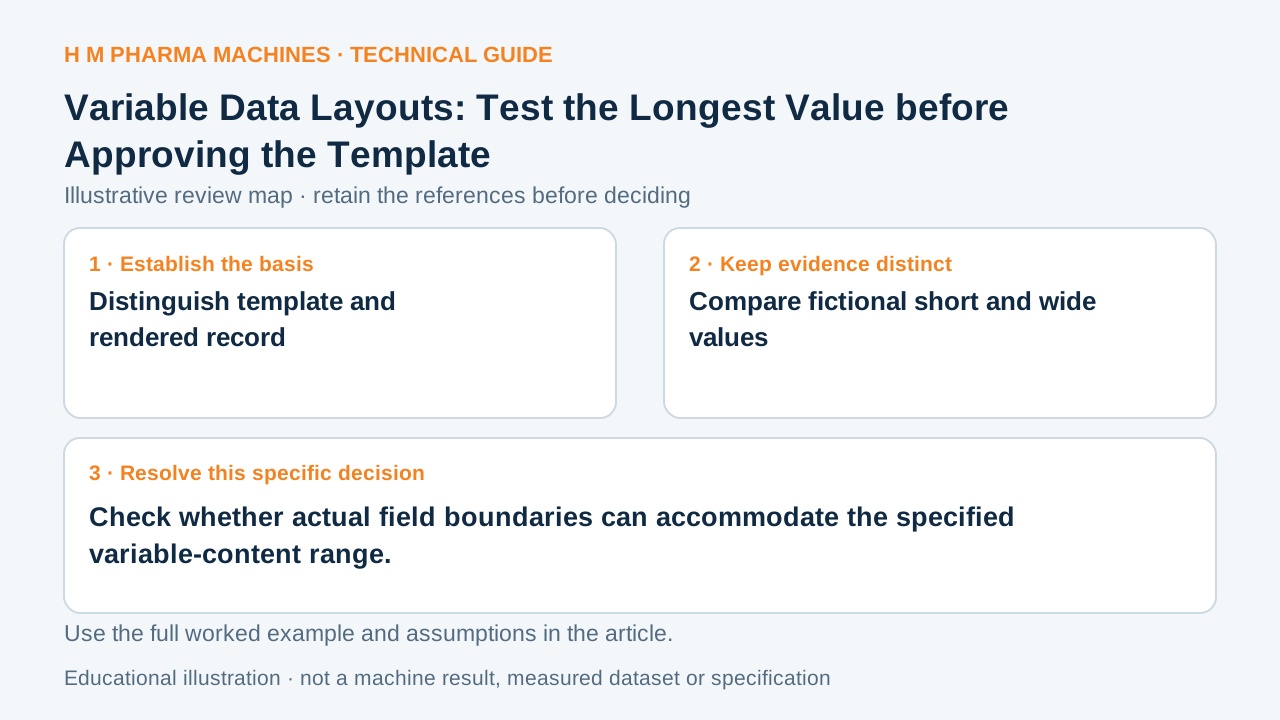
A placeholder occupies a design location; the real value occupies space according to its characters, font and formatting. Review the actual allowed strings.
Distinguish template and rendered record
Data merging combines a common layout with record-specific text or images. A placeholder is therefore not the final content for every record. The template's geometry needs to accommodate the permitted values once they have been rendered. Primary reference: Adobe: data merging combines a layout with variable records.
Character count alone does not define physical width in a proportional font. Different letters and signs can occupy different advances, and formatting or fallback can change those advances. Keep the approved font, field boundaries and possible content range together in the review.
Compare fictional short and wide values
Imagine a field tested only with IIII and later populated with WWWW in a hypothetical proportional font. Both strings contain four characters, but they need not occupy equal widths. A maximum-character rule could therefore pass both while one exceeds the intended physical field.
Likewise, an inserted separator or a required unit can consume space absent from the trial value. This illustration gives no font widths, allowable character count or minimum text size. It identifies why the actual widest allowed formatted cases should be represented in the evidence.
Keep boundary cases in the proof set
Prepare examples from the authorized content range, including long values, wide glyph combinations, signs and required prefixes or suffixes. Render them through the actual template and output route. Check wrapping, clipping and adjacent information at the final physical scale.
If software shrinks text automatically, record that rule and assess the resulting readability rather than treating successful fitting as automatic acceptance. Preserve the specific strings used and the template revision. A short successful record demonstrates that record; the complete allowed range needs its own documented layout evidence.
Customer Questions
Do equal character counts guarantee equal width?
No. Actual glyph advances and formatting matter.
Does a placeholder prove every record fits?
No. Test representative permitted boundary values.
Is automatic shrinking enough approval?
No. Review the resulting final-size text against the task requirement.
Primary References
These references support the technical principles discussed in this guide. The worked examples and review questions are educational.
Discuss Your Machine Requirement
Share your product, container, required output and the evidence needed for your technical review.
Request a Technical Review