
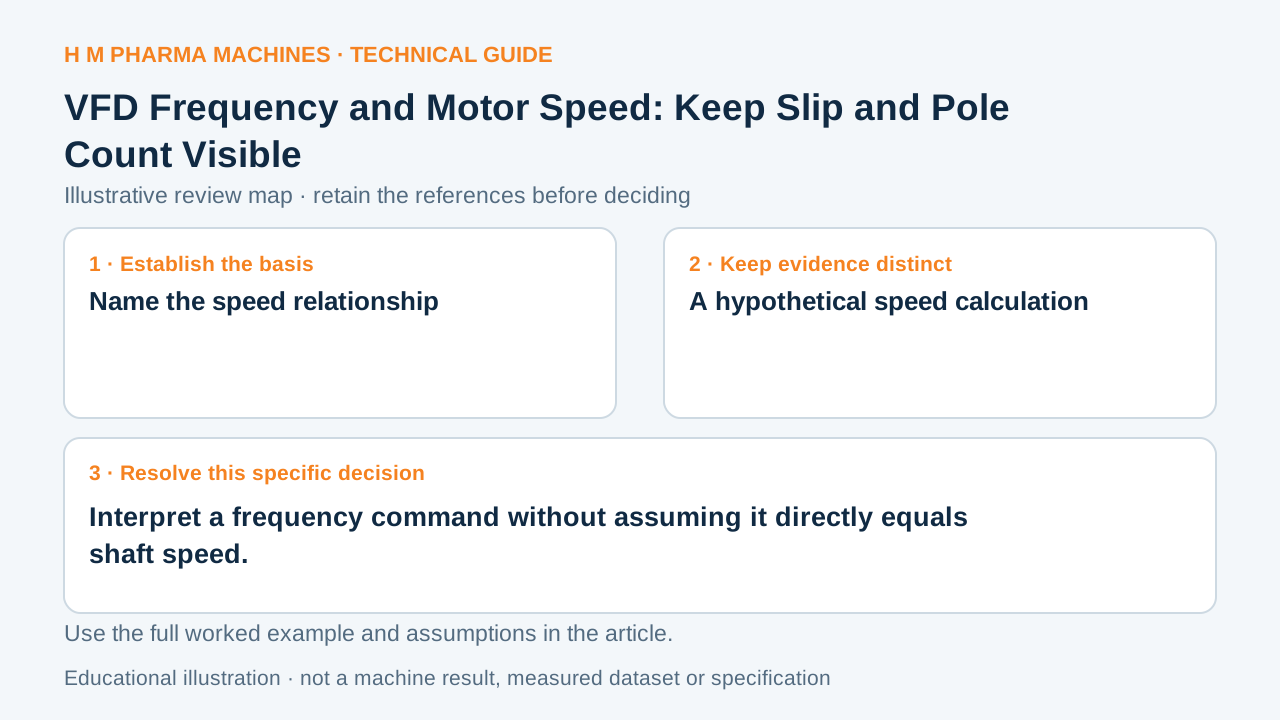
Pole count and slip help distinguish synchronous speed from actual running speed.
Name the speed relationship
Eaton's induction-motor application note identifies nominal speed and slip-compensation context. A frequency command should retain its actual motor relationship. Primary reference: Eaton induction-motor V/f context.
In a basic induction-motor interpretation, synchronous rotational speed depends on frequency and pole count. Actual shaft speed has the relevant slip and operating context. Do not equate an inverter frequency display with a directly observed shaft-speed result or with container output.
A hypothetical speed calculation
Assume a fictional four-pole case at 60 Hz. The synchronous-speed expression 120×frequency/poles gives 1,800 rpm. With an independently assumed 3% slip, the simple model gives 1,746 rpm. Those assumptions illustrate why a command and running speed are different entries; they do not describe an HM motor or actual measured slip.
Make columns for frequency, pole definition, synchronous model, slip basis and observed shaft speed. A transmission or process-output relation belongs in a separate mapping. The arithmetic does not authorize changing an installed motor's frequency range.
Preserve the actual drive and load context
Ask how the selected motor and control method represent speed under the intended duty. If feedback or compensation is included, identify its actual function rather than assuming every inverter reports the same quantity.
Keep motor and drive identities with the accepted speed relationship. A later motor, pole or transmission change can make earlier scaling inapplicable. This guide helps reconcile frequency and speed descriptions without prescribing a drive parameter, assuming fixed slip at every load or converting one frequency command into a guarantee of machine output. Record pole count with the supply-frequency calculation.
Customer Questions
Does a Hz display directly measure shaft rpm?
Not by itself. Preserve the actual motor and measurement relationship.
Is 3% slip a universal value?
No. It is an invented teaching assumption.
Does shaft speed equal container output?
No. Any transmission and process relationship must be defined.
Primary References
These references support the technical principles discussed in this guide. The worked examples and review questions are educational.
Discuss Your Machine Requirement
Share your product, container, required output and the evidence needed for your technical review.
Request a Technical Review