
Filler identity alone does not describe every material contributing to a fusion deposit.
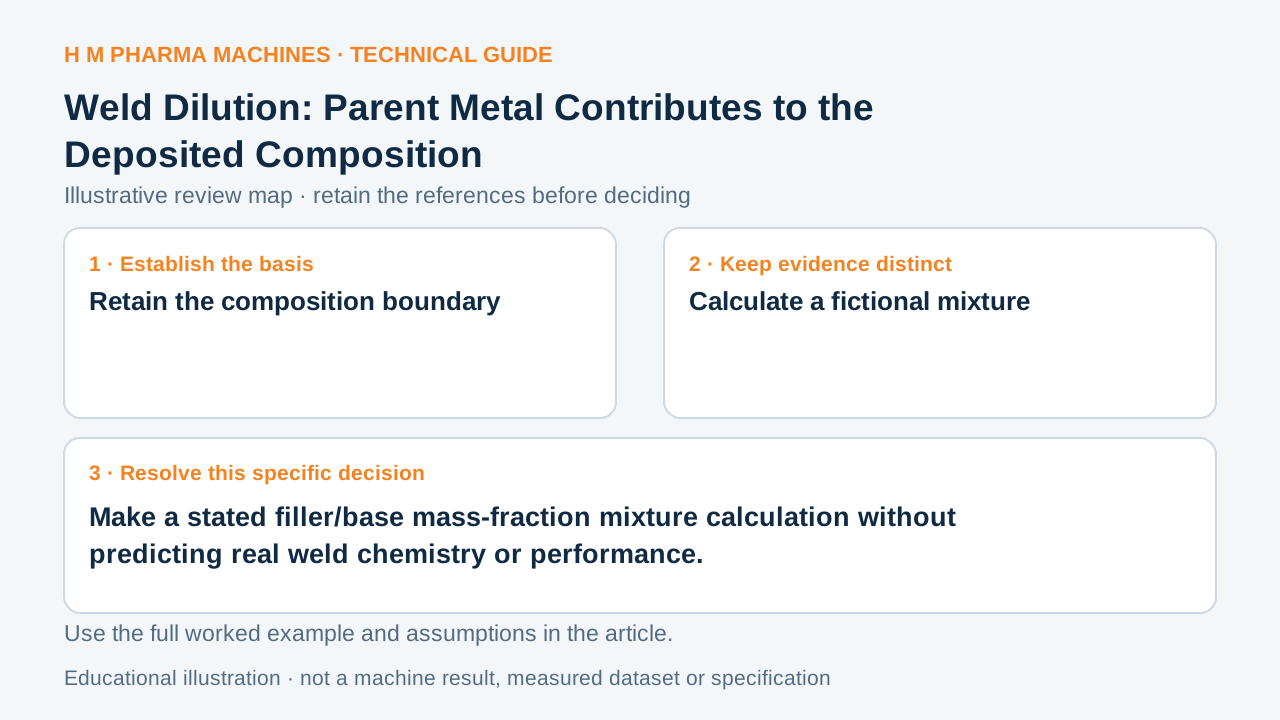
Retain the composition boundary
TWI discusses parent-metal dilution changing weld-metal composition in dissimilar joining. A filler designation alone therefore cannot identify the complete mixed-metal condition. Primary reference: TWI technical explanation.
The following exercise assumes full mixing, known mass fractions and no element loss or reaction. Actual local chemistry and solidification can require other evidence; the calculation is a defined average, not a metallurgical prediction.
Calculate a fictional mixture
Imagine an invented deposit contains 70% filler contribution and 30% parent contribution by mass. Filler contains 20% of fictional element X, while the parent contains 2%. The mixture model gives 0.70×20 + 0.30×2 = 14.6% X.
Quoting the filler’s 20% as the deposit composition would omit the parent contribution. A volume fraction could not replace the declared mass fraction without the necessary density relationship. These values represent no actual consumable or HM material certificate.
Preserve the assumptions
Build a worksheet with each contributing material, its element fraction, contribution basis and the calculated average. Keep the evidence used to determine contribution separate from the filler supplier’s composition record.
Ask which actual weld-region chemistry is relevant to the requirement and what verifies it. A coherent mass balance can identify a missing input, but it does not establish local phase structure, corrosion performance or suitable joining procedure from an average element percentage alone.
Customer Questions
What is the fictional average X fraction?
14.6% by mass under the stated assumptions.
Can filler identity alone establish it?
The parent contribution also enters the model.
Can volume and mass fractions be substituted?
Their relationship needs the corresponding material basis.
Primary References
These references support the technical principles discussed in this guide. The worked examples and review questions are educational.
Discuss Your Machine Requirement
Share your product, container, required output and the evidence needed for your technical review.
Request a Technical Review