
A purchase or issue quantity is not automatically the metal remaining in the joint.
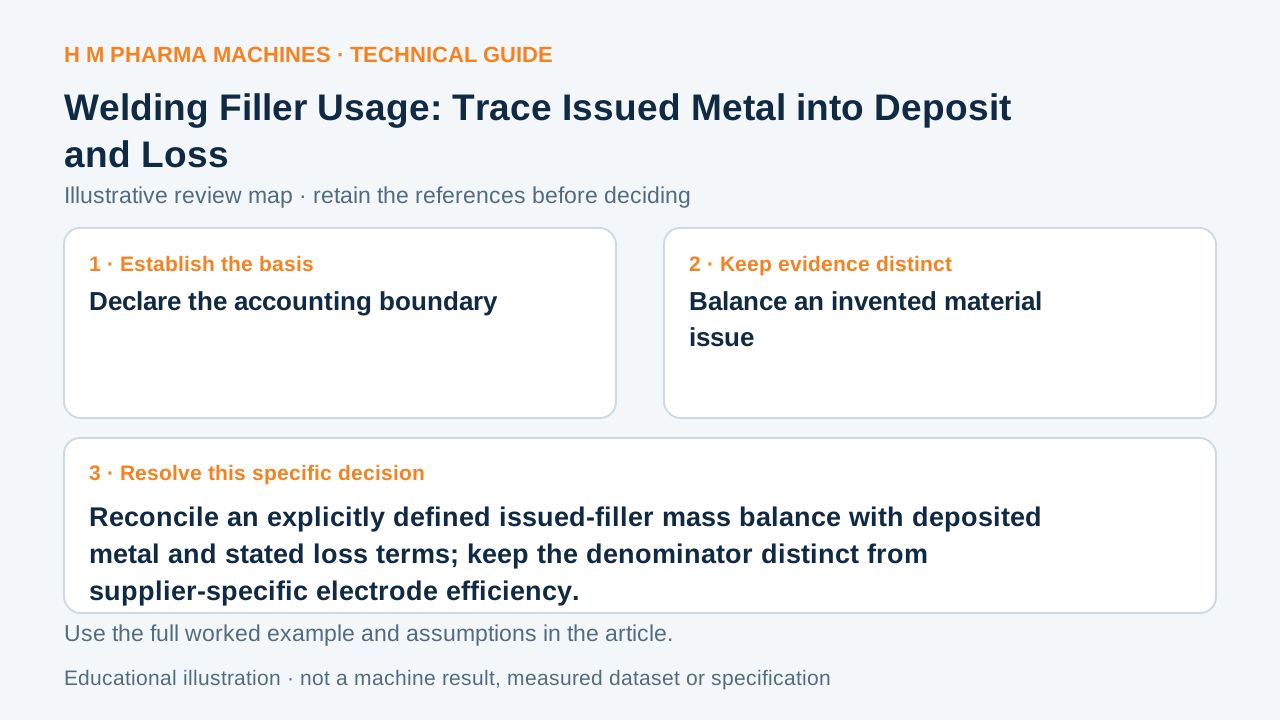
Declare the accounting boundary
TWI notes that deposited weld metal and purchased filler quantities differ because of process and handling losses. A mass comparison needs its stated input boundary. Primary reference: TWI technical explanation.
Here the worksheet uses issued filler-metal mass, excluding any coating or packaging, and separately counts remaining unused stock. This accounting yield must not silently inherit a supplier’s differently defined electrode-efficiency denominator.
Balance an invented material issue
Suppose a fictional job issues 1.00 kg of filler metal. Its illustrative record assigns 0.80 kg to deposit, 0.10 kg to unused return, 0.06 kg to discarded ends and 0.04 kg to captured process losses. The four terms sum to 1.00 kg.
Deposit divided by issued mass is 80%. If unused return is excluded, deposit divided by the 0.90 kg spent from inventory is about 88.89%. Both percentages follow their explicitly different denominators; neither is a supplier or HM efficiency result.
Keep every term identifiable
Make a mass ledger with issue, return, deposit and each supported loss category. Retain how each mass was established, including any unaccounted difference rather than forcing it into spatter.
Ask which denominator a quotation or productivity estimate uses. Purchased stock, issued metal and arc-consumed material are different boundaries. A clear ledger supports a meaningful consumption discussion without copying a generic process multiplier or assuming all missing mass reached the joint.
Customer Questions
What is the invented deposit/issue yield?
Eighty percent.
What changes when the unused return is excluded?
The denominator becomes 0.90 kg, giving about 88.89%.
Should every missing mass be called spatter?
Preserve measured categories and any unaccounted balance.
Primary References
These references support the technical principles discussed in this guide. The worked examples and review questions are educational.
Discuss Your Machine Requirement
Share your product, container, required output and the evidence needed for your technical review.
Request a Technical Review