
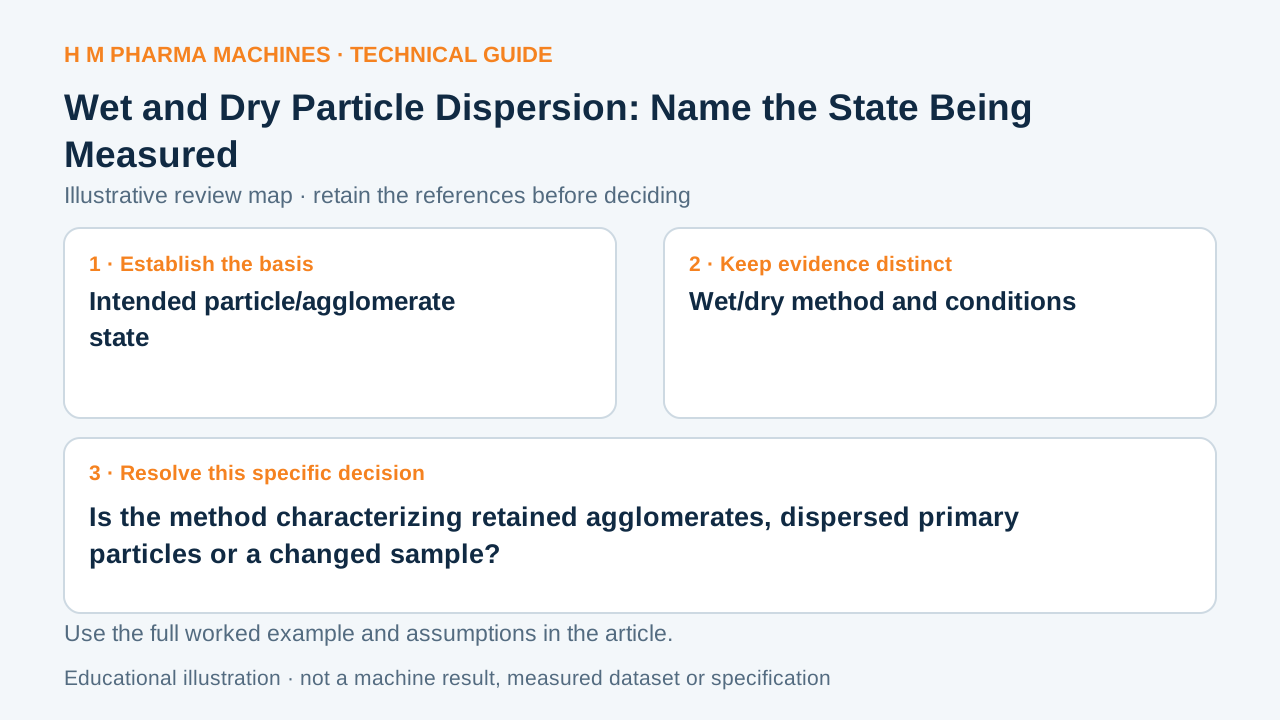
Dispersion conditions can change which particle structures the measurement represents. Decide the intended material state before comparing results.
Separate Sample State from Instrument Label
Malvern Panalytical explains that wet and dry dispersion can provide complementary information. Dispersion energy may break agglomerates; stronger conditions can also damage primary particles. A smaller reported distribution is therefore not automatically a more truthful description for every application.
Its reporting guidance calls for retaining dispersion conditions. A technique name alone leaves those conditions unresolved. Ask whether the intended question concerns the powder as handled, a deagglomerated population or another defined state. Primary characterization reference.
Illustrative Disagreement
Suppose invented reports of one identified powder show a coarser distribution under one dispersion method and a finer one under another. The difference could reflect altered dispersion state and needs review; it does not prove that the incoming lot changed between certificates.
These reports are hypothetical and supply no HM particle data. The laboratory should evaluate dissolution, agglomeration, breakage and the relevant method conditions. A chosen result should retain its state description instead of silently becoming the only particle size of the product.
Choose the Application-Relevant Record
For a powder-handling question, discuss which measured state represents the actual material reaching the equipment. For a formulation question, the desired state may differ. Keep the distinction explicit rather than treating all certificate values as interchangeable.
Complete the worksheet with the intended state, dispersion route, conditions and supported conclusion. This gives a powder-equipment supplier a clearer material reference while leaving actual feeding, dosing and dust behaviour to representative application evidence. HM equipment context: Auger Powder Filling Machine.
Wet and Dry Particle Dispersion: Name the State Being Measured — blank comparison record
This blank worksheet is for your own project. It contains no H M machine trial result.
| Quantity/question | Method or result | Reviewer/status |
|---|---|---|
| Intended particle/agglomerate state | To complete | To complete |
| Wet/dry method and conditions | To complete | To complete |
| Possible sample alteration | To complete | To complete |
| Application-relevant selected record | To complete | To complete |
Customer Questions
Is the finest result always the correct one?
The appropriate result depends on the state and question the method is intended to represent.
Can dispersion break primary particles?
The primary guidance identifies breakage as a possibility requiring method review.
Does a different distribution prove a different lot?
Resolve method and state differences before assigning a lot change.
Related Equipment References
Review the actual offered equipment and application separately from this educational example.
Primary References
These references support the technical principles discussed in this guide. The worked examples and review questions are educational.
Discuss Your Machine Requirement
Share your product, container, required output and the evidence needed for your technical review.
Request a Technical Review