
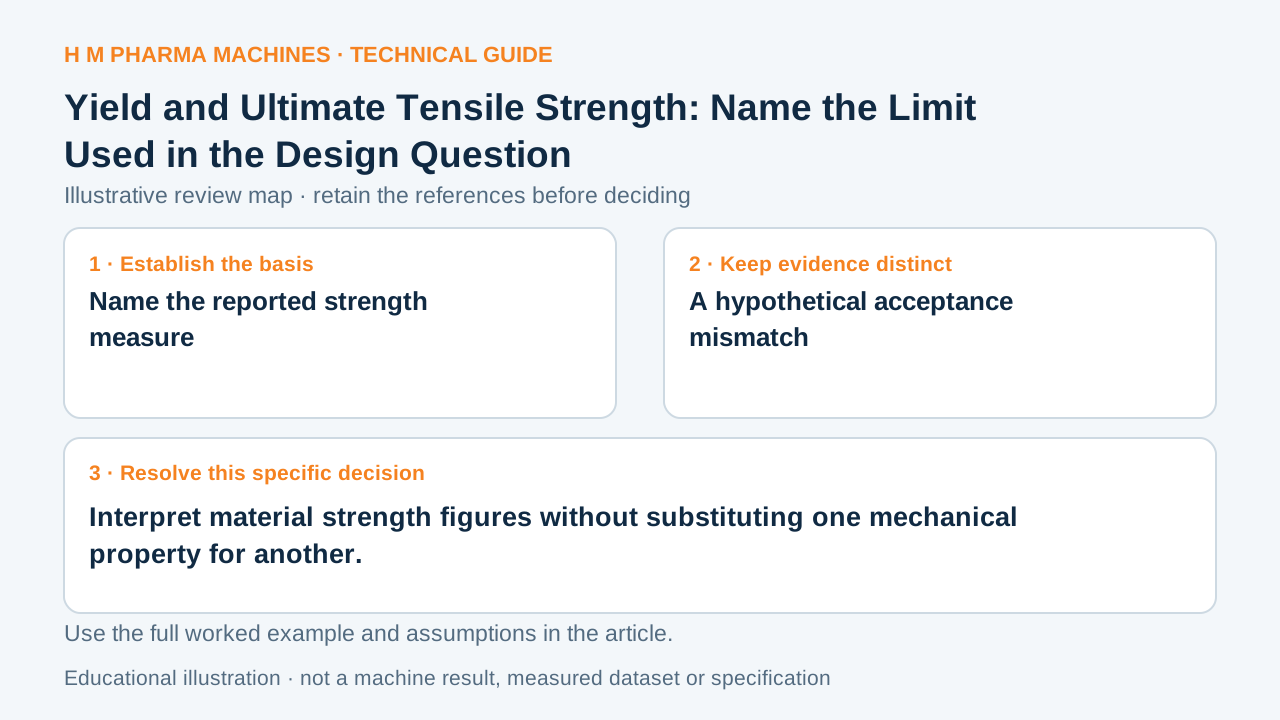
Yield and ultimate tensile strength should retain their names when offers are compared.
Name the reported strength measure
Instron describes yield strength through specified permanent deformation, and its tensile-strength guidance distinguishes reported tensile behavior. Preserve the exact property definition. Yield-strength reference; tensile-strength reference.
A request concerning permanent set should not be answered silently with a maximum-stress figure from the tensile test. Keep the method, supplied condition and relevant temperature beside the reported property. The same unit does not make two different property definitions equivalent.
A hypothetical acceptance mismatch
Imagine a fictional material offer reporting ultimate tensile strength of 600 MPa and a defined yield result of 350 MPa. A requirement explicitly asks for a yield-property basis. Entering 600 MPa into that field would change the definition, even though both figures use MPa. The teaching numbers select no material and establish no permitted design stress.
Make a worksheet with requested property, offered property, method, condition and resolved comparison. If the offer provides only a generic strength label, request clarification rather than guessing which limit it means. No HM specimen or performance result is reported.
Preserve the chosen definition in later records
The engineering assessment should identify which property it uses and why that property belongs to the intended requirement. A higher ultimate value does not automatically settle a yield-related question, and neither value alone establishes a complete finished-component capacity.
For replacements, retain the exact accepted property reference instead of reducing it to strong steel. Changes in supplied condition or processing should remain visible in the comparison. This guide prevents a definition mismatch in an RFQ or calculation input without prescribing a universal safety factor or interpreting a catalog tensile value as an assembled-machine rating.
Customer Questions
Does the MPa unit make yield and ultimate strength equivalent?
No. Their definitions differ.
Can a generic strength label fill a yield requirement?
Clarify the actual reported property first.
Does either number alone establish machine capacity?
No. The actual component design and duty require assessment.
Primary References
These references support the technical principles discussed in this guide. The worked examples and review questions are educational.
Discuss Your Machine Requirement
Share your product, container, required output and the evidence needed for your technical review.
Request a Technical Review