
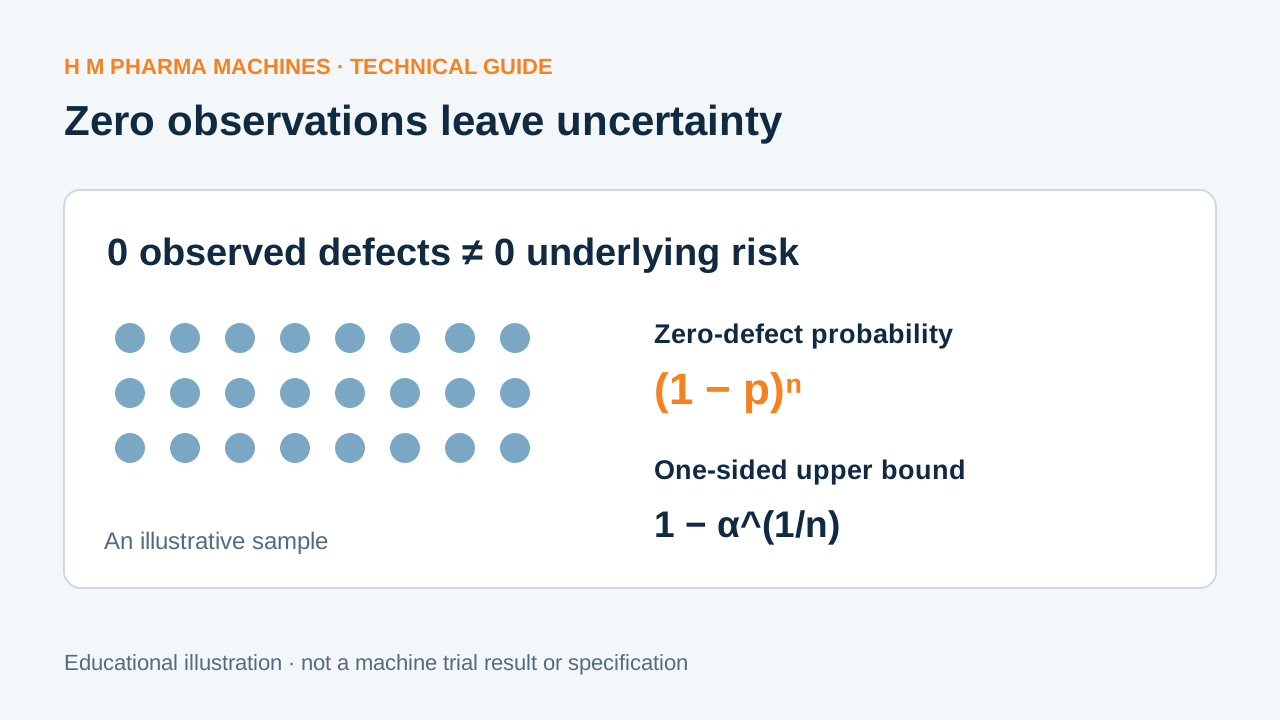
Zero observed defects is a sample result. Its meaning depends on what was assessed, how units were selected and which statistical assumptions are justified.
Define What Zero Counts
Name the defect criterion and assessment method before collecting the sample. Record the number assessed and the number classified defective, including uncertain observations under the agreed procedure. Zero machine rejects is not automatically zero defects: the selected check may not detect every condition the buyer cares about.
For a carton weight checker, keep the weighing decision distinct from proof of every item identity inside the carton. The published equipment scope should define the selected task. A statistical calculation cannot repair an undefined or unsuitable assessment.
State the Model Before Calculating
A binomial model represents a fixed number of trials with two outcomes and a constant event probability. For the calculation here, observations are assumed independent and share one defect probability p. If defects occur in clusters or operating conditions change, that model needs review. NIST binomial distribution reference.
Identify the population and run conditions represented by the sample. Consecutive easy packs from one stable interval do not automatically represent every head, format, restart or later batch. Keep the sampling rationale and assessment limitations with the result.
Illustrative One-Sided Upper Bound
For zero observed defects in n trials, the binomial probability of that outcome is (1 − p)n. Setting it equal to α and solving gives p_upper = 1 − α^(1/n). For a one-sided 95% bound, α is 0.05. This is an algebraic zero-count illustration of an exact binomial bound, not a prescribed factory acceptance plan. NIST guidance on binomial confidence intervals.
Hypothetical example: zero defects among 30 assessed packs gives an upper bound of approximately 9.50%; zero among 300 gives approximately 0.994%, under the stated model. These invented samples are not HM results. Both observed proportions are zero, yet their statistical information differs substantially.
The 95% describes the confidence procedure's coverage under its assumptions. It is not a 95% probability that this particular machine is defect-free, and it does not establish a permanent production limit.
Keep the Bound Separate from Acceptance
The buyer's approved sampling and acceptance method determines the purchasing decision. Do not choose a convenient threshold after seeing the sample or pool unrelated formats to obtain a smaller bound. Retain head, condition and defect-definition differences when they affect what the sample represents.
If the intended decision concerns a complete line, consider which conditions were actually covered and which were absent. An observed zero count can be useful bounded evidence while leaving other requirements open. A different defect mechanism needs its own assessment; counting one outcome does not validate every quality attribute.
Report the Observation and Its Limits Together
Complete the worksheet before interpreting the result. Keep raw classifications, sample identity and the chosen statistical method available for review. A useful report can state zero observed under the named assessment, identify the represented conditions and disclose the assumptions behind any confidence bound. That is more informative than labeling the machine zero-defect.
Blank zero-count interpretation record
This blank worksheet is for your own project. It contains no H M machine trial result.
| Field | Evidence to enter | Reviewer |
|---|---|---|
| Defect definition and assessment method | To complete | To complete |
| Population, run condition and sample selection | To complete | To complete |
| Assessed count, defect count and uncertain cases | To complete | To complete |
| Statistical assumptions, bound and acceptance reference | To complete | To complete |
Customer Questions
Does zero observed defects prove the defect probability is zero?
No. It is a sample observation. Any wider inference depends on the assessment, sampling method and statistical assumptions.
Can this example supply a universal FAT sample size?
No. The approved project method must define the relevant population, risks, sampling and acceptance decision.
Can zero rejects be entered as zero defects?
Only the defined assessment result should be counted. Reject behavior and the actual defect classification may answer different questions.
Related Equipment References
Review the actual offered equipment and application separately from this educational example.
Primary References
These references support the technical principles discussed in this guide. The worked examples and review questions are educational.
Discuss Your Machine Requirement
Share your product, container, required output and the evidence needed for your technical review.
Request a Technical Review