
In This Guide
- Name the visible condition precisely
- Separate fresh product behavior from accumulated deposits
- Compare channels and the surrounding operation
- Collect a nozzle-tip observation record
- Escalate cleaning and inspection safely
- Define what a proposed correction must demonstrate
- Customer Questions
- Product References
- Discuss Your Requirement
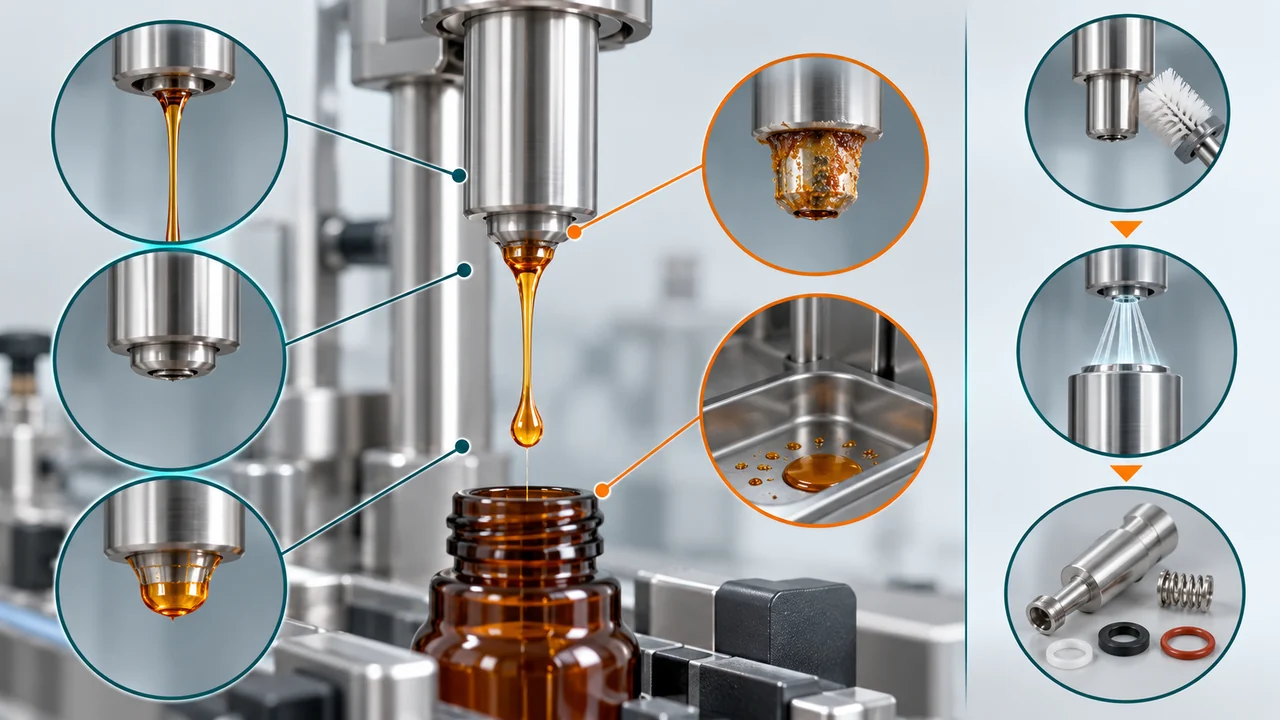
A sticky trail at the nozzle tip can leave syrup on a bottle neck, a conveyor or the next container. It is tempting to describe every occurrence as a drip and request an anti-drip feature. A syrup liquid filling machine review becomes more useful when the operator distinguishes a trailing strand, a hanging drop and a deposit that changes the outlet condition.
Identify when the residue appears, whether it affects one channel or the whole filler, and how it changes through the run. Record the product and setup conditions, then use the supplied cleaning and inspection procedure before considering an authorized configuration or recipe change.
Name the visible condition precisely
Stringing is a strand that remains connected as the bottle or nozzle moves away. Wetting can leave product on the outside of the tip without a distinct free drop. A closing-related observation may appear as continued delivery after the intended end of filling. These descriptions are useful even when the cause is not yet known.
Record the sequence from normal guarded operation. Do not classify the condition from residue found much later on the conveyor, where several filling events and transfer movements may have combined.
Separate fresh product behavior from accumulated deposits
Compare the first accepted bottles with observations later in the run. A condition that grows as residue builds differs from one present immediately after the approved startup. Note whether the tip appearance changes after a defined cleaning step and whether the same behavior returns under comparable conditions.
Do not assume that every deposit has the same composition or that a stronger cleaning chemical is the answer. The product-contact materials, cleaning method and product characteristics determine what the responsible team can approve.
Compare channels and the surrounding operation
Identify the filling position associated with each affected bottle. A single-channel pattern can justify inspection of that outlet and its supplied components. A shared pattern directs attention toward the liquid condition, delivery profile or another common part of the process. Neither observation alone confirms a defective valve.
Check the neck and bottle exterior before the next operation. Product deposited during withdrawal can be confused with spill caused by an unstable transfer. Keeping the filling and conveying observations separate avoids requesting a nozzle modification for an unrelated handling problem.
Collect a nozzle-tip observation record
| Observation | Evidence to retain |
|---|---|
| Trail, drop or surface wetting | Description and safe recording of the event |
| When it occurs | Initial delivery, closing or withdrawal stage |
| Where it occurs | Head identity and affected container position |
| Product condition | Lot, observed temperature and handling history |
| Deposit development | Clean-start observation versus later run |
| Setup identity | Nozzle reference, bottle format and recipe revision |
Keep the required quantity results alongside this record. A visible improvement in the tip condition is not sufficient if the revised trial fails the agreed dose or container-handling checks.
Escalate cleaning and inspection safely
A nozzle should not be wiped by hand while filling continues. Use the equipment's stopped, isolated inspection and cleaning procedure when access is required. Identify removed parts and their condition so the technical review can relate the findings to the correct channel.
Ask the supplier which valve, seal or tip observations warrant further inspection for the actual configuration. Do not change spring settings, seal materials or outlet geometry based on a generic troubleshooting list. After reassembly, perform the approved restart and first-off checks before returning the output to normal production.
Define what a proposed correction must demonstrate
H M's syrup references describe different dosing arrangements. An anti-drip or motion proposal needs to belong to the machine being supplied, with its product path and operating sequence identified. A feature name does not explain whether it addresses stringing, wetting or a closing-related condition.
Agree how the revised trial will be compared: same syrup, same bottle and clearly identified settings, with the nozzle-tip record, measured quantity and neck condition reviewed together. This turns a vague request to eliminate drips into a specific engineering question and an observable acceptance discussion.
Customer Questions
Does every sticky strand indicate a leaking valve?
No. Record the event and its timing; product stringing, outside wetting and continued delivery may require different investigations.
Can I wipe the nozzle while the filler is running?
Do not reach into the operating area. Use the supplied cleaning and safe-access procedure and perform the required restart checks afterward.
What should an anti-drip trial compare?
Compare the same syrup and bottle with identified configuration and settings, including quantity, tip behavior and the condition of the bottle neck.
Product References and Further Details
These pages describe published equipment arrangements. Review the supplied machine, actual materials and agreed operating requirements when applying the guide.
Discuss Your Machine Requirement
Share your product, container or closure samples, required output, process conditions and line layout with H M Pharma Machines for a technical review.
Request a Technical Review