Prepare Consistent Hopper Feed
Review powder loading, hopper level and any agitation needed to feed the auger. Bridging, aeration or inconsistent replenishment can change how powder enters the dosing tool.

H M Pharma Machines offers servo powder filling machines using a servo-controlled auger dosing arrangement. The focus is controlled auger motion, matched dosing tooling and a practical recipe for the tested powder, dose and container.
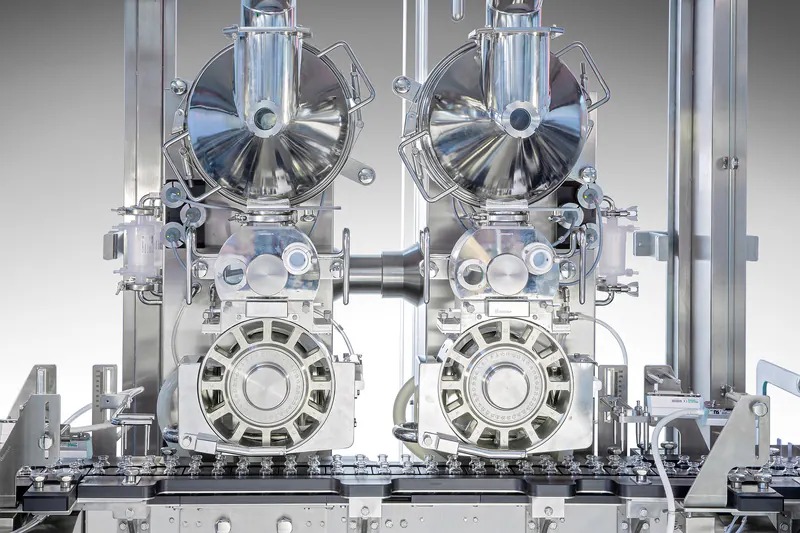
Machine overview
An auger moves powder from the hopper through the dosing outlet. A servo drive controls the auger motion used for each dose. This allows the dosing movement to be set for the application instead of treating every powder and fill quantity as the same operating condition.
Servo control does not remove the need to understand the powder. Bulk density, aeration, flow, moisture behavior and the condition of the hopper feed can influence the quantity delivered. The auger, outlet, any agitation and operating recipe therefore need to be assessed together.
Operating principle
The sequence below explains the intended servo auger approach. Feeding, control options and container handling depend on the agreed machine configuration.
Review powder loading, hopper level and any agitation needed to feed the auger. Bridging, aeration or inconsistent replenishment can change how powder enters the dosing tool.
Match the auger and outlet to the powder, dose and container opening. Position the container so powder enters cleanly, then define container detection and the conditions that permit a dose.
The control recipe commands the selected auger movement and speed for the dose. Trial fills are weighed to establish the setting for the actual powder and confirm the agreed acceptance criterion.
Filled containers proceed to the specified weighing, closing or packing stage. Weight feedback, rejection or automatic recipe correction is included only when that equipment and control function are part of the agreed scope.
Application selection
Provide a representative production sample and describe how it is stored and loaded. A powder that settles or becomes aerated can behave differently even when the auger movement is unchanged.
Share the full dose range and container samples. A recipe change alone may not suit every format: auger geometry, outlet clearance, hopper conditions and the space available above the container all need review.
Describe dust generation, cleaning frequency and the intended process environment. Contact materials, access and extraction arrangements need assessment for the formulation. Sterile or contained processing requires a separately specified and qualified system.
Technical discussion
Use these points to prepare the technical enquiry. The final machine specification follows application review and the agreed supply scope.
| Dosing principle | Servo-controlled auger movement with tooling and settings matched to the powder. |
|---|---|
| Powder review | Sample, bulk density, flow behavior, aeration, moisture sensitivity and dust characteristics. |
| Dose and container | Required dose range, container dimensions, opening and available headspace. |
| Accuracy assessment | Dose-weight checks using the agreed sample, trial conditions and acceptance method. |
| Output and head arrangement | Determined from dose cycle, powder feed, container handling and production target. |
| Controls and weighing | Recipe functions, container detection and any weighing feedback specified in the order scope. |
| Construction and utilities | Contact materials, cleaning access, extraction interfaces, electrical supply and layout reviewed for the application. |
| Final specification | Model, rating, options and supplied documentation confirmed in the approved quotation. |
Installation and changeover
Plan the refill method, access for the operator and hopper-level conditions. Feeding equipment and extraction interfaces should be reviewed with the filler instead of added without checking their effect on the powder.
Define whether weight verification is a separate inspection or an integrated feedback function. Discuss container transfer to capping, sealing and labeling, including stop/start coordination when the next machine is unavailable.
Record the recipe, dosing tool and cleaning steps for each approved product. After a change, confirm the tool installation and check trial doses before returning the line to routine production.
Common questions
Servo describes how the auger is driven and controlled. The auger remains the powder-metering tool. This page focuses on the servo-controlled configuration within the broader auger filling approach.
No. Delivered weight also depends on powder bulk density, feed condition and tooling. Weighed sample trials establish the recipe and verify performance against the agreed criterion.
Some changes may be handled by recipe settings, but a wider dose or container change can require different auger or outlet tooling. Confirm the full range with powder and container trials.
No. A servo auger drive and a weighing feedback loop are separate parts of the system. Specify whether you need external checks, an integrated checkweigher, rejection or feedback adjustment in the project scope.
Provide a powder sample, bulk density and flow information, dose range, container samples, required output, cleaning needs and line layout. Identify any dust-control, inspection or special process requirements.
Related equipment
Contact H M Pharma Machines
Send your application details for technical review and a project-specific quotation.