
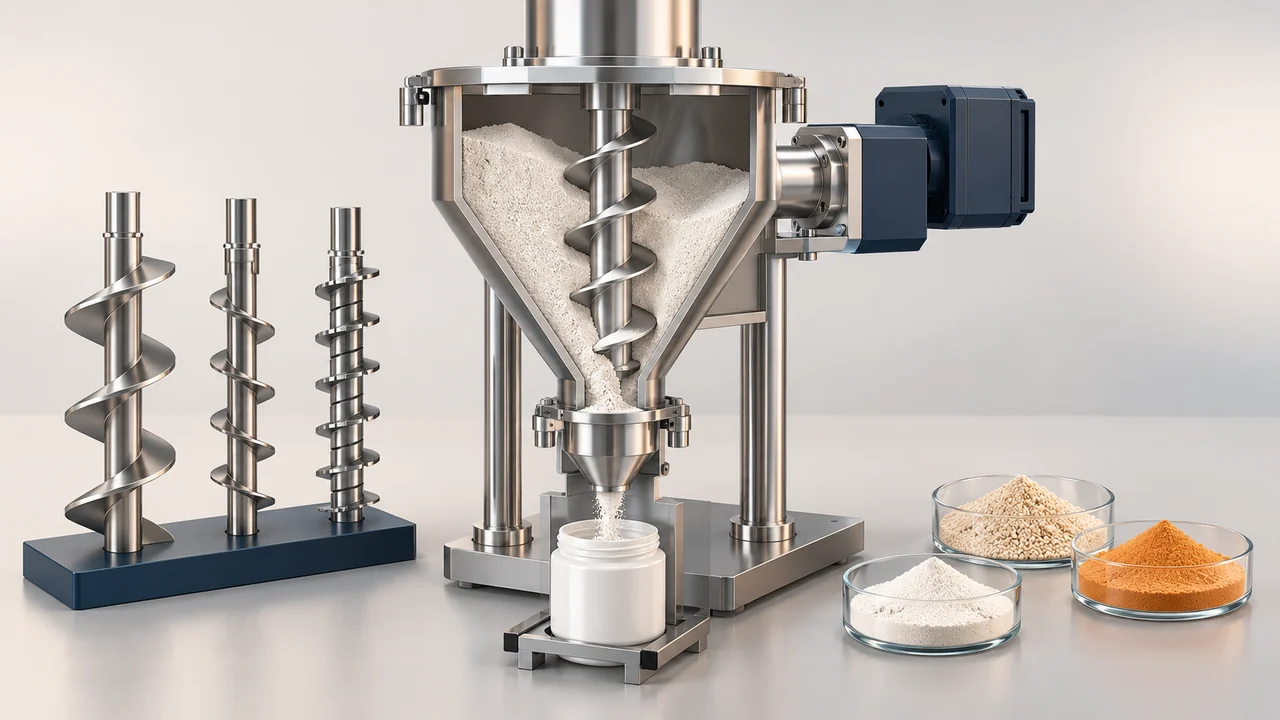
Auger describes the powder-metering tool; servo describes how its movement is driven and controlled. They are not necessarily competing filling principles. A servo powder filling machine can use an auger, while an auger powder filling machine can be supplied with different drive and handling arrangements. Buyers should compare the complete powder path and the results it produces rather than treating the names as a performance ranking.
Select the auger, outlet, hopper feed and dosing settings together for the real powder and container. Servo control provides controlled movement, but does not remove changes caused by powder density, aeration or replenishment. Weigh trial doses under recorded conditions and distinguish separate checkweighing from any integrated feedback or rejection system.
Ask what the proposed machine actually meters
The auger powder filling machine moves conditioned powder through a helical dosing tool. The servo powder filling machine uses controlled auger motion and a recipe established for the powder, dose and container.
Request a description of the auger geometry, outlet, drive control and container presentation rather than comparing only product names. Identify how the dose setting is established and how a filled container is checked. A programmed rotation is a machine setting; the delivered dose weight is a separate result that needs measurement.
Describe powder condition and replenishment
Provide representative powder, available bulk-density information, flow behavior, moisture sensitivity and dust characteristics. Describe how the product reaches the hopper, including storage and loading. Material that is settled, aerated or replenished differently may not feed the auger in the same way.
Observe what happens at different working hopper levels and after a refill. Record any agitation and its settings rather than assuming it is suitable for every product. A successful short trial with a convenient sample does not establish the behavior of another formulation or a powder supplied under different handling conditions.
Match the tooling to the dose and container neck
Submit the required dose range and actual container openings. Review the auger, outlet clearance, container support and available headspace together. A recipe change may not cover a large format change if the tool or outlet needs to change as well.
Ask how powder is presented to the tool, how the outlet is aligned and what permits the dose to start. Check spill or residue at the neck independently of dose weight. If dust extraction is proposed, review its position and effect during the trial rather than assuming that an unspecified extraction connection resolves every handling issue.
Measure trial doses against a traceable setup
Agree the dose-weight criterion and sampling method before the run. Keep results for starts, steady operation and replenishment linked to the powder batch and machine settings. An average alone can conceal individual fills outside the required acceptance limits.
| Record | Include |
|---|---|
| Powder | Batch and loading condition |
| Tooling | Auger and outlet identification |
| Recipe | Dose movement, speed and agitation settings |
| Container | Opening, position and dose target |
| Measurement | Weighing method and individual results |
Distinguish weighing from automatic correction
A separate weight check can inspect filled containers without changing the fill recipe. Integrated weighing, automatic recipe correction and reject handling are different functions, with different equipment and control requirements. The servo powder page identifies these as scope choices rather than standard consequences of a servo drive.
If feedback is required, ask how the measured result reaches the controller, what response is allowed and how rejected containers are handled. Demonstrate the function requested in the order. A control-screen weight display or a nearby weighing device is not enough to establish that automatic correction has been included.
Purchase tooling and changeover information together
For a powder filling machine enquiry in India, send the formulations, dose range, container samples and cleaning requirements with the trial request. H M Pharma Machines can review an auger or servo-auger arrangement against those details; the decision should follow the powder evidence and required handling functions.
Ask for a tooling register and a product-specific setup record, including what is removed for cleaning and what must be checked after reassembly. List extraction, checkweighing, rejection and downstream closing separately. This makes the supply scope clearer than a quotation stating only servo control and a general accuracy claim.
Buyer Questions
Are auger and servo powder fillers different dosing principles?
Not necessarily. Auger identifies the dosing mechanism, while servo identifies its drive and control. Ask for the actual mechanism, tooling and weighing functions in the offered machine.
Can one auger cover every powder and dose?
Do not assume that it can. Powder feed, bulk density, dose range and container opening can require different tooling or operating settings, confirmed through sample trials.
Does servo control include automatic weight correction?
Only if the necessary weighing, feedback and control functions are specified. Controlled auger movement and automatic weight correction are separate features.
Related Machine Guides
Product References and Further Details
These primary pages describe the published machine arrangements discussed in this guide. Use the actual product and component requirements when reviewing a configuration.
Discuss Your Machine Requirement
Share your product, container or closure samples, required output, process conditions and line layout with H M Pharma Machines for a technical review.
Request a Technical Review