
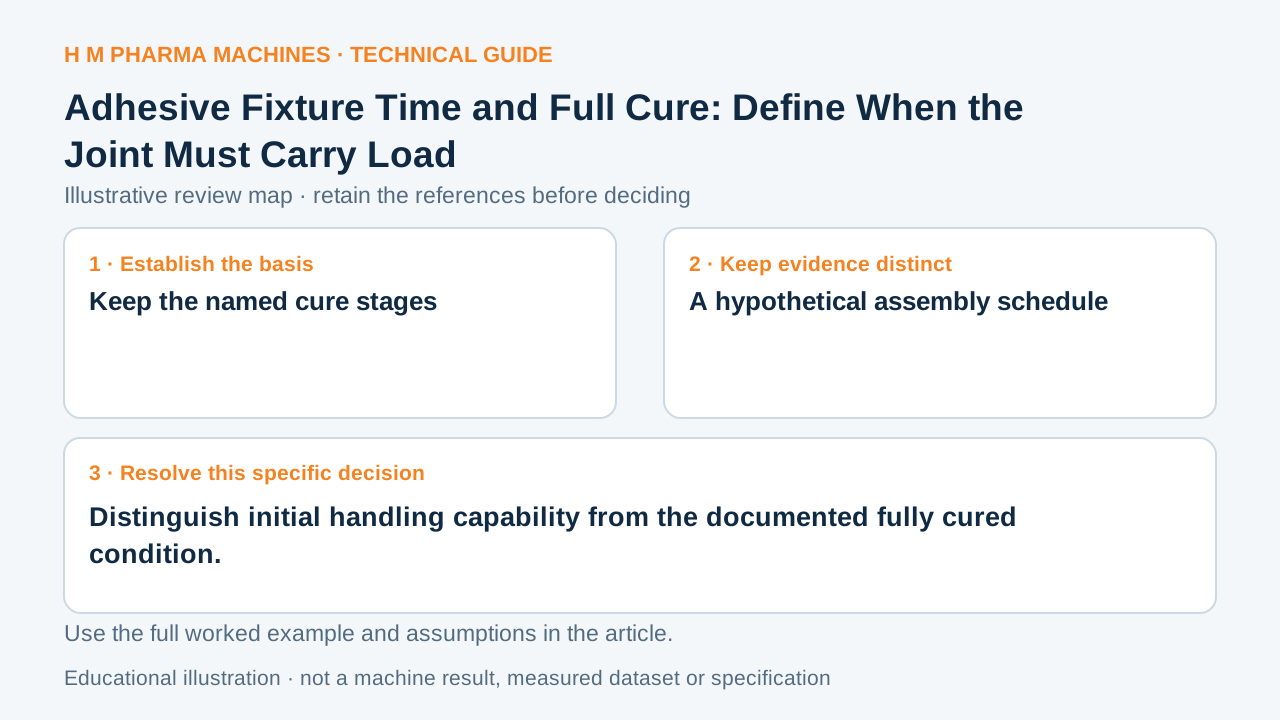
Fixture time and full cure should remain separate events in the assembly plan.
Keep the named cure stages
The cited 3M product information reports fixture and full-cure timing separately for that identified adhesive. Those labels should not be collapsed into one unexplained dry time. Primary reference: 3M defined adhesive timing example.
For the actual selected product, preserve the manufacturer's conditions and the permitted operation at each stage. A joint that can be handled under a defined basis is not automatically ready for every final service load. Avoid treating the cited product's figures as universal values for other adhesives.
A hypothetical assembly schedule
Assume fictional planning entries permit defined handling after 45 minutes and require a separately documented24-hour condition before the intended loading. A schedule moving the part at 60 minutes may fit the handling entry while still leaving the final-load condition unmet. These times are invented scheduling inputs, not instructions from the cited product or an HM process.
Make columns for mixing/application reference, relevant temperature, stage definition, elapsed time and allowed operation. If conditions differ from the documented basis, keep the timing question open instead of assuming the same duration still applies.
Release the operation actually required
Ask what evidence demonstrates the stage needed for the next planned activity. A handling check should retain its limited purpose rather than becoming a full-cure statement by convenience.
Preserve the selected adhesive, substrates and cure-condition record with the assembly. If product, temperature or process changes, revisit the relevant timing basis. This guide helps a buyer reconcile a production schedule with named adhesive stages. It does not prescribe a cure method, copy a manufacturer's mixing procedure or claim that elapsed calendar time alone proves every bond has reached its required final properties.
Customer Questions
Does fixture time necessarily equal full cure?
No. Preserve the actual manufacturer's distinct stage definitions.
Are the45-minute and24-hour entries recommendations?
No. They are invented schedule examples.
Can timing conditions be omitted?
No. Retain the selected product's applicable conditions.
Primary References
These references support the technical principles discussed in this guide. The worked examples and review questions are educational.
Discuss Your Machine Requirement
Share your product, container, required output and the evidence needed for your technical review.
Request a Technical Review